



By Martin Ekpeke
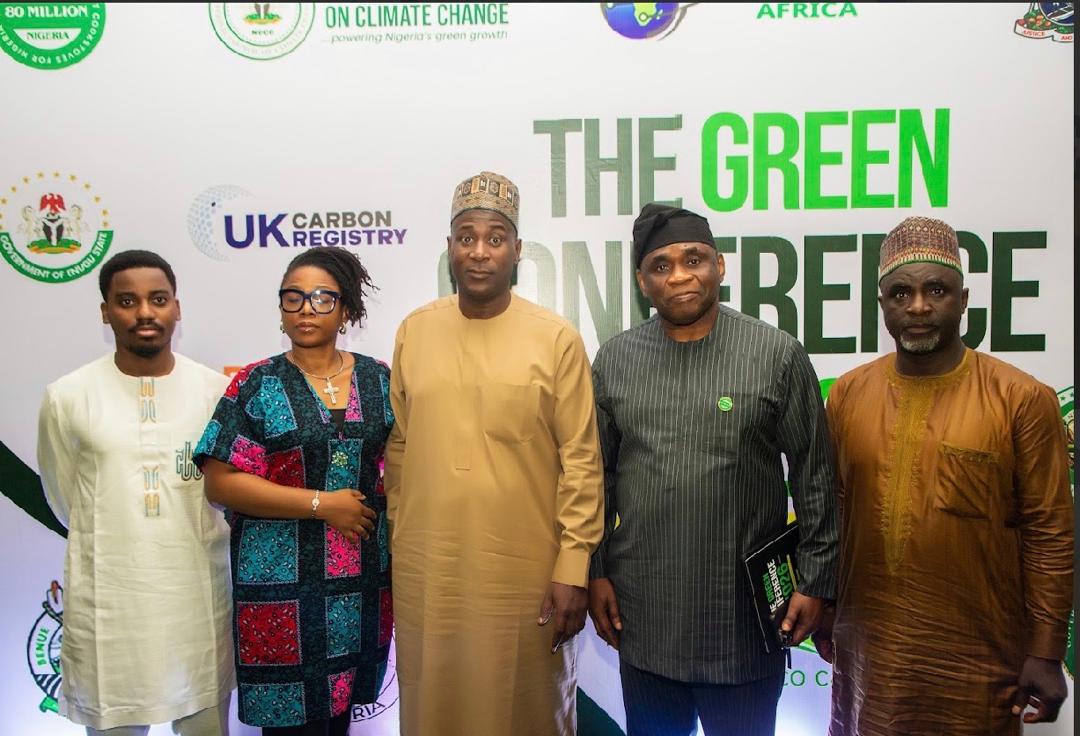
The Green Conference 2026, held in Lagos last week, concluded with a unified push from telecommunications regulators and climate officials to transform Nigeria’s environmental policies into a massive engine for economic growth.

Hosted by GreenPlinth Africa in collaboration with the National Council on Climate Change (NCCC) and the Office of the Vice President, the event focused on shifting from policy commitments to scalable implementation.

Executive Vice Chairman of the Nigerian Communications Commission (NCC), Dr. Aminu Maida, delivered a keynote address highlighting the critical intersection of connectivity and sustainability. Represented by the Commission’s Head of Projects, Mr. Shuaibu Swade, Dr. Maida emphasized that the digital economy must also be an environmentally responsible one.
To achieve this, the NCC is spearheading several key initiatives, such as promoting a transition to solar-powered base stations to reduce the industry’s reliance on expensive diesel, which helps cut operational costs and improve network uptime in remote areas.
Furthermore, the regulator is encouraging infrastructure sharing among operators to minimize the physical footprint of digital networks and lower capital expenditure. The NCC is also implementing stricter policies for electronic waste to support a circular economy. By formalizing the e-waste sector, the Commission aims to recover valuable materials and create new technical jobs in collection and specialized recycling.
From Policy to Practice: The Clean Cookstove Initiative
 The conference transitioned from dialogue to action with the signing of Memoranda of Agreement (MoA) between GreenPlinth Africa and the governments of Benue and Niger States.
As part of a national 80-million-unit initiative, these states will deploy two million clean cookstoves each. Dr. Daniel Mailumo, Director-General of the Benue State Council on Climate Change, noted that the move would protect forests and improve health outcomes for rural women by providing low-emission alternatives to firewood.
Beyond environmental benefits, these projects offer direct social empowerment to participating households. Beneficiaries will receive energy-efficient stoves and biomass briquettes alongside health insurance and monthly stipends. Furthermore, these large-scale programs create opportunities for carbon credit generation, which helps attract significant international climate finance.
Climate Action as Economic Opportunity
Meanwhile, Omotenioye Majekodunmi, Director-General of the NCCC and recipient of the Green ICON Award, argued that Nigeria’s climate strategy must be synonymous with job creation and industrial prosperity.

“Let us utilize the resources beneath our feet to power the prosperity above our heads—building an Africa that is industrialized, resilient, and climate-responsible,” Majekodunmi stated.
She noted that Africa’s vast reserves of critical minerals and renewable potential could birth entire new industries, from green manufacturing to sophisticated carbon markets. As Nigeria’s apex climate body, the NCCC is currently aligning national development priorities with international decarbonization commitments to ensure local supply chains benefit from the global shift toward green investment.