



By Epiphanus Obia
Angela Lipps was babysitting four children at her home in Tennessee last July when federal marshals arrived at her door with guns and arrested her. The 50-year-old grandmother who had never been arrested in her life, was handcuffed and charged with bank fraud that happened in North Dakota, a state she had never visited before.

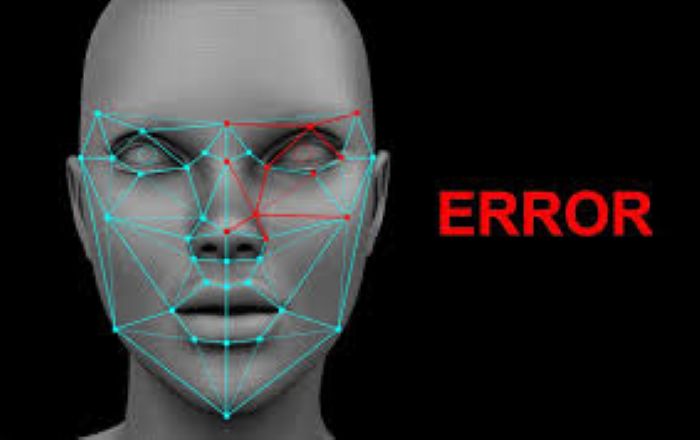
The evidence against her was a single identification made by an artificial intelligence facial recognition system. The Fargo Police Department, which operated the system, made no further attempts to verify the match before authorising her arrest.
Lipps spent nearly six months in jail, before investigators finally examined her bank records and discovered she had never left Tennessee. She was released on Christmas Eve with no money, no coat, and no means of returning home in snowy temperature. Local lawyers contributed their own money to pay for her hotel room. No one from the Fargo Police Department has apologized for the error.
A Pattern Emerging Across the United States
Lipps’ case is not isolated. A growing number of wrongful arrests linked to AI facial recognition technology have been recorded across the United States, with law enforcement agencies repeatedly failing to verify the systems’ outputs before detaining suspects.
In April 2025, the New York Police Department arrested Trevis Williams, a father, after facial recognition software identified him as a possible match for a man who had exposed himself to a woman two months earlier. The software had scanned low-quality CCTV footage and returned six potential matches.
Investigators placed Williams’ photograph in a police lineup. The victim identified him. He was arrested and held for more than two days. The problem was documented clearly in his case file. Williams was taller and approximately 70 pounds heavier than the actual suspect. No officer had checked.
The charge was eventually dismissed. The investigation was closed. Williams received no compensation.
In Detroit, LaDonna Crutchfield, 37, was arrested at her home and accused of attempted murder after facial recognition software flagged her photograph. Her attorney immediately presented evidence showing she was several years younger and significantly shorter than the actual suspect. The case collapsed.
Nigeria is not as far away from this as it may seem
While these cases may appear to be problems confined to the United States, technology does not respect borders, and Nigeria is already deploying the same tools.
Facial recognition systems are currently in operation at several Nigerian airports. The Lagos State government has been installing a network of closed-circuit surveillance cameras across the city as part of its broader Smart City programme. Federal government agencies continue to expand digital public infrastructure under the Ministry of Communications, Innovation and Digital Economy.
As artificial intelligence tools become cheaper and more accessible globally, it is only a matter of time before they are adopted more widely by Nigerian law enforcement agencies.
The accountability question
The deeper problem in each of the American cases was not the technology itself but the failure of human oversight that followed.
In every instance, officers accepted the AI’s identification without independent verification. In every instance, the accused was required to prove their own innocence rather than investigators proving guilt. And in every instance, the institutions responsible faced no formal consequences.
That pattern, could be significantly more dangerous in Nigeria than it has proven to be in the United States.
Nigeria’s post-EndSARS reforms promised a fundamental change in the relationship between citizens and law enforcement. Panels were set up, reports were written, but accountability mechanisms within Nigerian policing remain limited, and access to legal representation for ordinary citizens continues to be a serious challenge.
In the United States, wrongfully arrested individuals eventually found lawyers, accessed courts, and secured dismissals, in some cases after months of unjust detention. In Nigeria, where legal aid is harder to access and pretrial detention periods can extend far longer, the consequences of an equivalent AI error could be considerably more severe.
What the law currently says and does not say
Nigeria currently operates without specific primary legislation governing the use of artificial intelligence in law enforcement, relying instead on a fragmented framework of indirectly applicable laws like the Cybercrime Act and the Nigeria Data Protection Act (NDPA) 2023 to address data-related concerns.
On the ground, there are no formal, statutory rules requiring investigators to independently verify AI-generated leads, such as facial recognition or predictive policing matches, before conducting arrests, a gap that raises significant risks of violating constitutional guarantees of due process and fair trial.
Furthermore, there is no established accountability framework or dedicated “AI liability” law to provide legal recourse for victims when algorithmic errors or inherent biases result in wrongful detention, as extant penal laws generally do not recognize AI entities as subjects of criminal liability. While the National Artificial Intelligence Policy (NAIP) and the Control of Usage of Artificial Intelligence Technology Bill represent steps toward a more structured governance system, current law enforcement practices remain largely unregulated at the procedural level.
Among the measures being proposed by digital rights advocates are a requirement that AI identification alone cannot constitute probable cause for arrest, mandatory human verification of all algorithmic matches before enforcement action is taken, and accessible legal pathways for citizens who are wrongfully detained as a result of technological error.
The Nigerian Communications Commission, the National Information Technology Development Agency, and the National Human Rights Commission are all institutions with a role to play in developing these frameworks.
The broader stakes for Nigeria’s digital ambitions
Nigeria has set an ambitious target of building a one trillion-dollar digital economy by 2030. Billions are being invested in fibre optic infrastructure. Artificial intelligence is being positioned as central to the country’s economic future.
But technology deployed without adequate legal safeguards carries risks that can undermine the very goals it is meant to support. Incidents of algorithmic injustice damage public trust in digital systems, create legal liabilities for institutions, and generate reputational costs that follow a country’s technology sector internationally.
Angela Lipps lost her home, her car, and her dog. She was released into freezing temperatures on Christmas Eve with no support from the department that put her there.
The same technology that arrested her is currently being marketed to governments across Africa as a modern, efficient solution to public safety challenges.
Nigeria has the opportunity to learn from these failures before experiencing them firsthand. Whether its institutions move quickly enough to do so remains an open question.