



By Epiphanus Obia
MTN FibreX users in Nigeria have taken to X (formerly Twitter) to report service disruptions, delayed installations, and poor customer support, raising fresh concerns about the telecom giant’s fibre broadband rollout.

The complaints were triggered by a post from user Feyi on Wednesday April 9, who alleged that the service failed shortly after installation despite aggressive marketing in their residential compound.
“I was enjoying my Starlink… your staff came to advertise FibreX… after paying, this product hasn’t worked at all,” the user wrote, adding that repeated calls to customer support yielded no resolution.
The post has since drawn over forty thousand views and sparked a wave of similar complaints from other users.
Several respondents described prolonged activation delays. @tyretroo said their connection, installed in November, was only activated in February after “countless” follow-ups, while @JefferyCrypt claimed he paid in January but were yet to receive installation months later.
Others pointed to inconsistent service quality depending on location. While some users reported stable connections in cities like Awka and Ibadan, others in parts of Lagos and beyond said the service was unreliable or completely unusable.
The backlash also reflects growing comparisons with Starlink, which many users praised for its plug-and-play setup and wider coverage. @Big2dor noted that FibreX appears limited to select urban areas, while Starlink can be used “anywhere in Nigeria.”
Customer service emerged as a recurring concern. Multiple users criticized delayed responses, unresolved complaints, and the need for repeated calls or physical visits to service centers.
What the Technology Means
MTN FibreX is a fibre-to-the-home (FTTH) broadband service offered by MTN Nigeria, designed to deliver high speed internet through fibre optic cables.
Unlike mobile data networks, fibre broadband relies on physical cables that transmit data using light signals, enabling faster and more stable connections. However, this also means performance is highly dependent on infrastructure, such as properly installed cables, functional distribution points, and active connections to the provider’s network.
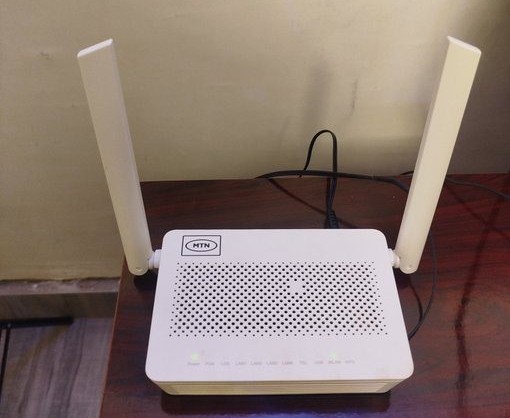
The device shown in the viral post is a fibre router/terminal, which connects homes to MTN’s fibre network. A red “LOS” (Loss of Signal) indicator, visible in the image, typically suggests a disruption in the fibre link, which could be caused by damaged cables, faulty connections, or network outages.
In contrast, Starlink uses low-Earth orbit satellites to beam internet directly to user terminals, eliminating the need for ground-based fibre infrastructure. This allows for broader coverage but can come at a higher cost.
Industry Context
The complaints come as competition intensifies in Nigeria’s internet market, particularly with the entry of satellite providers like SpaceX.
Telecom operators have increasingly promoted fibre broadband as a faster alternative to mobile data, often bundling incentives such as free installation to attract new users. However, as the FibreX complaints suggest, gaps in deployment and customer support may be undermining user confidence.