


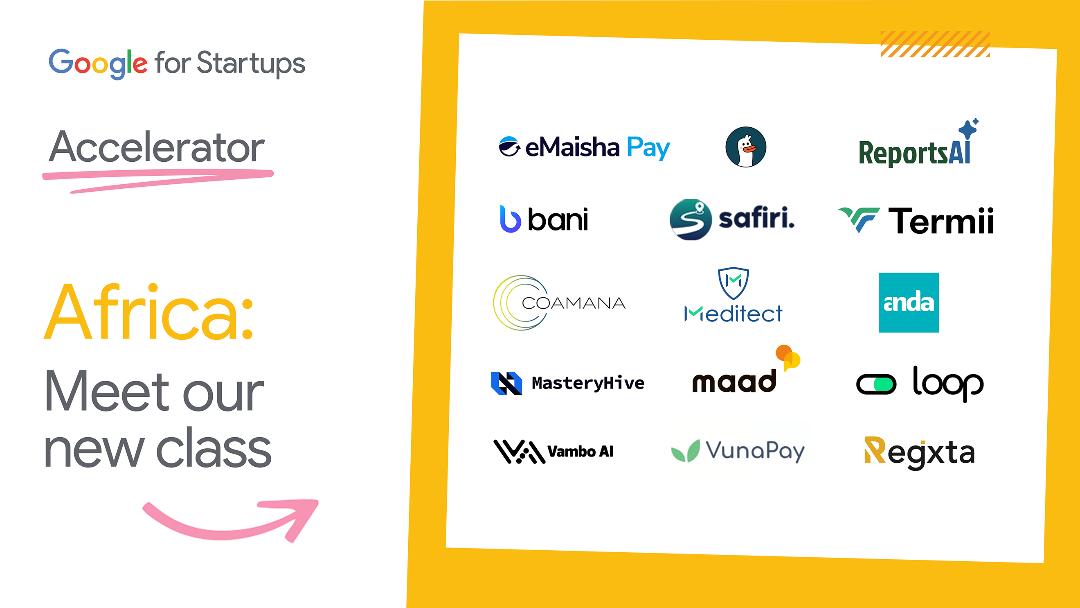
In a significant nod to Nigeria’s burgeoning tech scene, four homegrown startups have been selected for the 10th cohort of the Google for Startups Accelerator Africa. Out of nearly 2,600 applications across the continent, these four innovators secured spots in the final group of 15, a feat representing an acceptance rate of less than 1%.
The four startups are:

Bani : A cross-border payments infrastructure platform eliminating settlement delays for African businesses trading globally.
MasteryHive AI : An AI-native platform automating transaction reconciliation, fraud detection, and AML monitoring.
Regxta : Combines alternative data-driven credit scoring with a hybrid digital-agent distribution model to deliver financial products to unbanked micro businesses.
Termii : An AI-native communications infrastructure platform ensuring reliable financial messaging for banks and fintechs.
While Africa’s venture ecosystem raised a staggering $3.9 billion in 2025, capital alone isn’t enough to scale complex AI solutions. These startups require specialized technical infrastructure, advanced cloud capabilities and strategic mentorship
Folarin Aiyegbusi, Head of Startup Ecosystem for Africa at Google, emphasized that the programme acts as a partner to help these founders amplify their real-world impact by providing the global network and technical tools necessary for sustainable growth.
“At Termii, we’re building AI-powered infrastructure that ensures financial transactions don’t fail. The Google Startup Accelerator is helping us accelerate our AI roadmap and scale globally,” said Gbolade Emmanuel, CEO of Termii
The hybrid programme kicked off on April 13th and will run through June 19th, 2026. During this period, the 15 selected companies will undergo hands-on technical workshops focusing on AI and Machine Learning.
Since its inception in 2018, the Google for Startups Accelerator Africa has built an impressive track record of 106 startups supported across 17 countries, $263 million+ in collective capital raised by alumni and 2,800+ jobs created within the digital economy.