



By Martin Ekpeke
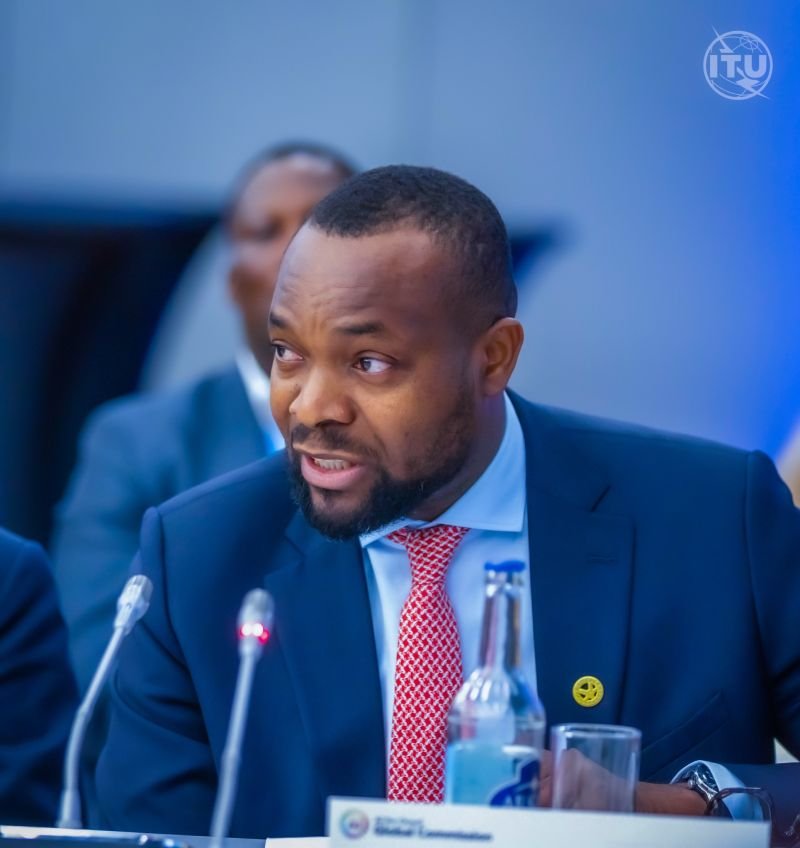
The global Artificial Intelligence landscape witnessed a historic shift as Nigeria’s Minister of Communications, Innovation and Digital Economy, Dr. Bosun Tijani, was officially inaugurated as a Founding Member of the newly formed AI for Good Global Commission.

Convened by the International Telecommunication Union (ITU), this high-level international body is co-chaired by President Paul Kagame of Rwanda and Marc Benioff, CEO of Salesforce, with ITU Secretary-General Doreen Bogdan-Martin serving as Vice-Chair.
The commission brings together an elite cohort of global leaders, including Heads of State, tech industry titans, academia, and international organizations, to build a trusted, inclusive, and globally coordinated approach to Artificial Intelligence.
For Nigeria, this appointment is far more than a diplomatic honour, as the nation aggressively expands its digital footprint. Dr. Tijani having a seat at the global table translates into tangible socio-economic advantages across four critical pillars.
Directing global policy to favour African realities: Historically, global technology standards and governance models have been written by Western and Asian economies, leaving Africa to adapt to frameworks that do not fit its unique local infrastructure. With Dr. Tijani on the commission, Nigeria will act as a primary anchor to ensure that African perspectives, indigenous languages, unique data privacy needs, and distinct economic realities are baked directly into global AI governance. Rather than being added as an afterthought.
Attracting high-value global tech investments: Nigeria’s international standing in the tech space has skyrocketed, recently jumping 42 places to rank 38th globally and 1st in Africa on the Global Index on Responsible AI Governance. Tijani’s direct proximity to global tech giants and international policymakers on the commission presents a premium networking pipeline. This exposure is strategically positioned to unlock new international venture funding, cloud infrastructure partnerships, and data center investments for local tech hubs.
Boosting local talent and technical subsidies: The appointment seamlessly aligns with Nigeria’s ongoing domestic digital pipelines, such as the 3 Million Technical Talent (3MTT) initiative and the National Artificial Intelligence Strategy (NAIS). Through the Commission’s extensive network, Nigeria stands to gain preferential access to world-class research fellowships, collaborative academic resources, and international training grants to scale up its local tech workforce.
Accelerating in-country computing power: Building and running AI requires massive infrastructure. Nigeria has already made headway via private-public investments, such as its ongoing GPU computing pilots. Being tied directly to the ITU’s flagship commission gives Nigeria a much stronger voice when negotiating international backing, technical support, and financing for the expensive digital infrastructure required to power local AI start-ups.
Reacting to the appointment, Dr. Tijani noted that he is honoured to have been inaugurated as a Founding Member of the AI for Good Global Commission, explaining that for Nigeria, this appointment reflects the significant progress the country is making in building a responsible and inclusive AI ecosystem through investments in digital infrastructure, talent development, research, innovation and AI governance.
“This appointment provides an opportunity to ensure that the perspectives and priorities of Africa and other emerging economies are represented in global conversations that will shape the future of this transformative technology,” he said.
By bridging the gap between high-level international diplomacy and practical local application, this appointment will likely transition Nigeria from a mere consumer of global technology into a decisive co-architect of the AI era.