



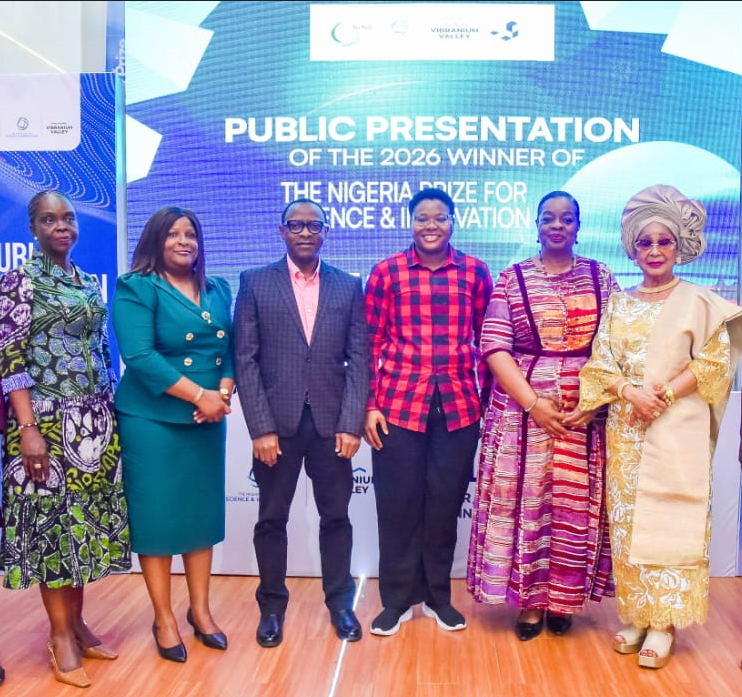
Mary-Brenda Akoda, winner of the 2026 The Nigeria Prize for Science and Innovation (NPSI), has unveiled GenScanAI, an artificial intelligence-powered medical imaging solution capable of reducing magnetic resonance imaging (MRI) scan times by up to 90%, potentially improving diagnostic efficiency without requiring new MRI hardware.
Akoda presented the innovation at a public engagement held in Ikeja, Lagos, where medical practitioners, healthcare professionals, researchers, academics, students and technology stakeholders examined its underlying technology and potential applications in healthcare delivery.

GenScanAI uses artificial intelligence and advanced computing techniques to reconstruct MRI images, with the potential to significantly shorten scan times while maintaining or improving image quality.
The innovation could help hospitals and diagnostic centres examine more patients using existing MRI equipment, improve infrastructure utilisation, reduce waiting times and support faster diagnosis and treatment.
By reducing the time patients spend undergoing scans, the technology could also help address capacity constraints in diagnostic facilities, particularly in a country where population growth continues to increase demand for healthcare services.
Speaking at the event, Sophia Horsfall, General Manager, External Relations and Sustainable Development at Nigeria LNG Limited (NLNG), said the innovation addressed an important healthcare challenge by demonstrating how artificial intelligence could improve the efficiency of existing medical infrastructure.
“Medical imaging plays a critical role in diagnosis and treatment, but the time required for MRI examinations can create delays for patients and limit the number of people healthcare facilities can serve,” Horsfall said.
She noted that innovations such as GenScanAI showed how advances in artificial intelligence and computing could be applied to practical healthcare challenges.
Horsfall described the public presentation as an opportunity to extend the winning innovation beyond the Prize adjudication process by connecting its developer with the medical and research communities.
According to her, engagement with healthcare professionals, researchers and students would help deepen understanding of the technology and encourage discussions on its potential contribution to healthcare delivery.
The presentation also provided Akoda with an opportunity to explain the problem that inspired GenScanAI, the technology behind its development and its possible applications in medical imaging.
Participants examined how the solution could address operational challenges in diagnostic services, while students gained insights into how scientific research and technological innovation could be applied to real-world problems.
Beyond reducing scan times, GenScanAI has the potential to accommodate patient movement and improve image quality, although its practical benefits will depend on appropriate clinical evaluation and validation.
If successfully deployed, the technology could offer diagnostic centres a way to improve patient throughput without immediately investing in additional MRI machines, potentially helping facilities make better use of their existing equipment.
Akoda emerged as the winner of the 2026 Nigeria Prize for Science and Innovation after a rigorous evaluation of more than 230 entries.
The 2026 edition of the Prize focused on “Innovations in Artificial Intelligence or ICT or Digital Technologies for Development”, highlighting the growing importance of digital technologies in solving societal problems and advancing national development.
NLNG facilitated the public presentation as part of efforts to showcase the winning innovation to relevant stakeholders and encourage discussions on its potential real-world applications.
The engagement underscored the importance of connecting scientific research with healthcare professionals, institutions and technology stakeholders to explore pathways for translating promising innovations into practical solutions.
For Nigeria’s healthcare sector, GenScanAI presents a potential opportunity to apply locally developed artificial intelligence to medical diagnostics, with the prospect of improving access to imaging services and making better use of existing healthcare infrastructure.