


A new report by the Broadband Commission, an arm of the International Telecommunications Union has disclosed that 15 countries across the world currently have a benchmark broadband status in their national plan, insinuating these countries for the very first time have strategies in place for promoting the safe use of Artificial Intelligence.
This year’s report titled ‘The State of Broadband: Broadband Catalyzing Sustainable Development’, highlights the critical role that broadband connectivity plays for the world’s people, from accessing online health services to receiving social security payments via mobile phones to receiving life-saving disaster warnings.
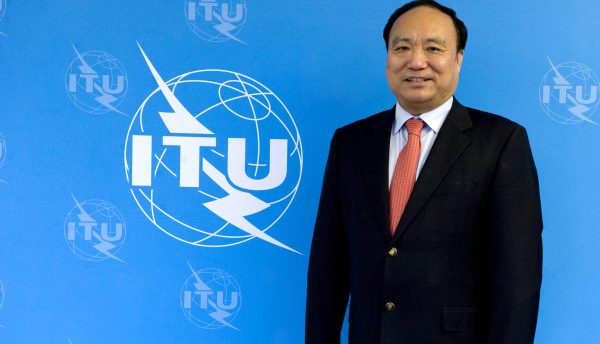
According to Mr Houlin Zhao, Secretary-General of the International Telecommunication Union (ITU), who serves as co-Vice Chair of the Commission alongside UNESCO Director-General Audrey Azoulay, Broadband infrastructure is vital country infrastructure, as essential as water and electricity networks, stressing that the data analysis and policy recommendations contained in the 2018 State of the Broadband report come at a crucial time when Internet access is more important than ever before.
To boost broadband, the Broadband Commission recommends: building national leadership for broadband; promoting Internet training and stimulating consumer and business demand; monitoring ICT developments to inform policy; reviewing universal service measures; strengthening digital skills and literacy; supporting local eBusinesses and entrepreneurs; adapting legal frameworks; and reducing taxes and duties on telecom products and services.
Key highlights of the report include updates on the Broadband Commission’s advocacy targets:
Making broadband policy universal (Target 1)
Progress is being made in the establishment by countries of broadband policies, but only incrementally. The total number of countries with a National Broadband Plan (NBP) has seen a net increase of three, from 80% (156 countries) to 81% (159 countries). Also, a number of countries have approved their NBP (e.g. Bolivia, Democratic Republic of Congo, Maldives, Mali and Kuwait), while certain other countries’ NBPs have lapsed.
Making broadband affordable (Target 2)
The Broadband Commission, in its new 2025 Targets, has reduced the broadband services affordability threshold target from less than 5% to less than 2% of monthly gross national income per capita. This new target will particularly assist lower income groups in developing and least developed countries to gain connectivity. The change in target, though, results in a lower number of countries meeting the affordability threshold. For fixed broadband affordability, 73 countries had achieved the new target, and 122 countries have yet to achieve it. For mobile broadband affordability, 109 countries had achieved this target, and 86 countries have yet to achieve it.
Getting people online (Target 3)
The report highlights the inherent challenges of bringing the “other half” of the world’s population online, noting that it has taken more than 25 years to bring nearly half of the world online – mainly by connecting those in urban and easy-to-reach areas. It will be difficult to bring another quarter of the world’s population online in the next seven years at current population growth rates of 5% per annum – especially in developing and least developed countries.
Acquiring minimum digital skills and literacy (Target 4)
The report cites low data availability related to digital skills, and shows how global averages for digital skills vary from 5.2% (using a programming language) to 43.7% (transferring files). As such, it identifies the need to define what can be considered a “minimum level of proficiency in digital skills”, and to increase data collection in order to effectively measure advancements.
Using digital financial services (Target 5)
The report cites the rapidly expanding use of digital finance services – currently at 15.8% of the global population and 21.4% of the global adult population, and anticipated to increase to 40% of the global population by 2025.
Getting businesses online (Target 6)
The report identifies key enablers to bring more businesses and small- and medium-sized businesses online. This includes creating supportive legal and regulatory environments, increasing digital skills and literacy, and reducing costs such as import duties on Telecom/ICT equipment and services.
Achieving gender equality in access to broadband (Target 7)
The report highlights that, as per the most recent data available, the digital gender divide in fact grew from 11% in 2013 to 11.6% in 2016; and that women are, on average, 26% less likely to use mobile Internet than men. The report identifies increasing global efforts to address the digital divide, including the EQUALS Global Partnership (www.equals.org), and as such has an optimistic outlook for achieving gender equality in access to broadband by 2025.