


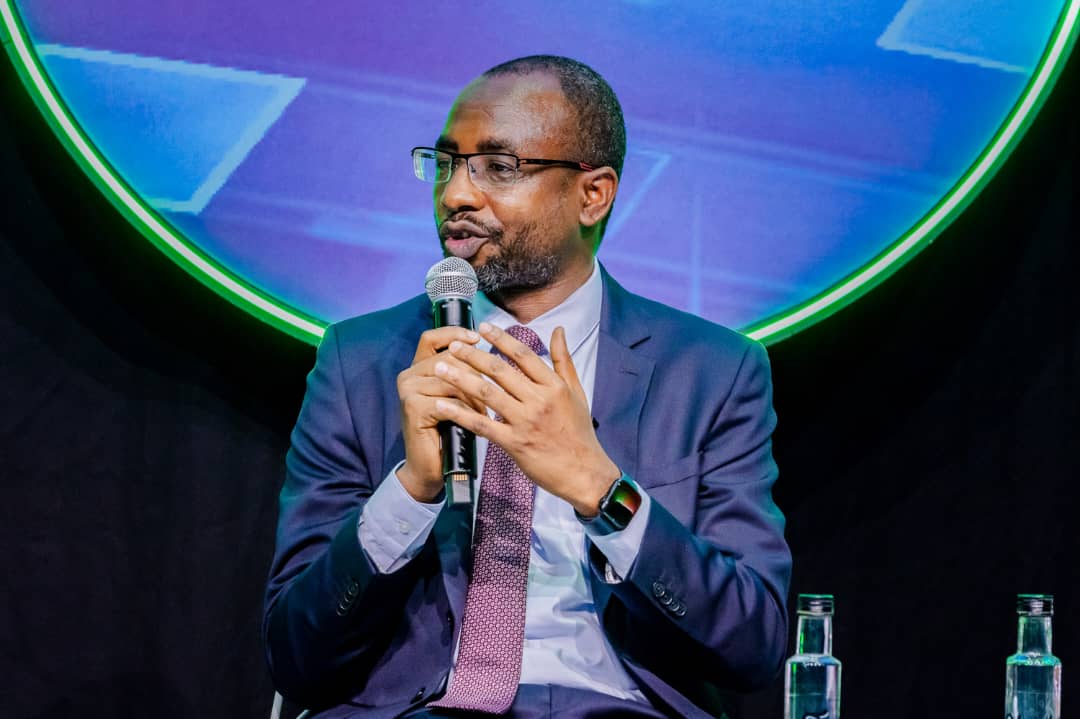
At a strategic stakeholder engagement in Abuja, the Director General of the National Information Technology Development Agency (NITDA), Kashifu Inuwa, issued a clarion call for the urgent diversification of the Nigerian economy. Despite holding the title of Africa’s largest GDP, Inuwa warned that Nigeria is at a critical juncture where traditional revenue streams must be complemented by a robust digital economy to ensure sustainable growth.
Represented by Mr. Ajayi Babajide, the NITDA boss emphasized that digitalization is no longer a luxury but the primary driver of global economic transformation. For Nigeria to compete, it must pivot toward a “Strategic Pathway” fueled by innovation, job creation, and inclusive development.
To move beyond rhetoric, NITDA is deploying its Strategic Roadmap and Action Plan (SRAP 2.0), a framework designed to break boundaries and foster an entrepreneurial evolution across all 36 states. The roadmap includes several key pillars, such as the National Digital Literacy Framework, which is a bold initiative to equip citizens in every sector with the skills necessary for a rapidly shifting job market.
Additionally, the agency is focusing on infrastructure expansion and has already established over 100 IT centers nationwide to provide the hardware and connectivity needed for digital learning. Furthermore, NITDA is nurturing startups from initial ideas into market-ready global competitors through specialized innovation hubs like the Office for Nigerian Digital Innovation and the National Centre for Artificial Intelligence and Robotics.
Inuwa noted that while Nigeria has already produced world-recognized “unicorns,” or startups valued at over $1 billion, maintaining this momentum requires a quadruple helix of collaboration between four key sectors. This model includes the government creating effective policies and legal frameworks, as well as the private sector driving investment and market-ready solutions. Additionally, academia must fuel the research and talent pipeline while civil society ensures that digital gains are inclusive and reach underserved communities.
The engagement also highlighted state-level success through the example of Kogi State, where the government is independently driving this mandate. Pharm. Eric Monday, Permanent Secretary of Kogi State’s Ministry of Innovation, shared how the confluence state is applying technology to revolutionize local governance. These efforts include implementing digital data management in healthcare and public works to expand service coverage. Furthermore, the state is collaborating with Chinese organizations to build a localized innovation ecosystem and is nearing the completion of a dedicated center to train Kogi’s youth in high-demand digital vocations.
The consensus from the Abuja engagement was clear: Nigeria’s digital potential will not be realized by accident. It requires a deliberate harvest through robust institutional support and a shift in mindset. As Nigeria looks toward 2030, the goal is to build an economy where innovation is the standard, and the “digital backbone” supports every citizen, from the tech hubs of Lagos to the rural farms of the North Central.