


By Patrick Hogan
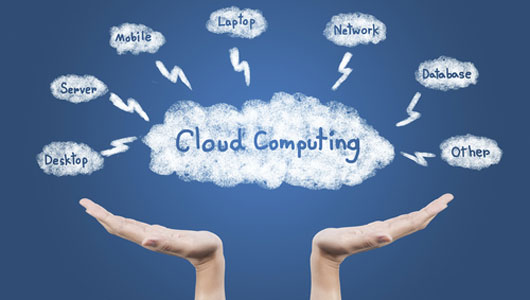
Ten years ago, few would have imagined that employees could work entirely remotely or that an entire business infrastructure could exist on the internet. With the adoption of cloud computing, a service that allows companies to access processing and data storage through the internet, these business models are becoming a reality.
with cloud computing, almost any device can work. Employees can often connect via their mobile phones. Older computers and employee-purchased phones can both connect to cloud services. This new business model enables IT staff to focus their efforts on tasks other than monitoring the computers in an office
Today, small businesses can take advantage of the same computing power that big businesses use without paying for all the infrastructure. Cloud computing companies, like Amazon Web Services and Microsoft Azure, sell the computing power in increments. Companies are quickly incorporating cloud solutions. In 2016, Amazon Web Services made over $2.5 billion in revenue. But this revenue is distributed among a massive amount of companies. A smaller business can take a smaller slice of the cloud computing power pie, only taking what it needs to run its enterprise. Technology startups, like Zapier, are using this capability to create a 100% remote workforce and enable new business processes.
Remote workforce
“We’re a 100% distributed team living and working all over the world…” reads the Zapier about page. A quick look at their map shows employees scattered across the United States, Europe, Asia and Australia. All the employees come together to work digitally. Customer Champions, the Zapier name for customer service representatives, can answer questions about Zapier’s software via a cloud program. Employees can gather via Skype, email or another platform. 99% of the time, Zapier employees communicate through the cloud.
A three-week project can become a two-day simulation if the engineering company uses cloud computing services to purchase ten times more processing power. Thanks to cloud technology, smaller engineering firms can deliver solutions as quickly as the bigger ones
While remote work seems to be a great advantage for employees, it is also an advantage for customers. Customer Champions are present in most time zones. Customers can reach out at any time to seek an answer to their pressing software questions. A wide-awake employee is available to help at any time.
The business itself can also save money through a totally distributed workforce. While Zapier does provide a workstation for each employee, the company does not have to provide office space. As the company brings on more employees, instead of looking for a larger office, they simply contact their cloud hosting provider and upgrade their services.
Lightning fast processing
Many small engineering companies are exploring the advantages of cloud computing to increase the speed of their simulations. By connecting to the cloud, simulations can be processed by thousands of computers at once. This dramatically decreases the computing time. A three-week project can become a two-day simulation if the engineering company uses cloud computing services to purchase ten times more processing power. Thanks to cloud technology, smaller engineering firms can deliver solutions as quickly as the bigger ones.
Better use of IT staff
For years, IT staff have focused on the endless cycle of purchasing computers at the right time and for the right budget. Now, with cloud computing, almost any device can work. Employees can often connect via their mobile phones. Older computers and employee-purchased phones can both connect to cloud services. This new business model enables IT staff to focus their efforts on tasks other than monitoring the computers in an office. As an IBM executive explains “…it’s taking the previous dollars you spent on having IT staff and making sure you get those folks working on the things that are most differentiating to your company.”
Integrated SaaS
Another advantage of cloud computing is that all software can be hosted on the cloud and accessed from anywhere. The accounting software can be linked to the customer relationship management (CRM) software through APIs. Cloud solutions like QuickBooks can integrate with a CRM, like Salesforce. These cloud services are available at all times to employees. Zapier likely does not have a dedicated accounting computer. Instead, any of the employees using the accounting software can connect from different devices in different countries. This access enables a new level of collaboration across employees because everyone has access to the same cloud services.
Companies take advantage of this access in different ways. Some, like Zapier, might decide to create their entire office in the cloud. The cloud also creates a central hub for software as a service, which means that companies can integrate their software and automate processes
Automated processes
“We want to empower businesses everywhere to create processes and systems that let computers do what they are best at doing and let humans do what they are best at doing.” Zapier’s mission aligns with the power of cloud technology. When cloud services can integrate with one another through the cloud, more automation is possible. Different branches of the business are no longer siloed. An accounting transaction in QuickBooks can be automatically logged in a CRM software to track purchases on behalf of the marketing department. These actions used to be tedious tasks for a human to complete. Instead, these cloud services can be integrated into a seamless process.
Cloud technology provides a simple solution – access to more processing power and data storage. However, companies take advantage of this access in different ways. Some, like Zapier, might decide to create their entire office in the cloud. The cloud also creates a central hub for software as a service, which means that companies can integrate their software and automate processes (while also being able to access these tools from anywhere.) Cloud hosting and technology enable a whole new business landscape which companies are now just beginning to explore.
Source: Tenfold