


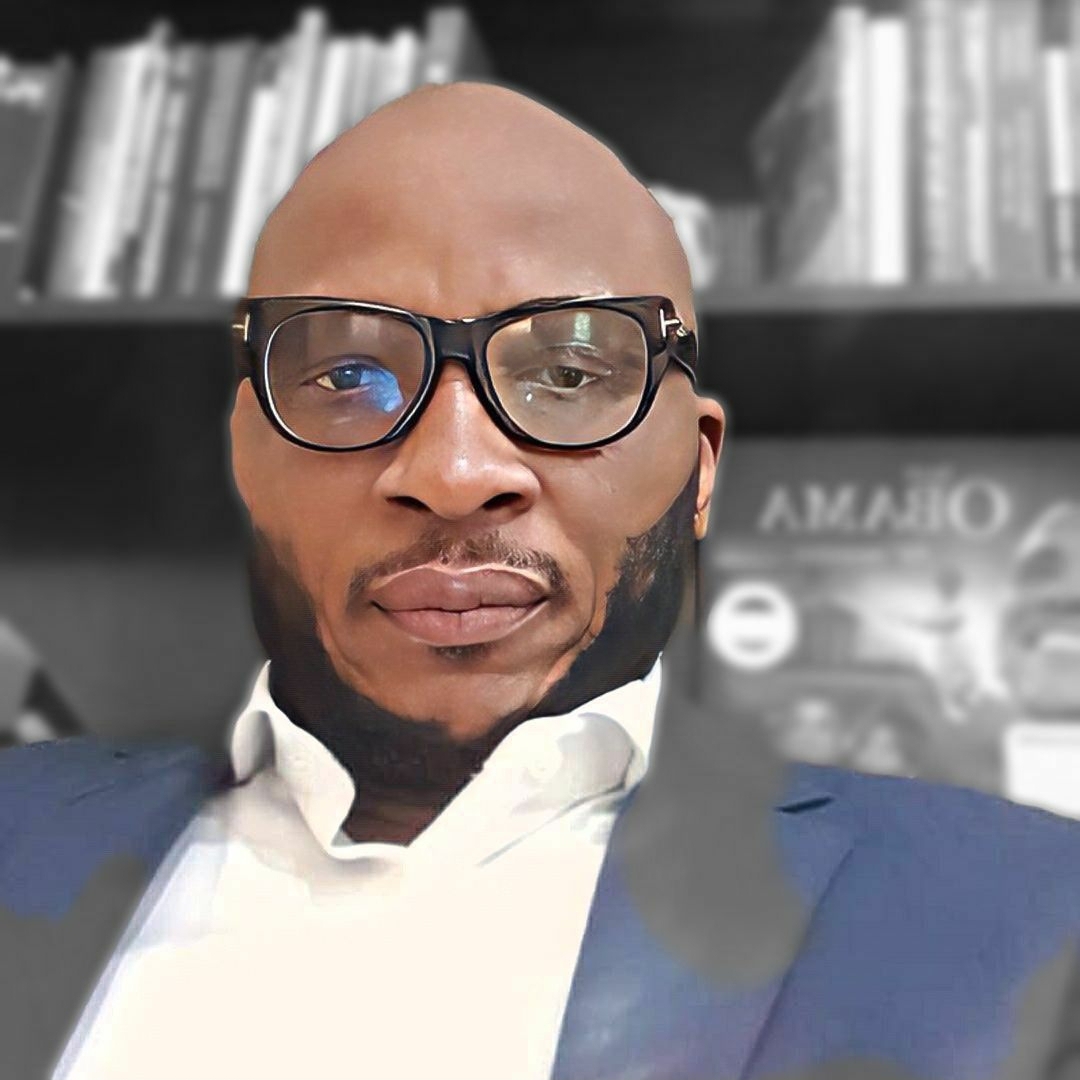
By Emmanuel (Emeka) Orjih
I once asked Ahmed Joda a question I had been turning over for some time. We had just driven twelve hours from Abuja to Gembu in my personal car. Just the two of us. I was driving. Joda sat beside me, as he always chose to. He could have flown to Yola and done a much shorter drive. But he preferred this, every time.
I always kept books in my boot and somewhere on that long road north he started and finished Richard Branson’s Business Stripped Bare, closed it, and asked for another. I parked, stepped out, opened my car boot, took out and handed him The Black Swan by Nassim Nicholas Taleb. He smiled and said I had only given him that because Taleb was a fellow Wharton MBA and I was selling my schoolmate’s work. He finished that one too before we arrived.
For all 12 hours, Gregorian chants played in low volume on my car stereo. A devout senior Muslim. No objection. He hummed along at times, particularly to “Sadeness” by Enigma. No police escorts. No armed guards. No convoy. One of the most powerful men in Nigeria, a fast-driving Christian young man, two books, monks singing in Latin. That was a different Nigeria. A safer Nigeria.
And that was the man called Ahmed Joda.
We were sitting outdoors on the highest inhabited peak of Gembu when I asked my question. Joda had welcomed me the way he always did: with fried beef, a sweeping view down the hills, his grandchildren moving in and out of the bungalow behind us.
Joda was the founding Chairman of the Nigerian Communications Commission (NCC), one of the most respected technocrats in Nigeria’s post-independence history, and one of only three men outside my own father and father-in-law I have ever called “Daddy”.
I asked Joda: if he were to reduce to one reason why the NCC and Nigeria’s telecom revolution wildly succeeded, what would it be?
He said he would do me one better. He would reduce it to one word.
“Obasanjo”
Then he explained. Obasanjo appointed them and gave just one clear instruction: make it work. And he never, for a single day, called either him or Ernest Ndukwe to ask for anything.
That one word, spoken on a hilltop in Taraba by the man who lived it, is the entire story of Nigeria’s telecom revolution. Everything else is detail.
Today, Nigeria is the 7th largest internet nation on earth, the only African country in the global top 10, ahead of Japan, ahead of Mexico, ahead of Pakistan. More than 169 million Nigerians are connected. The sector has attracted $75.6 billion in investment over 24 years and now contributes 19.78% to GDP, overtaking oil at 6.38%. Five of Africa’s seven tech unicorns are Nigerian.
At Flutterwave’s 10th anniversary gala at The Delborough Lagos in February 2026, with Ernest Ndukwe in the room, Flutterwave founder and CEO Olugbenga Agboola told him that the company would not have existed without the telecom reforms of the early 2000s. One of Africa’s most valuable unicorns, tracing its own origin story to the man in whose honour this tribute is written.
Lagos is known globally as Yabacon Valley. And 67.3% of the reduction in youth unemployment in a country of 220 million has come directly from the digital economy.
All of it traces back to one decision. Made by one man. In one room. In Abuja. In January 2001.
Happy 89th birthday, Baba. This one belongs to you.
When Obasanjo came to power in 1999, 34 telecom licences had already been issued, held by well-connected, politically untouchable Nigerians who understood exactly how the game was played. The licences were decorative. Nigeria had fewer than 500,000 working lines for a country of over 100 million people. Nigeria’s teledensity was 0.4% against an African average of 1.98%.
That he had the guts to cancel all 34, and to insist on a transparent auction process that produced the likes of MTN, is revolutionary in the Nigerian space. The Digital Mobile Licensing auction of January 2001 was later described in academic papers as the world’s first ascending clock spectrum auction.
His administration had rejected attempts to sell those licences for $3 million each. OBJ insisted on fair value. The market delivered 95 times that amount. Ninety-five times. A decision. Defended. Against everyone.
That he then picked Ernest Ndukwe and Ahmed Joda to run the NCC and left them to operate without interference is unNigerian. OBJ built a wall around them and told the wolves: you cannot enter here. A Delta State governor demanded personal payments from bidding consortia. An NPA Chair who was a close friend of OBJ physically stormed Aso Villa demanding the auction be cancelled. The pressure was real, documented, and came from close.
It stood. And delivered.
Protecting that appointment for eight consecutive years, from friends, from pressure, from the daily temptation of Nigerian political life, that is nation-building. Joda confirmed it in Gembu in the simplest terms. One instruction: make it work. And for eight years, their phone never rang. While Nigeria’s telephone lines went from 450,000 in 1999 to 169 million today.
I know what happened next not from a distance, but from the inside. Working with MTN, GBF and over 2,000 civil society partners, I led deployment of the first 10,000 phone sharer umbrellas across 2,300 rural communities in 34 states. Women under yellow umbrellas in Sokoto. Yagi antennas in villages in Borno. That grassroots network became the backbone of Nigeria’s mobile money industry.
November 23, 2006. President Obasanjo arrived to open Africa’s first Telecom Museum, which Chessboard, a company owned by my artist sister Chinze and myself, had built. I offered him my Parker Duofold Centennial Limited Edition to sign the register. He took it. Looked at it. Said nothing for a moment. Then reached deep into the folds of his agbada and produced, from somewhere inside that vast fabric, the exact same pen. Parker Duofold Centennial. Limited Edition.
He held it up, looked me in the eye, and said with a chuckle: “You this small boy. You think say na only you get am? I have my own.”
Always prepared. Always one step ahead. In competitive Chess we call this “Prophylaxis”. It is the reason Petrosian and Karpov always won.
History has a precise name for a leader who takes a nation with nothing and through political will alone bets on the right thing, protects it absolutely, and watches it compound into generational transformation.
History’s name for such a leader is Lee Kuan Yew.
Nigeria had its own. In one sector. For eight years. And it changed everything. The greatest Nigerian president. By a considerable distance.
Many happy returns, Baba.
230 million Nigerians see you. 1.4 billion Africans see you. 8 billion earthlings see you.
As to the chickens at Ota Farm? They may not know what a unicorn is. But Yabacon Valley certainly does.
I dobale
Orjih, Founding Director, Centre for AI, Digital Justice & Economic Rights(CADER); President, African Institute of Applied AI (AIAI); and former Senior Technical Adviser, Nigeria’s Federal Minister of Innovation & Technology, writes from Abuja.