



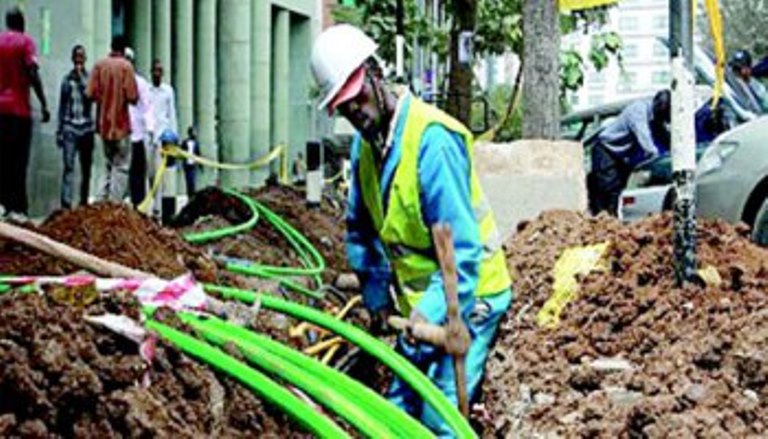
The era of consequence-free damage to Nigeria’s digital backbone has come to an end. The Nigerian Communications Commission (NCC) and the Nigeria Security and Civil Defence Corps (NSCDC) have issued a joint stern warning to construction companies and government contractors: the rising incidents of avoidable fiber-optic cable cuts due to negligence will no longer be excused.
Under the Designation and Protection of Critical National Information Infrastructure (CNII) Order 2024, telecommunication fiber is now officially classified as a critical national asset. This means any unauthorized digging or failure to coordinate with regulators that leads to damage is now a prosecutable criminal offense.

In a joint statement, Mrs. Nnenna Ukoha, Head of the Public Affairs Department at the NCC, and ACC Babawale Afolabi, National Public Relations Officer for the NSCDC, emphasized that these cables do more than just provide internet; they power the nation’s emergency services, financial stability, and government operations.
“Under the CNII Order 2024, telecommunication fibre infrastructure is classified as Critical National Information Infrastructure,” the signees stated. “Consequently, any damage resulting from unauthorized digging, construction activities, or failure to collaborate with relevant authorities to prevent damage during construction constitutes a criminal offence.”
The agencies noted that whether destruction happens through willful sabotage or simple lack of coordination, the result is a direct threat to the digital economy.
The days of viewing fiber cuts as a minor occupational hazard of road construction are over. The NCC and NSCDC warned that individuals or firms responsible for such damage will face the full weight of the law, including sanctions under the Cybercrimes (Prohibition, Prevention, etc.) Act 2015.
“Future damage to fibre optic infrastructure caused by excavation, road construction, or any civil engineering activity conducted without due consultation or collaboration with network operators and relevant regulators will attract strict legal consequences,” Ukoha and Afolabi warned in a categorical statement.
The agencies are urging federal, state, and local government bodies, as well as private developers, to adopt a “safety first” approach to avoid litigation. This approach involves conducting pre-construction verification of fiber routes and collaborating with the NCC, NSCDC, and telecom operators before breaking ground. Furthermore, organizations must report any accidental damage immediately to the authorities to ensure a rapid response. The public is also being drafted into this protective effort by reporting acts of sabotage or accidental damage to the nearest NSCDC office. Reports can also be submitted via email to protect@ncc.gov.ng or by calling the 622 toll-free number.