



By Martin Ekpeke
As global conflicts spill into the digital realm, triggering infrastructure disruptions and internet blackouts, the urgency for local resilience has reached a breaking point, according to the Internet Exchange Point of Nigeria (IXPN).

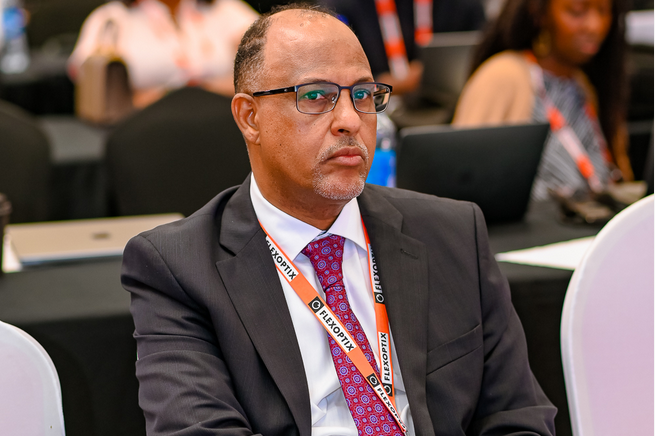
In a post on LinkedIn, Muhammed Rudman, CEO of IXPN, argued that in today’s increasingly volatile digital landscape, the Internet Exchange Point of Nigeria (IXPN) has emerged as a critical anchor for the nation’s connectivity.
He warns that domesticating internet traffic is no longer a technical preference; it is a strategic imperative for national security and business continuity.
According to Rudman, relying heavily on international transit paths leaves Nigeria’s digital economy vulnerable to external shocks when geopolitical tensions or submarine cable cuts occur; networks dependent on overseas routing face total isolation.
“Local traffic exchange is no longer a technical luxury; it is the cornerstone of Nigeria’s digital sovereignty, economic competitiveness, and national security. Maintaining local routing is essential for continuity. If an undersea cable fails, robust local exchange ensures that essential domestic services remain operational,” Rudman stated.
This disaster-proofing ensures that even if Nigeria’s global link is strained, locally-hosted services such as banking apps, government portals, and .ng websites continue to function seamlessly.
Rudman emphasizes that joining the IXPN ecosystem provides five distinct advantages for network operators and enterprises, starting with greater network resilience by allowing networks to bypass international transit vulnerabilities and ensure stability during geopolitical or physical crises. He also notes that domesticating traffic reduces dependence on international transit, which saves the Nigerian economy hundreds of millions of dollars annually in bandwidth costs.
Furthermore, local peering strengthens digital sovereignty by keeping Nigerian data protected under local laws and reducing exposure to foreign surveillance. Additionally, it ensures faster and more secure connectivity as latency drops from 150ms–300ms to a mere 5ms–10ms, a change that is critical for real-time fintech and communication tools. Finally, the platform provides access to a powerful ecosystem where members connect to over 125 networks, including global giants like Google, Microsoft, and Meta, alongside Nigeria’s major telcos such as MTN, Glo, Airtel, and 9mobile.
Under Rudman’s leadership, IXPN has hit significant milestones, recently crossing 2 Terabits per second (Tbps) in peak domestic traffic. This growth marks a shift toward a self-sustaining internet backbone capable of withstanding global pressures.
“A fast, cheap, and reliable internet is the platform upon which new digital businesses are built. He urged both the government and the private sector to recognize internet exchange points as critical national infrastructure, ensuring Nigeria remains the “digital heartbeat of Africa” regardless of global instability,” Rudman added.