



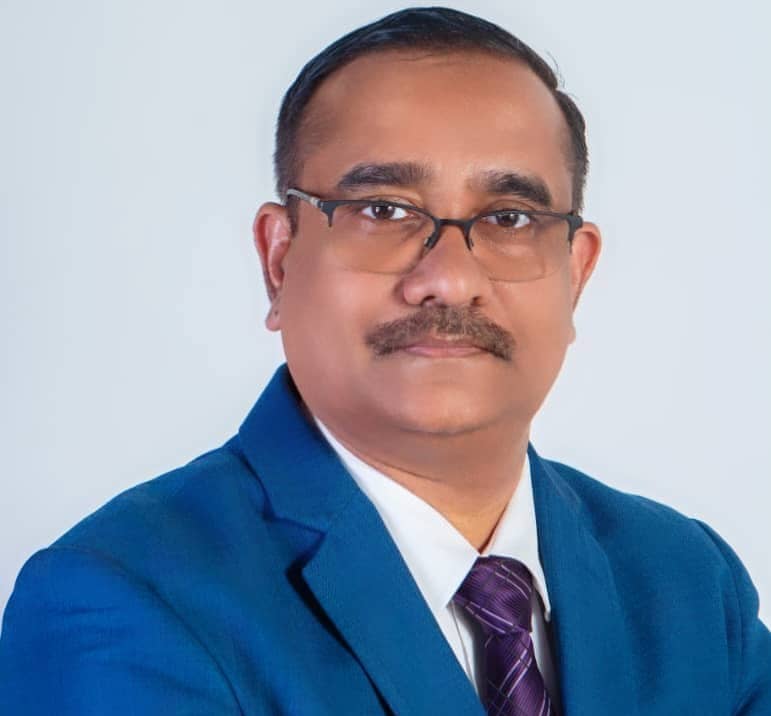
By Dr. Krishnan Ranganath
For decades, Africa has engineered its digital ecosystem, specifically its data centers, with a primary focus on high availability. The continent prioritized redundancy, resiliency, and fault tolerance to ensure that critical services remained online. However, as 2026 unfolds, a brutal reality has emerged from the smoke of global conflicts: the threat is no longer limited to internal system failures or localized power outages. In an era of geopolitical volatility, the new threat is warfare.

The disruptions arising from ongoing conflicts in the Middle East and parts of Europe have changed data center design forever. Drone strikes hitting cloud infrastructure and the targeted sabotage of subsea cables are not isolated incidents; they are signals that digital infrastructure is no longer a passive asset. These facilities have become strategic targets in coordinated infrastructure warfare.
When fiber routes are severed or subsea cables disrupted, the cloud simply vanishes. The ongoing global instability, which many initially hoped would resolve quickly, has instead exposed a hard truth: digital infrastructure is fragile. In these uncertain times, every African nation must ask itself: Where is our data stored, who controls the physical infrastructure, and how resilient are the facilities supporting our national systems?
The Sovereignty Gap: Africa’s 0.6% Reality
Currently, Africa holds a mere 0.6% of global data center capacity. More alarming is the fact that approximately 85% of African data traffic is hosted abroad. We cannot sustain a 21st-century digital economy encompassing financial systems, government services, education, healthcare, and AI models on someone else’s infrastructure. If that external infrastructure is compromised by a foreign war, Africa’s digital heart stops beating.
We are witnessing a convergence of threats where physical and cyber-attacks occur simultaneously. Power grids are targeted and SCADA systems are breached. This shift means we are no longer just designing for availability; we are designing for survivability.
The mission is to build together
The time for Africa to act is now, but we must move with a unified mission. This cannot be viewed as 54 separate struggles. At the very least, the continent’s 20 largest economies must align their frameworks to fast-track the deployment of sovereign assets, sovereign clouds, localized data centers, and hardened networks.
While the “Big Four” South Africa, Kenya, Nigeria, and Egypt lead in sheer numbers, the entire continent must adopt a sovereign compute mindset. This requires establishing multi-region active failover systems that function across African borders. Additionally, nations must implement island-mode microgrids to ensure operations continue even when national power grids fail.
To support this transition, governments should shift away from borrowing solely for debt service. Instead, they should focus on Public-Private Partnership (PPP) models to invest in finished digital products. PPP models can bring global technology to African soil while simultaneously training our workforce. Africa must stop exporting its raw data and begin refining it within its own borders.
Africa possesses a unique advantage: a median age of approximately 19. While we currently lack the full physical infrastructure for high-level AI, we possess immense untapped brainpower. By building our own data centers, we create a laboratory for this young population to lead the world in AI and digital services.
Digital sovereignty is as vital as controlling our ports or our power plants; it is the very foundation of national resilience. We have the opportunity to leapfrog mature markets by building a next-generation infrastructure that isn’t just built for the cloud, but built for the continent.
Africa is no longer an optional backup plan; it is the future of digital resilience. We must build the heartland here, on our own soil.
Dr. Krishnan Ranganath is the CEO of UniCloud Africa and a leading advocate for digital sovereignty and infrastructure development across the continent.