



The Director-General of the National Information Technology Development Agency (NITDA), Kashifu Inuwa, has challenged the global technology community to build an AI future that represents local realities and gives people the power to create value, rather than turning them into passive consumers of technology.
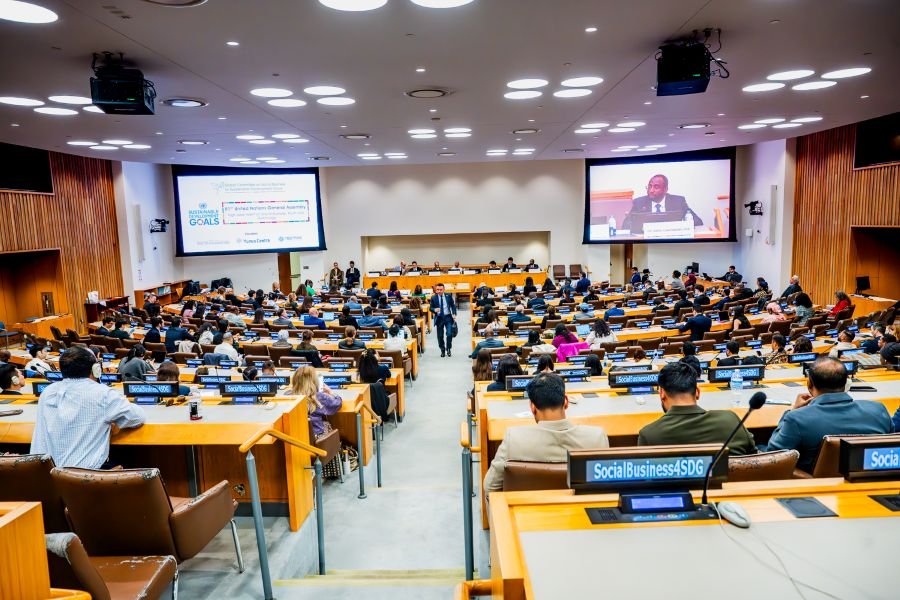
Speaking at a high-level global dialogue at the United Nations General Assembly on technology, innovation and inclusive development, Inuwa said the next phase of AI must move beyond access to focus on representation, agency and digital sovereignty.

“Inclusive AI requires representation and access and access must mean agency, not just consumption.”
His intervention came as global leaders and development experts examined how technology and innovation can accelerate sustainable development.
The gathering featured United Nations General Assembly President Dr. Khalilur Rahman, Timor-Leste President José Ramos-Horta, Bhutanese Prime Minister Tshering Tobgay, Brazil’s State Minister Wellington Dias, Pakistan’s Minister of State Bilal Bin Saqib and Nobel Peace Laureate Professor Muhammad Yunus.
For Inuwa, the AI race is not simply about who develops the most powerful models. It is also about whose data, languages, cultures and values are represented in those systems.
He said Nigeria needs AI capable of understanding its unique context while operating within Nigerian laws and reflecting local realities.
He stressed that digital sovereignty should not mean shutting out global technology companies or investment.
Instead, Nigeria should have the capacity to shape how AI is developed and deployed locally while remaining open to international partnerships.
The NITDA chief illustrated the opportunity with agriculture. A farmer who cannot easily reach an agronomist, he said, could have an AI-powered expert in his pocket to analyse weather and soil conditions, identify crop problems and connect him to markets.
“The promise of AI is not that every Nigerian becomes an AI expert. It is that AI can put expertise within the reach of every Nigerian.”