


By Abigail Mbah
Nigerians are increasingly turning to power bank and portable battery rental services as alternatives to buying generators and solar systems, with startups tapping into the country’s unreliable electricity supply to provide affordable, pay-as-you-go backup power.

From small power banks available for hourly rentals at shopping malls and campuses to larger portable batteries capable of powering lights, fans, televisions and small refrigerators, a growing number of companies are making electricity accessible without the burden of purchasing expensive equipment.
The model allows customers to rent only the power they need, use it and return the equipment, eliminating the high upfront costs associated with owning backup power systems.
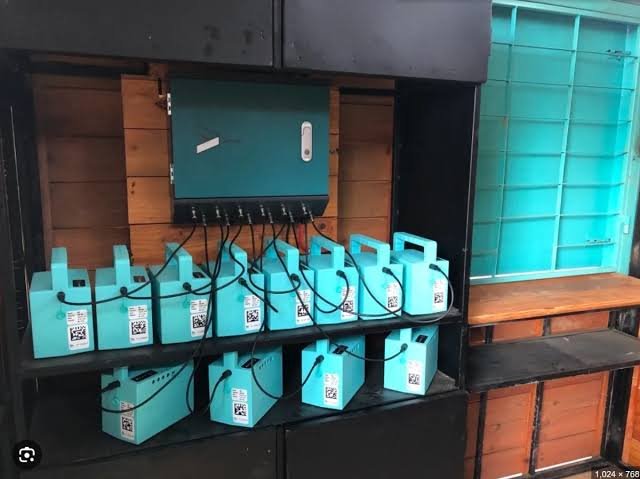
One of the emerging players in the market is bPOWERd, which has established rental hubs at several Mobil filling stations across Lagos. Customers undergo a quick identity verification using their National Identification Number (NIN), pay a refundable deposit and collect a fully charged battery.
Its 300Wh unit rents from ₦1,500 per day, while the larger 1,000Wh version starts at ₦3,000. The company says the batteries can power everyday household devices for several hours at a cost considerably lower than running a petrol generator over the same period.
Another player, MOPO, operates through a network of solar-powered charging hubs managed by local agents. Its services allow customers to rent batteries of different capacities for lighting, phone charging and powering household and small-business appliances. The UK-based company has recorded millions of rentals across its African operations.
Earlier this year, MOPO partnered with Nigeria’s Rural Electrification Agency (REA), committing up to $75 million by 2030 to expand its operations. A pilot phase of a national smart battery rental programme is also expected to commence soon.
Smaller, urban-focused services are equally gaining ground. Companies such as Padiplug and DmplusPower operate automated rental kiosks in high-traffic locations, including shopping centres, universities, National Youth Service Corps (NYSC) camps and transport hubs.
Through mobile applications, customers scan QR codes, make payments based on their preferred rental periods, collect fully charged power banks and return them to designated stations when finished.
The growing popularity of these services reflects Nigeria’s persistent electricity challenges, including inadequate power generation, gas supply constraints, transmission limitations and frequent power outages.
Although households and small businesses continue to depend heavily on petrol generators, rising fuel costs, maintenance expenses and noise pollution have made alternative power solutions increasingly attractive.
However, purchasing a complete solar installation or inverter system remains financially out of reach for many Nigerians. Battery rentals provide an alternative by removing the need for substantial initial investment and the responsibility of maintaining personal equipment.
The services cater to different categories of users. Market traders, barbers, cybercafé operators and households rely on larger portable batteries to sustain essential activities during power outages, while students, young professionals and commuters use smaller power banks to keep their phones and laptops charged.
Some users are also turning the services into small income-generating opportunities by renting batteries or charging devices for neighbours and customers.
Despite the growing interest, the long-term success of the business model will depend on the companies’ ability to maintain adequate battery supplies, expand charging infrastructure, manage equipment returns and keep rental prices affordable as demand increases.
For now, power bank and battery rentals are emerging as a practical alternative for Nigerians seeking reliable, flexible and affordable electricity in a country where the national grid continues to struggle to meet demand.