



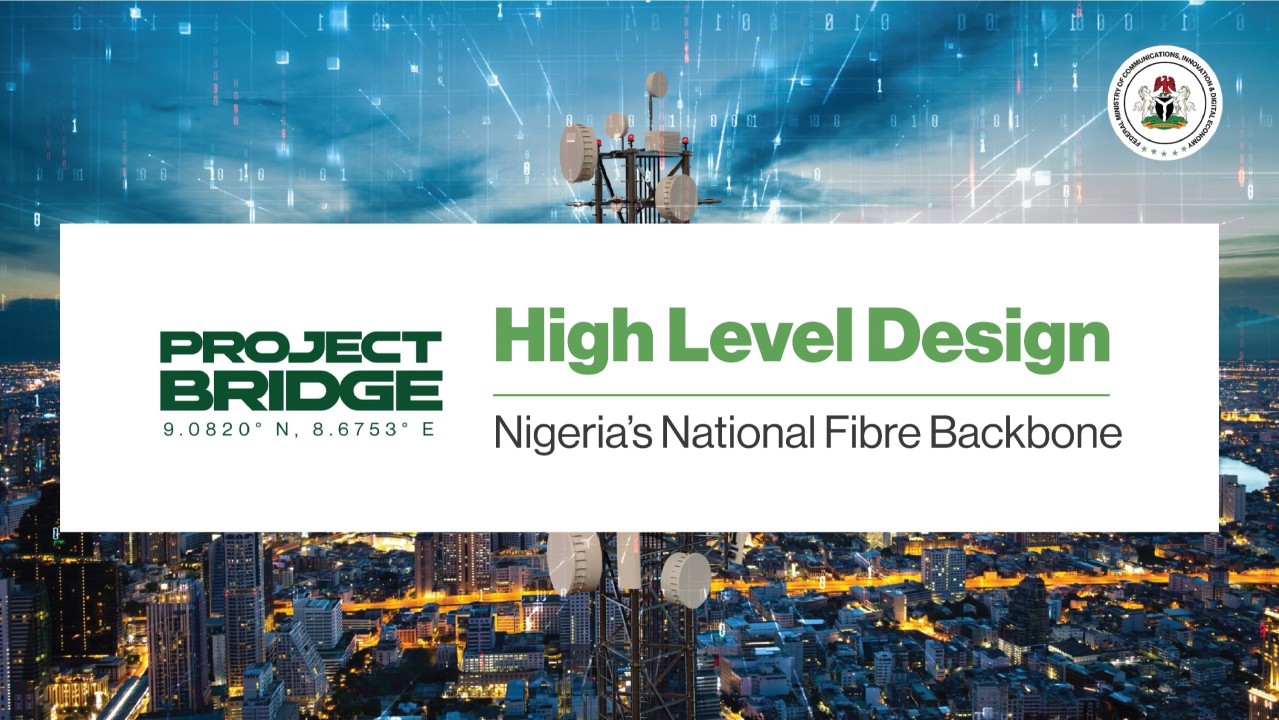
The African Development Bank has approved a $200 million loan to support Nigeria’s flagship digital infrastructure initiative, Project BRIDGE, aimed at expanding broadband access across the country.
The funding forms part of a broader financing package involving multiple development partners, including the World Bank, which has committed $500 million, and the European Bank for Reconstruction and Development, expected to provide $100 million.

Project BRIDGE, also known as the Digital Value Chain Infrastructure for Boosting Employment (D-VIBE) programme, seeks to expand Nigeria’s national fibre backbone from about 30,000 kilometres to 120,000 kilometres. The project is designed to connect all 774 local government areas and strengthen regional links with neighbouring countries, including Benin, Cameroon, Niger, and Chad.
The initiative is structured under a public-private partnership model using a special purpose vehicle to attract private sector investment and accelerate deployment.
According to the AfDB, the project is expected to provide backbone infrastructure for high-speed connectivity nationwide, supporting job creation, digital inclusion, and economic productivity.
Despite the fresh funding, Project BRIDGE remains in a preparatory phase, with the Federal Government allocating about $6.1 million for consultancy services covering transaction advisory, legal compliance, and technical planning.
Officials say the pace of implementation will depend not only on funding availability but also on regulatory alignment, project structuring, and coordination among stakeholders.
Challenges such as high right-of-way costs, fragmented policies, and infrastructure coordination have historically slowed fibre rollout in Nigeria, prompting reliance on development finance institutions to de-risk early stages of the project.
Disbursement of funds is expected to follow a milestone-based model tied to rollout targets, indicating tighter oversight as implementation progresses.
Project BRIDGE is part of Nigeria’s broader digital economy strategy, which prioritises large-scale fibre infrastructure as a foundation for nationwide connectivity and regional integration.