


By Martin Ekpeke
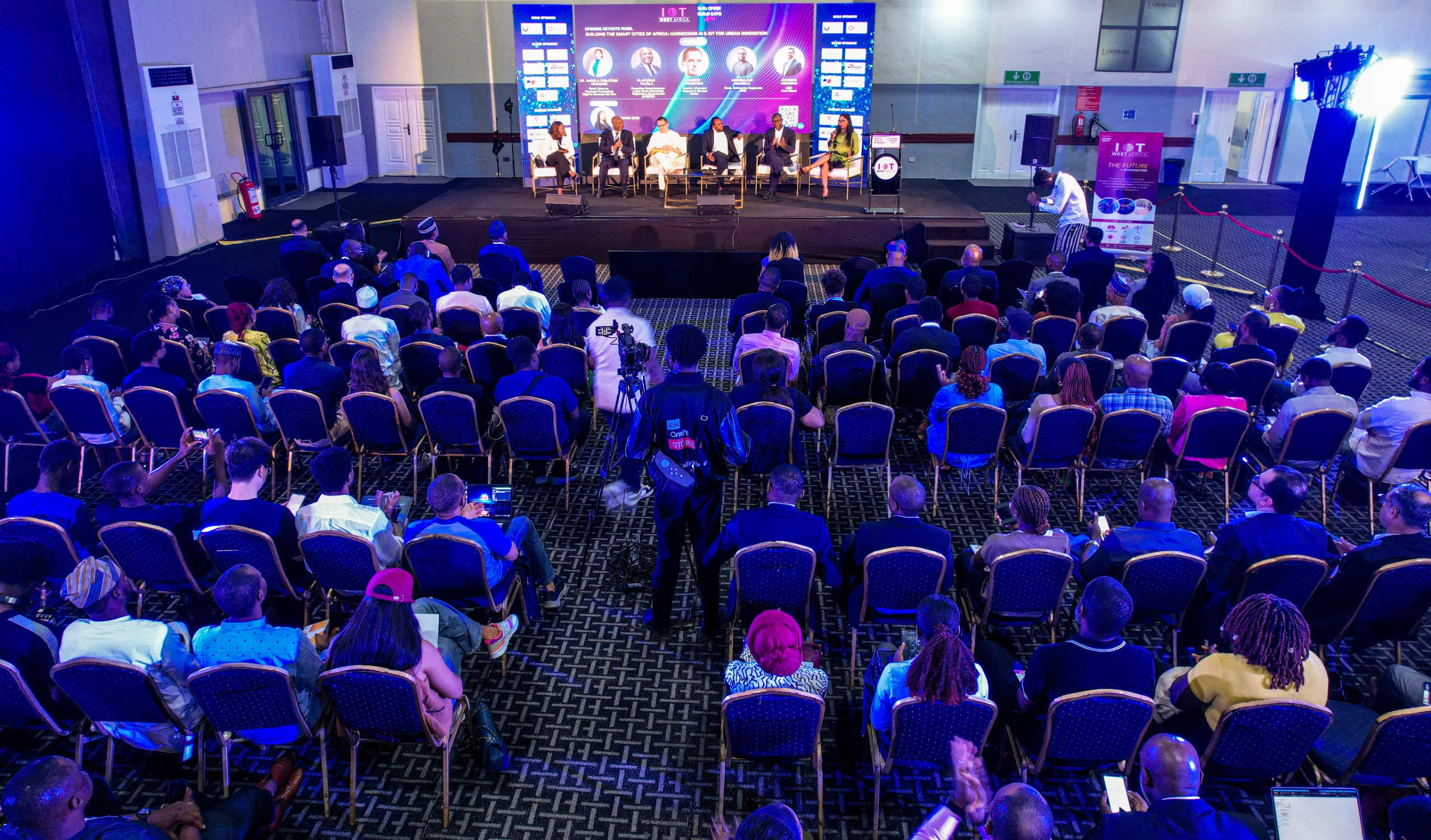
In the bustling halls of the Landmark Centre in Lagos, the air at the ongoing 2026 IoT West Africa Conference and Exhibition, organized by Vertex Next was thick with a paradox: the promise of an AI-driven future versus the grounded reality of a country where 40% of states still lack a single local Internet Service Provider (ISP).
In the last three days, technology titans, C-suite executives, and policymakers gathered to dissect a hard truth: Nigeria is currently building a digital skyscraper on a foundation that is still being laid. While the cognitive infrastructure of tomorrow’s digital twins, AI-driven maintenance and smart cities dominate the boardroom conversation, the backbone infrastructure of today remains the primary bottleneck.
Data is the fuel in the machine
The consensus among experts is clear: you cannot automate what you haven’t organized. Dr. Daniel Adaramola, Executive Director at the Society for AI Advancement, stripped away the jargon to reveal the core requirement of the modern era.
“The essence of AI is data. Without properly structured and accessible data, organisations cannot derive meaningful value from AI systems,” Adaramola told a captive audience.
He warned that many Nigerian firms are eager to leap into Artificial Intelligence without first cleaning their data houses. For AI to work, it requires massive, high-quality datasets. Poor data structures don’t just limit effectiveness; they render expensive tech investments useless. However, data alone isn’t the silver bullet. Adaramola noted that a people-centered approach upskilling the workforce to match the pace of technology is the only way to ensure these systems don’t just sit idle.
Strategy over software
A recurring theme of the summit was the IT Project Trap. Dika Oha, Chief Technology Officer at OmniBiz Africa, challenged the notion that digital transformation is something the IT department does in a vacuum.
“Technology must sit at the heart of strategy, not at the edge of implementation,” Oha argued, stressing that transformation is a business tool meant to solve problems like growth and efficiency. His advice to the C-suite was pragmatic: start small, win incrementally, and scale. Adopting a massive suite of tools without aligning them to specific organizational goals is a recipe for a failed and expensive transformation effort.
The infrastructure bottlenecks
 If data is the fuel and strategy is the engine, then infrastructure is the road. Currently, that road is full of potholes. George Dupien, Sales Director at Exagate and Borreas, pointed out that AI is just an idea without resilient data centers and cooling systems capable of handling unprecedented heat and power demands.
The most jarring statistic of the conference came from Muhammed Rudman, CEO of the Internet Exchange Point of Nigeria (IXPN). He disclosed that nearly 40% of Nigerian states lack local ISPs. “This isn’t just a business problem; it’s a national development crisis,” he said.
The high cost of laying fiber, coupled with security concerns and maintenance fees, has made it nearly impossible for smaller ISPs to survive outside major hubs like Lagos and Abuja. Rudman called for an open-access national fiber infrastructure and praised the government’s Project Bridge as a potential lifeline if implemented effectively.
The urban-rural divide
Debo Dauda, Head of Network at Infratel, brought a dose of reality to the discussion on rural connectivity, arguing that the urban models used in Lagos simply don’t work in the hinterlands.
“Rural connectivity requires a different approach. It is often not commercially viable without policy support,” Dauda said. He advocated for a dig-once policy, where fiber ducts are laid simultaneously with road construction to slash costs and reduce the constant cycle of road excavation.
A future built on partnerships
Despite the challenges, the mood remained optimistic. The conference concluded with a tangible commitment: industry stakeholders pledged to train 1,000 professionals in AI and data infrastructure over the next two years.
Oluwaseun Oluboyo, Chief Technology Architect at ipNX Nigeria, perhaps summed it up best by noting that the very gaps facing the nation are actually opportunities. “No single organisation can independently build all the capabilities required,” he said, calling for a new era of radical collaboration between the private sector and the government.
As the curtains closed on the 5th edition of IoT West Africa, the mandate for Nigeria’s C-suite was clear: To lead the digital charge, they must stop looking at tech as a luxury and start treating infrastructure and data as the essential utilities of the 21st century.
Key Takeaways from IoT West Africa 2026:
- Organizations must prioritize data quality and structure over sheer volume to effectively enable Artificial Intelligence.
- The government and private sector should implement “dig-once” policies and develop open-access fiber networks to strengthen infrastructure.
- Stakeholders have committed to training over 1,000 professionals to bridge the significant human capital and skills gap.
- Business leaders need to align their technology tools with core business challenges rather than simply following industry trends.
- Improving connectivity requires reducing latency by routing internet traffic locally through Internet Exchange Points (IXPs).