



By Martin Ekpeke
The Ministry of Finance Incorporated (MOFI) has unveiled a strategic blueprint to convert idle federal assets into productive digital infrastructure, aiming to directly create jobs, lower internet costs, and bring millions of unserved Nigerians into the formal economy.

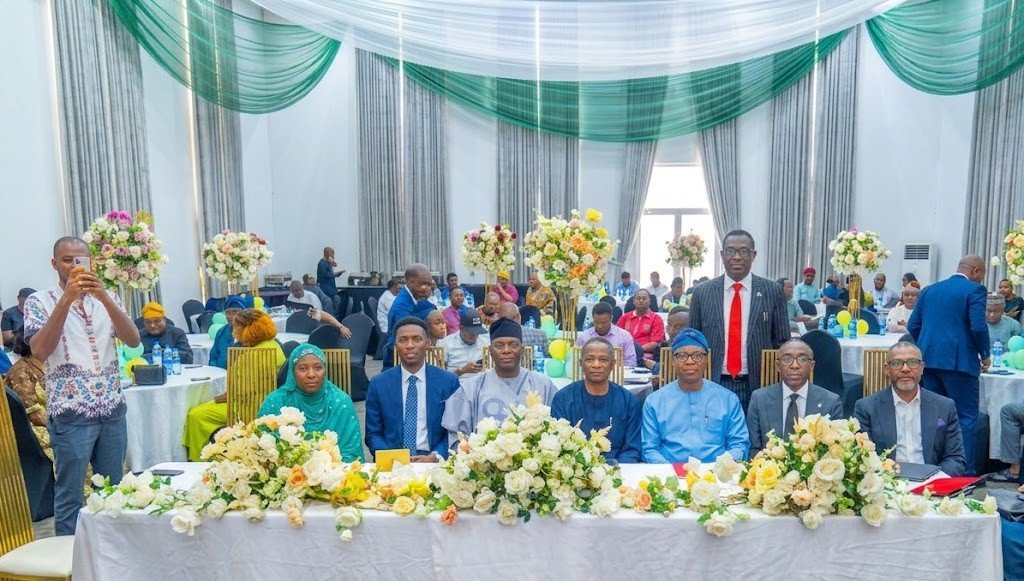
Dr. Armstrong Takang, the Managing Director and Chief Executive Officer of MOFI, presented the plan at the West Africa Convergence Conference (WACC) 2026.
Titled “Mobilising Federal Assets, Capital and Partnerships for Nigeria’s Digital Economy,” the presentation outlined how state-owned commercial assets are being repositioned to support President Bola Ahmed Tinubu’s Renewed Hope Agenda.
By separating the state’s regulatory functions from commercial asset ownership, MOFI is adopting global public wealth management standards to drive national productivity and deliver direct socioeconomic benefits to Nigerian citizens.
Dr. Takang’s presentation highlighted several pillars of progress designed to improve the daily lives and economic opportunities of Nigerians. First, MOFI’s infrastructure mobilization targets closing the digital inclusion gap for roughly 33 million citizens who remain completely offline, opening up access to the digital economy, online education, and remote work opportunities.
Second, the ministry is backing Project BRIDGE under a Public-Private Partnership model to deploy a 90,000 km national fiber backbone, utilizing a $2 billion capital requirement to scale up broadband availability and ultimately drive down data costs for everyday consumers and small businesses.
Third, through Project 774, the government is collaborating with NIGCOMSAT and Galaxy Backbone to deliver reliable internet access to all 774 Local Government Secretariats, ensuring citizens experience faster, more efficient local services and seamless access to public information within their home communities.
Fourth, following the launch of the National AI Strategy, MOFI is focusing its investments on positioning artificial intelligence as a primary engine for job creation, technical skill acquisition, and public service efficiency. Finally, by designating telecom infrastructure as Critical National Assets, the government protects vital equipment from vandalism to ensure more reliable network connections, fewer dropped calls, and less service downtime for citizens.
According to Dr. Takang, Nigeria’s next frontier of economic growth depends on how hard the country’s existing public assets are made to work. Diversification beyond oil relies heavily on tech-driven productivity.
“Nigeria must build an economy that is productive, inclusive, and globally competitive. Digital technology is one of the strongest platforms for delivering that ambition,” Dr. Takang stated.
With technology positioned at the center of national growth, MOFI’s asset mobilization strategy aims to provide the bedrock required to achieve Nigeria’s ambition of a one-trillion-dollar economy, ensuring that national wealth translates directly into shared prosperity for all citizens.