



By Martin Ekpeke
Nigeria’s digital economy is facing an unprecedented connectivity crisis, as rampant vandalism, rapid road construction, and infrastructure degradation triggered over 150,000 fibre-optic cable cuts in just two months.

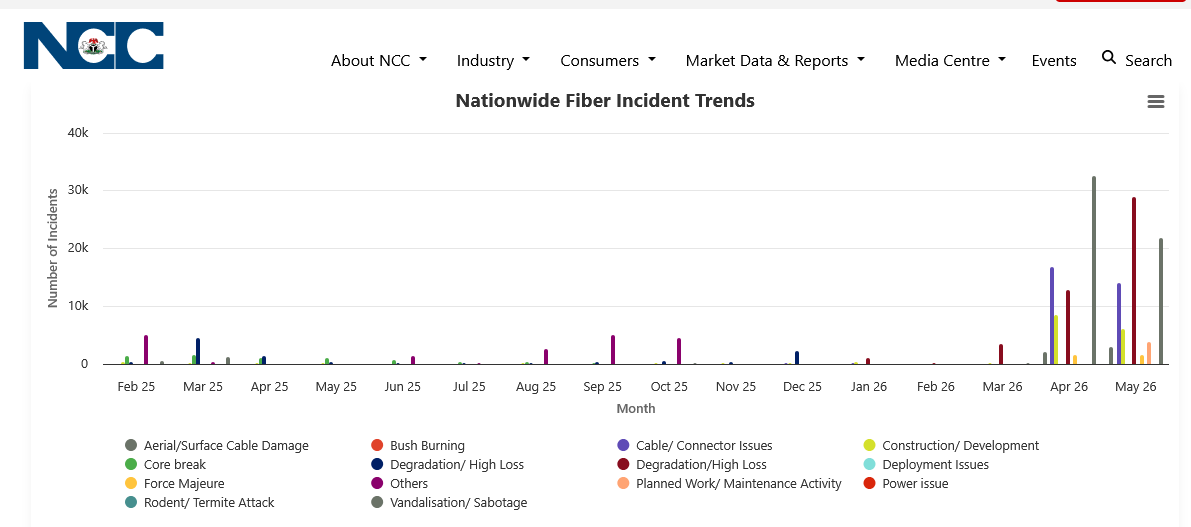
According to the latest Quality of Experience (QoE) update from the Nigerian Communications Commission (NCC), a staggering 155,397 fibre-cut incidents were recorded across April and May 2026, marking the highest level of network disruption in the country’s history.
This dramatic surge represents a catastrophic 2,428% increase compared to the first quarter of the year, plunging telecom operators into a constant battle to maintain baseline uptime.
This is despite the federal government designating telecom equipment as Critical National Information Infrastructure (CNII), which carries a strict prison sentence of up to 10 years for vandals, bad actors, construction crews, and environmental degradation continue to severely undermine Nigeria’s digital sovereignty and daily commerce.
The NCC report paints a grim picture of a digital backbone under constant physical threat, with a monthly breakdown that shows a rapidly worsening situation as incidents climbed from 74,276 cuts in April 2026 to 79,121 cuts in May, representing a 6.5% month-on-month increase.
The data attributes these thousands of cuts to a mix of preventable human activities and environmental challenges, led by over 54,000 cases of deliberate vandalism that remain the top cause of network failure despite strict penalties under the CNII framework.
Infrastructure degradation from aging equipment and general wear-and-tear accounted for the second-largest share, with approximately 40,000 cases. Meanwhile, mid-line hardware failures and technical faults triggered about 30,100 cable and converter issues.
Finally, uncoordinated civil works and heavy machinery from road construction severed buried lines in 14,600 instances, while uncontrollable environmental events, classified as force majeure, caused an additional 3,161 cuts.
Meanwhile, fibre cuts are only half the battle, as telecom operators are also grappling with a spike in equipment theft and physical barriers to critical maintenance sites. Across the two months, operators suffered 675 equipment thefts at base stations, which included the loss of backup batteries, cables, generators, and a massive surge of nearly 300 diesel diversion incidents that starved off-grid towers of power.
Furthermore, engineers were blocked from entering base stations for essential repairs and refueling 4,319 times, with rising nationwide insecurity accounting for 74% of these access denials by making it physically unsafe for maintenance teams to reach compromised sites. The remaining access barriers were triggered by other challenging local factors, including hostility from community groups like “area boys,” ongoing disputes with landlords, and heavy-handed regulatory actions by local governments.
For the average subscriber, these numbers translate directly to dropped calls, failed bank transfers, and crawling internet speeds. In major commercial hubs like Lagos, a single fibre cut can instantly halt digital transactions, paralyze small businesses reliant on POS terminals, and cause millions of Naira in operational downtime.