



By Abigail Mbah
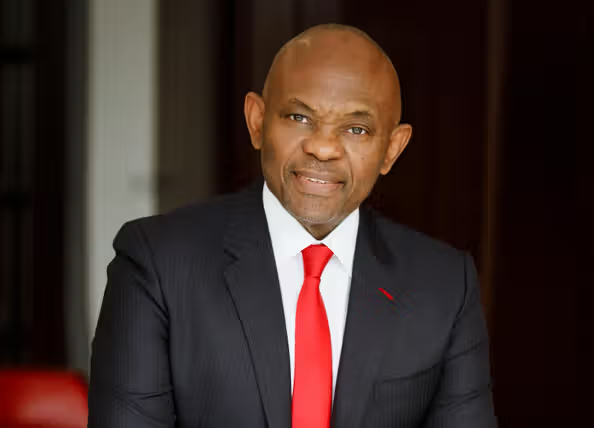
Tony Elumelu has stepped down as Group Chairman of United Bank for Africa after 12 years, effective August 21, 2026.

The move follows Central Bank of Nigeria rules that cap non-executive directors at a maximum 12-year term.
The board has appointed Emmanuel Nnorom, a long-serving non-executive director and chartered accountant with more than 40 years of experience, as his successor.
Under Elumelu’s leadership, UBA transformed into one of Africa’s largest banking groups, operating in 20 African countries and four global financial centres while serving more than 50 million customers. Technology moved from a support function to a core part of the business.
Between 2015 and 2025, total assets rose 1,106 percent to ₦33.17 trillion. Customer deposits climbed 1,051 percent to nearly ₦24 trillion.
Profit after tax grew 578 percent, and e-business income surged 1,213 percent.
The bank expanded its balance sheet more than elevenfold while cutting its workforce by 15 percent, reflecting efficiency gains from digital tools and automation.
Lending did not keep pace. Loans grew 575 percent, slower than deposits, and the loan-to-deposit ratio fell from nearly 50 percent to 29 percent.
Digital banking became a major income stream, but the costs of e-banking and IT infrastructure rose almost as fast, consuming most of the electronic revenue in 2025 and leaving thin margins.
The final year brought challenges. UBA recognised about ₦1.02 trillion in credit losses as it adjusted to stricter regulatory rules on loan provisioning.
The move pushed the non-performing loan ratio above the threshold for a final dividend, leaving shareholders with only the interim payout.
Nigeria’s share of the group’s assets also declined as operations across the rest of Africa grew to become the majority.
Elumelu described his time at the bank as one of the great privileges of his career and expressed confidence in Nnorom’s leadership.
Nnorom said he was conscious of the legacy he inherits and committed to sustaining the bank’s momentum.
Elumelu remains active through Heirs Holdings, Transcorp and his foundation. For UBA, the transition arrives after a decade of rapid digital and geographic expansion.
The next chapter will test how the bank manages the rising costs of technology while converting its large deposit base into steady, well-managed growth.