



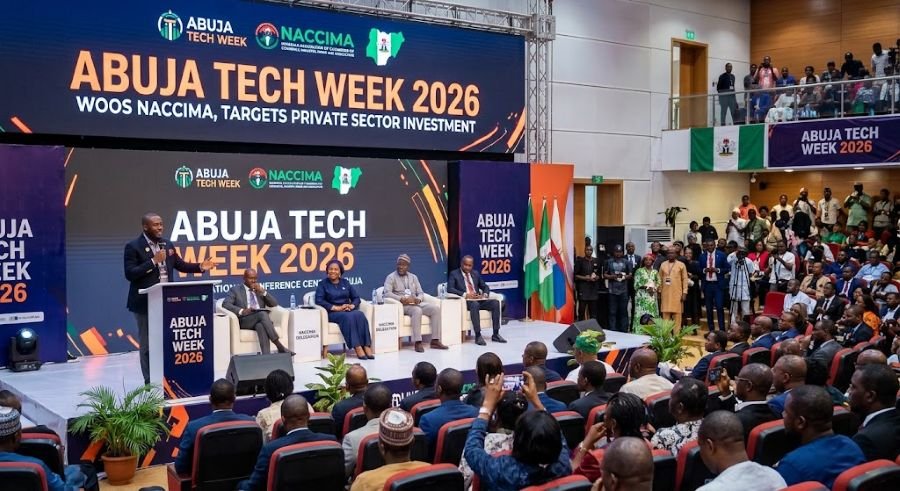
The organisers of Abuja Tech Week 2026 have intensified efforts to attract private sector investment and strengthen business participation in Nigeria’s technology ecosystem following a courtesy visit to the National President of the Nigerian Association of Chambers of Commerce, Industry, Mines and Agriculture (NACCIMA), Engr. Jani Ibrahim.
The Programme Steering Committee, led by Andrew Abu, Local Organising Chairman of Abuja Tech Week, Chairman of the Nigeria Computer Society (NCS) and Founder of Young Innovators of Nigeria (YIN), visited Ibrahim recently, to explore strategic partnerships, investment mobilisation and opportunities to connect technology innovators with businesses across key sectors of the economy.

The engagement strengthened collaboration between Nigeria’s technology ecosystem and organised private sector, with a focus on translating innovation into commercial opportunities, accelerating technology adoption and supporting enterprise growth.
Scheduled for November 24–26, 2026, at the Abuja Velodrome, National Stadium, Abuja, the event will bring together startups, investors, policymakers, technology companies, industry leaders and development institutions to explore how emerging technologies can drive economic growth and transform African cities.
The 2026 edition, themed “Energizing Smart Mobility: Powering Cities of the Future,” will focus on smart mobility, energy, artificial intelligence and digital transformation, while creating opportunities for businesses to identify technology-driven solutions to operational challenges.
NACCIMA’s involvement is significant given its extensive network across commerce, industry, mining and agriculture. Stronger engagement with the association could open doors for technology startups to access new markets, connect with corporate customers and attract investors, while enabling established businesses to identify innovations that improve productivity and competitiveness.
For Nigeria’s technology sector, the partnership offers an opportunity to bridge the gap between innovation and market adoption. Rather than limiting engagement to technology exhibitions and discussions, Abuja Tech Week aims to encourage practical business relationships capable of generating investment, expanding commercial opportunities and creating jobs.
Startups and emerging technology companies are expected to benefit from increased visibility, potential customer relationships and access to business networks. Investors will have opportunities to engage with emerging ventures, while established companies can explore partnerships with innovators to support digital transformation and business expansion.
The initiative also aligns with Nigeria’s broader need to deepen private sector participation in technology development, particularly as businesses increasingly rely on digital solutions to improve efficiency, develop new products and compete in changing markets.
Abu’s leadership of the Steering Committee reflects the organisers’ drive to build institutional partnerships that extend Abuja Tech Week’s impact beyond the event itself. Collaboration with NACCIMA and other industry associations could help ensure that connections made during the gathering translate into technology adoption, investment deals and sustained business relationships.
As preparations advance, the organisers are calling on investors, entrepreneurs, corporate organisations, government agencies and industry associations to participate in Abuja Tech Week 2026 and help strengthen the links between innovation, enterprise and investment in Nigeria.
The success of the event will ultimately depend not only on the technologies showcased but also on its ability to convert partnerships into tangible economic outcomes for Nigerian businesses and the wider digital economy.