



By Martin Ekpeke
The Nigerian Communications Commission (NCC) has sounded the alarm over a resurgence of call masking, warning that the practice is threatening the integrity of Nigeria’s telecommunications networks and depriving legitimate operators of revenue.

The warning was contained in a communique after the NCC’s 110th Board Meeting earlier this month, where the regulator reviewed developments across the country’s telecom industry and raised fresh concerns over renewed call masking activities.
The Board reaffirmed the Commission’s zero-tolerance stance, describing call masking as an unacceptable practice and a serious regulatory concern.
According to the NCC, the practice undermines legitimate telecommunications operations, distorts industry revenues and constitutes economic sabotage capable of adversely affecting the national economy.
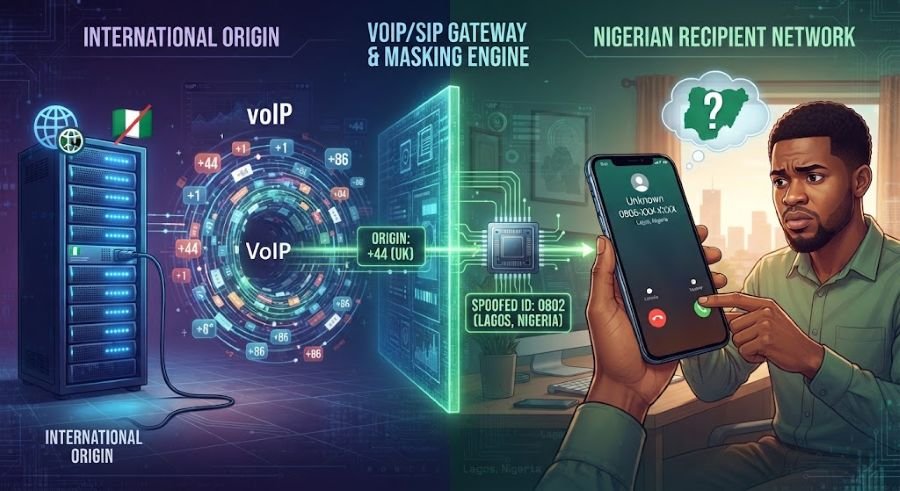
Call masking occurs when the identity of an incoming call is manipulated, allowing an international call to appear to a Nigerian user as a local call. The practice can bypass legitimate international call-termination arrangements and disrupt the revenue structure of telecom operators.
But the threat goes beyond lost revenue. The manipulation of caller identity can make it more difficult to establish the true origin of communications, raising concerns for telecom security, fraud detection and lawful investigations.
According to the communique, the board urged the NCC to work with security and law-enforcement agencies and industry stakeholders to identify, prevent and eliminate the renewed activities.
The crackdown comes as the Commission accelerates the deployment of Telecommunications Identity Risk Management System (TIRMS) aimed at strengthening trust across Nigeria’s telecom ecosystem.
TIRMS, which will be officially available in October 2026 is designed to strengthen governance around mobile identities and reduce risks associated with the misuse, reassignment and recycling of telephone numbers.
Meanwhile, the NCC has explained that the renewed call masking challenge is particularly significant as mobile numbers become increasingly connected to bank accounts, digital identities, social platforms and other critical digital services.
For the NCC, the latest resurgence presents both a regulatory and technology test: detecting how masked traffic is entering the country, identifying the infrastructure facilitating it and shutting down the loopholes being exploited.