



By Martin Ekpeke
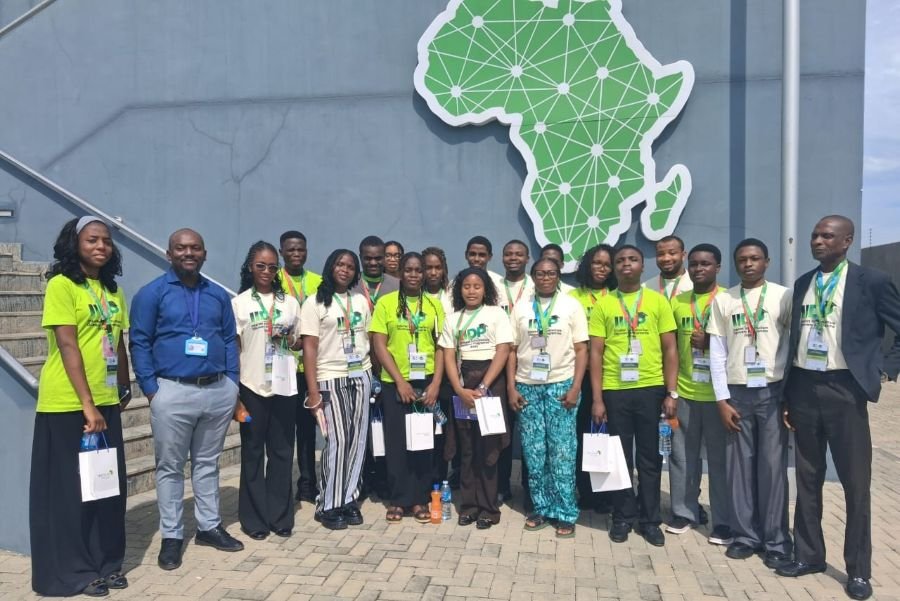
The Internet Exchange Point of Nigeria (IXPN) has sponsored students of Trinity University, Lagos, on a practical site visit to Open Access Data Centre (OADC), as part of activities marking its 20th anniversary.

The initiative exposed students of the university’s Computer and Information Science Department to the workings of a modern data centre, giving them an opportunity to connect classroom theories with real-world digital infrastructure.
During the visit, students were taken through various aspects of data centre operations, including data racks, cabling, network infrastructure and the systems required to ensure the reliable operation of critical digital facilities.
Speaking during the engagement, Head of Converged Digital Infrastructure at OADC, Obinna Adumike, commended the students for the quality of their questions and their level of engagement.
Adumike described the questions as some of the best he had encountered from students during his years in the industry, urging them to continue developing their professional and technical skills.
“I was really impressed with the questions you asked and, more importantly, with the answers you provided. They were some of the best questions I have received in the couple of years I have been here,” he said.
He encouraged the students to look beyond academic qualifications and develop practical competence that could position them for careers in data centres and the broader digital infrastructure industry.
According to him, while a university degree is important because it opens the door to employment, professional skills and the ability to demonstrate competence are what enable graduates to remain and progress in their chosen careers.
“Your degree, when you graduate and get your certificate, opens doors for you, but it doesn’t keep you in that door. Without it, you are not even starting. It is an extremely important document. But when you walk through that door, what keeps you there is your ability to prove yourself,” he said.
Adumike also highlighted the need for greater exposure of students to technology careers, noting that the academic system does not always provide young people with a clear picture of the opportunities available after graduation.
He recalled that when he studied computer engineering, the potential career opportunities in computing were not widely understood, noting that his father had once suggested that he use his computer skills to run a business centre.
“I did not spend five years studying computer engineering to run a business centre with photocopiers,” he recalled.
He said the technology industry had evolved significantly since then, creating specialised careers in areas such as data centre operations, network engineering and other fields supporting the digital economy.
Adumike urged the students to take advantage of opportunities that expose them to real-world infrastructure and help them understand the practical application of their academic knowledge.
For the university, the experience was an important bridge between theory and practice.
A lecturer in the Department of Computer and Information Science, Trinity University, Olapade Ogunfeyimi, described the visit as an “awesome” experience, saying it had given students a practical understanding of concepts that were previously abstract.
“Basically, what we teach the students in class can sometimes seem abstract. But what IXPN has done is to bring those concepts to life and give the students immediate practical understanding of what we teach,” he said.
Ogunfeyimi expressed appreciation to IXPN for the initiative and said the university was interested in sustaining the partnership, particularly by creating opportunities for students undergoing the Students Industrial Work Experience Scheme (SIWES) to gain further exposure to IXPN and data centre operations.
Also speaking, President of the Computer and Information Science Department at Trinity University, Nnedinma Konkwo, described the visit to OADC as insightful, saying it connected academic knowledge with actual industrial practice.
She said the students were able to see for themselves the physical infrastructure behind concepts they had previously encountered only in the classroom.
“The experience was insightful because it brought our academic classroom knowledge into the physical industrial environment. We were able to see the machines and infrastructure in real life,” Konkwo said.
She particularly highlighted the detailed explanations of data racks, cables and network equipment, saying the experience would help students apply their knowledge more effectively in their future careers.
Konkwo also said the visit had broadened her understanding of possible career paths in the technology industry, particularly network engineering.
The IXPN initiative forms part of activities marking its 20 years of supporting Internet interconnection and the development of Nigeria’s digital ecosystem.
By taking university students into operational digital infrastructure facilities, the programme also underscores the importance of developing the next generation of technical talent needed to support Nigeria’s expanding Internet, data centre and digital economy infrastructure.