



By Abigail Mbah
Electric mobility company Spiro is targeting 100,000 battery-swapping electric motorcycles on Nigerian roads within the next two to three years, as it accelerates expansion, scales local assembly and extends its energy infrastructure to more states.

The company also plans to sell 50,000 motorcycles by 2027 as it seeks to deepen the adoption of electric mobility among commercial riders and reduce dependence on petrol-powered motorcycles.
The expansion plans were unveiled at Spiro’s Media Connect event in Lagos, where Nigeria Managing Director and Country Head, Prasad Sane, and Head of Energy and Operations, Edward Amanambu, outlined the company’s growth strategy.
Spiro currently operates in Lagos, Ogun, Oyo and Benue states, with plans to enter Kano, Kaduna and Abuja in 2027. Further expansion into other states is expected as the company grows its operations and battery-swapping network.
A key component of the strategy is increasing local production capacity to meet rising demand and strengthen Nigeria’s electric mobility ecosystem.
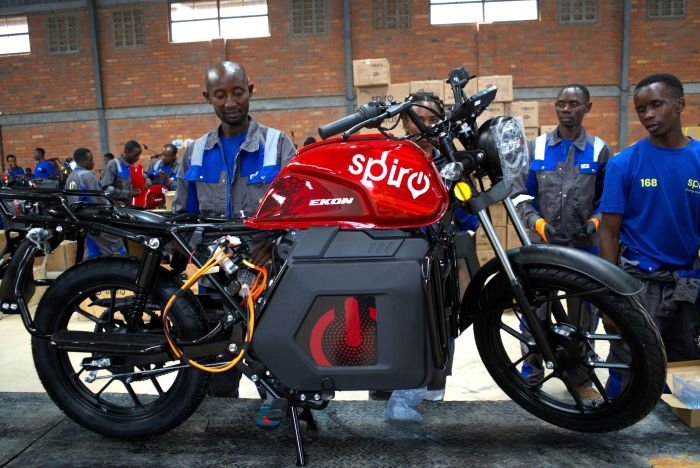
Spiro currently assembles its motorcycles at a facility in Sagamu, Ogun State, with an annual production capacity of about 30,000 units. The company plans to relocate to a larger facility and increase capacity to 200,000 motorcycles annually.
According to the company, the expansion would support higher production volumes, create more employment opportunities and reduce reliance on imported motorcycles. Spiro currently employs about 450 people in Nigeria.
Spiro’s business model is built around battery swapping, which allows riders to replace depleted batteries with fully charged ones at designated stations instead of waiting for their motorcycles to recharge.
The process takes approximately two minutes, helping commercial riders minimise downtime and spend more time on the road.
Since launching in Nigeria in 2024, the company has recorded about 84,000 battery swaps and established a network of more than 100 stations.
Spiro plans to add eight stations by the end of 2026, including larger facilities known as mega-stations, designed to accommodate dozens of batteries at a time. Planned locations include Ijebu, Sagamu and Ibadan.
The company is targeting more than 200 energy stations nationwide by 2028, a move expected to improve battery availability and support its planned entry into additional markets.
Spiro is positioning its electric motorcycles as a lower-cost alternative to petrol-powered bikes, particularly for commercial riders whose earnings depend on daily vehicle utilisation.
Company officials said the electric motorcycles could reduce operating costs by about 40 per cent compared with petrol models when purchase, maintenance and energy expenses are considered.
Battery-swapping charges are based on energy consumption, with a full battery swap currently costing ₦1,600, according to the company.
Beyond expanding its energy network, Spiro is strengthening its after-sales support through additional service centres. It is also exploring a dealership model that would cover motorcycle sales, repairs and spare-parts availability.
The expansion of these services is expected to support customer acquisition and retention as the company moves into new markets.
Spiro is also considering local assembly of three-wheelers and other commercial vehicles as part of its longer-term plans to broaden its electric mobility portfolio.
However, the company’s immediate priority remains scaling its two-wheeler business, expanding battery-swapping infrastructure and making electric motorcycles more accessible to everyday riders.
The planned increase in local assembly capacity, combined with wider geographic coverage and additional energy stations, will be central to Spiro’s ambition to establish a larger presence in Nigeria’s emerging electric mobility market.