


By Martin Ekpeke
In the high-stakes theater of global geopolitics, power is no longer measured solely by borders or battalions, but by bits and bytes. As Nigeria accelerates its digital transformation, the federal government has identified a critical vulnerability: the oxygen of the modern economy, cloud computing, is largely hosted on foreign soil.

Thus, the Nigeria Sovereign Cloud Strategy, a national roadmap that represents a bold pivot in national policy and seeks to transition the nation from a passive consumer of offshore technology to the primary architect of its own digital destiny. By localizing data residency and computational power, Nigeria isn’t just securing its data; it is claiming its digital self-determination.
At the heart of this movement is Mal. Kashifu Inuwa, the Director General of the National Information Technology Development Agency (NITDA). For Inuwa, the cloud is not merely a technical utility; it is a strategic necessity for national survival.
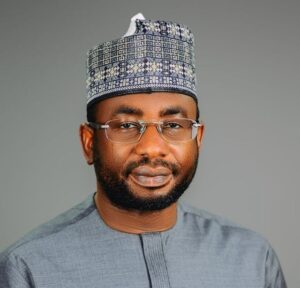
“In today’s reality, digital is no longer optional; it is a way of life,” Inuwa stated during a recent strategic session, insisting that the cloud is the oxygen that sustains that life, and the question that should be asked is: who controls that oxygen?”
Inuwa argues that the current reliance on foreign-owned hyperscalers creates a sovereignty gap that exposes Nigeria to external policy shifts and security risks. To bridge this gap, NITDA recently partnered with the International Data Center Authority (IDCA) to launch the Nigeria Digital Triangle (NDT), a network of AI-enabled, hyperscale data centers designed to host sovereign cloud services locally.
“We are generating data, but we are not in control of how and where that data is stored, processed or monetized,” Inuwa insists, adding that Nigeria would want to keep the intelligence in the country.
While the government sets the policy, the private sector is building the physical bridges required to make digital sovereignty a reality. Leading this charge is Dr. Krishnan Ranganath, CEO of UniCloud Africa.
Under his leadership, UniCloud Africa has championed the “One Cloud, One Africa” vision, recently partnering with Open Access Data Centres (OADC) to deploy enterprise-grade sovereign cloud and GPU-as-a-Service infrastructure within Nigeria.
“Our mission is to provide the definitive foundation for Africa’s digital and economic independence. By hosting our sovereign infrastructure within world-class, carrier-neutral facilities in Nigeria, we are ensuring that African data remains on African soil,” Dr. Ranganath explains.
Dr. Ranganath believes the benefits of a sovereign cloud extend far beyond security because it is an economic game-changer that addresses long-standing data colonialism in Africa.
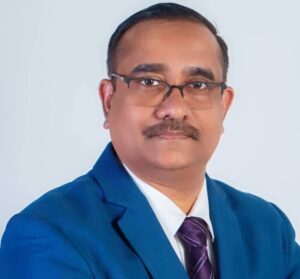
According to him, sovereign providers eliminate the forex volatility that makes global cloud services expensive by offering local currency billing. “Keeping data local reduces travel distance and results in faster speeds for fintech, healthcare, and government applications,” he said.
Additionally, indigenous clouds promote economic inclusion by providing a platform for local startups to scale without the crippling egress fees often charged by global giants.
The Nigerian Sovereign Cloud strategy is not about isolationism; it is about strategic autonomy. Mal. Kashifu Inuwa is quick to clarify that global hyperscalers are still welcome, but on terms that benefit the Nigerian people.
“We are not saying we are banning hyperscalers. We want them to come, work with local partners, create value in Africa, and let us capture that value here,” Inuwa added.
As the year progresses, the focus has shifted to the National Cloud Policy, which aims to migrate a significant portion of federal public institutions to local cloud environments. With the recent deployment of over 730 5G sites and the emergence of “The Digital Triangle,” the infrastructure is finally catching up to the ambition.
In the words of Dr. Ranganath, the goal is clear: “We are redefining the digital frontier. Fully localized cloud infrastructure is critical for economic growth and Africa’s digital future.”
Nigeria’s digital revolution is no longer just about getting online; it’s about owning the ground upon which that digital world is built. For a nation of over 200 million people, the message is loud and clear: the oxygen of the future will be home-grown.