


By Martin Ekpeke
In a major move to protect the backbone of the global digital economy, the International Telecommunication Union (ITU) has adopted a new suite of recommendations designed to shield submarine cables from disruption.
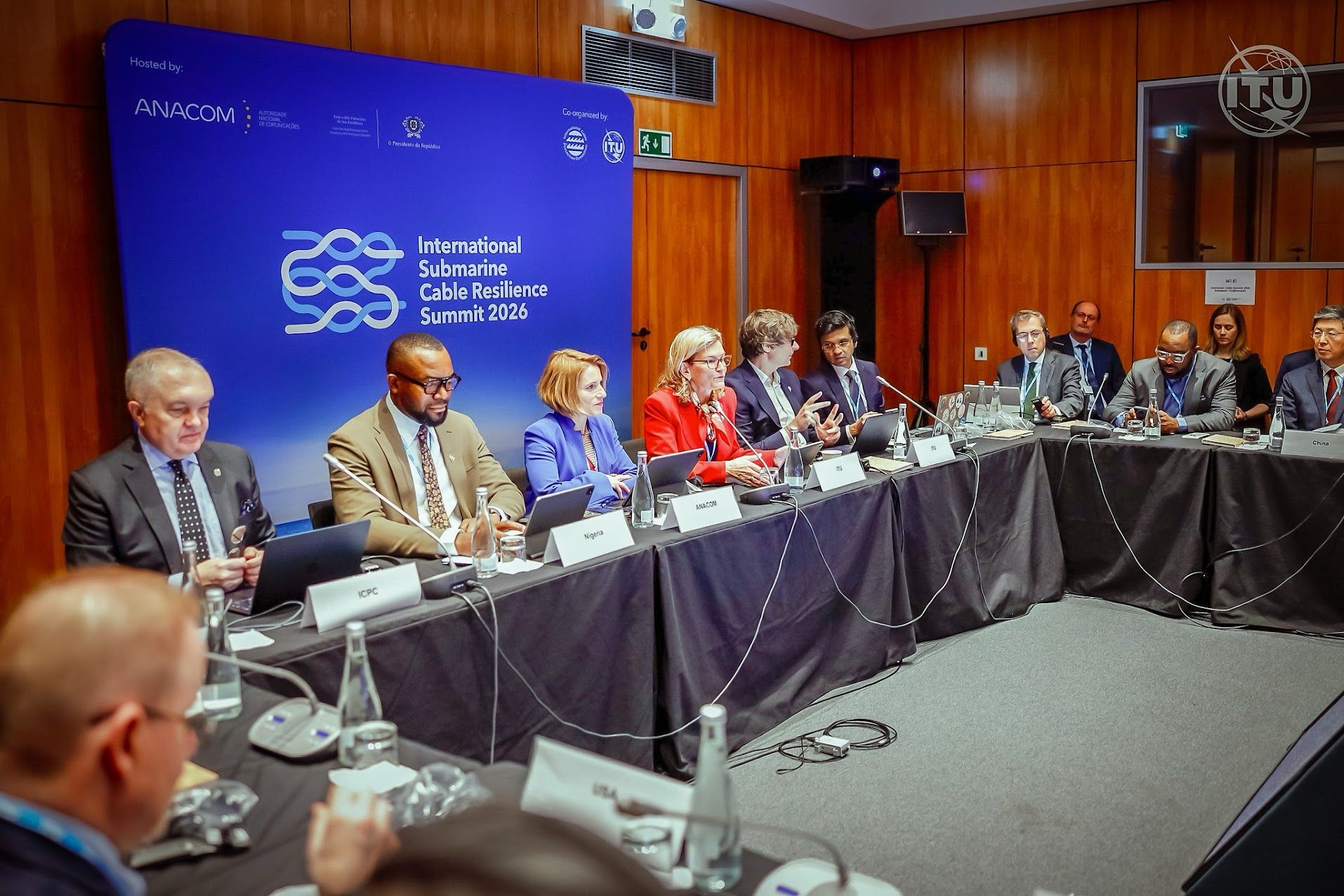
The agreement was reached during the 2nd physical meeting of the International Advisory Body (IAB) on Submarine Cable Resilience, co-chaired by Nigeria’s Minister of Communications, Innovation and Digital Economy, Dr. Bosun Tijani, and Prof. Sandra Maximiano, Chairwoman of Portugal’s ANACOM.
With submarine cables carrying over 99% of global internet data, the Porto summit underscored that these undersea lines are no longer just technical assets but critical strategic infrastructure.
“As more sectors of global economies move online, our collective responsibility is to ensure this infrastructure is resilient, secure, and future-facing,” Minister Tijani stated following the high-level talks.
The IAB Working Groups presented a comprehensive framework aimed at reducing regional connectivity blackouts. While the full technical details remain a matter of international policy coordination, the adopted recommendations focus on three core pillars:
The meeting comes at a pivotal time for global connectivity. Recent disruptions have highlighted the fragility of subsea networks, which are often vulnerable to accidental ship anchor drags, environmental shifts, and geopolitical tensions.
The new recommendations are intended to serve as a global roadmap, providing nations with the “best practices” needed to safeguard the continuity of digital services.
“The recommendations provide a practical roadmap to reduce disruptions and safeguard the continuity of global digital connectivity across regions,” Tijani added, praising the commitment of the IAB members and the leadership of ITU Secretary-General Doreen Bogdan-Martin.
The summit concluded with a “Call to Action” led by Minister Tijani, urging member states to integrate these recommendations into national legislation. The IAB will continue to navigate the implementation phase, focusing on fostering investment in underserved regions to ensure that global connectivity is not only fast but redundant and resilient.