


By Martin Ekpeke
The International Advisory Body for Submarine Cable Resilience (IAB) has established three specialized Working Groups to address critical vulnerabilities in global connectivity, in what many industry watchers describe as a major global effort to safeguard the subsea infrastructure powering the internet.

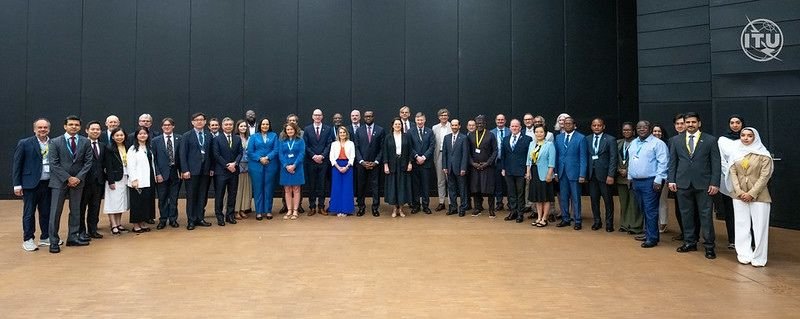
The initiative brings together an elite cohort of 175 experts drawn from the public and private sectors, including governments, regulators, industry leaders, academia, and international organizations, to identify challenges, review existing practices, and propose actionable solutions.
The development comes as a direct evolution of global conversations catalyzed by Nigeria’s Minister of Communications, Innovation and Digital Economy, Dr. Bosun Tijani, following the devastating submarine cable cuts that disrupted parts of Africa in March 2024.
The newly formed groups are structured to address distinct dimensions of subsea cable infrastructure.
Working group one focuses on timely deployment and repair by examining the regulatory delays, complex permitting procedures, and logistical constraints that stretch deployment timelines. The group highlights that rapid repair operations depend heavily on vessel availability, bureaucratic approvals, and swift stakeholder coordination, with Mr. Zhiguo Zhao of China’s Ministry of Industry and Information Technology and Mr. Kevin Adams of the United Kingdom’s Department of Science, Innovation and Technology serving as co-facilitators.
Working group two addresses risk identification, monitoring, and mitigation by focusing on physical and operational threats to submarine infrastructure. This group tackles risks such as commercial fishing activities, ship anchoring, natural hazards like earthquakes and landslides, alongside emerging climate change threats and maritime congestion, under the leadership of co-facilitators Ms. Nonkqubela Thathakahle Jordan-Dyani of South Africa’s Department of Communications and Digital Technologies and Mr. Andy Palmer-Felgate of the North American Submarine Cable Association.
Working group three targets fostering connectivity and geographic diversity by focusing on the investment, policy, and economic challenges of data routing. The group addresses how global traffic is currently concentrated along a limited number of cable routes and geographic chokepoints, which creates critical systemic vulnerabilities when disruptions occur, and is co-facilitated by Mr. Rodney Taylor of the Caribbean Telecommunications Union and Mr. Sangbu Kim of the World Bank.
Reacting to the conclusion of the IAB’s mandate in Geneva, Dr. Bosun Tijani, expressed profound satisfaction with how a localized crisis transformed into an unprecedented global coalition.
Writing on his official LinkedIn page, Dr. Tijani recalled the origin of the initiative:
“Following my search for solutions after the Submarine cable cuts in March 2024, what began as a conversation has evolved into one of the most significant global collaborations on the future resilience of the infrastructure that powers our digital world.”
Tijani tracked the timeline of the global collaborative effort, acknowledging the international partnership required to reach this stage:
“From the initial discussions with International Telecommunication Union (ITU) Deputy Secretary-General Tomas Lamanauskas in 2024, to the inauguration of the International Advisory Body on Submarine Cable Resilience, through landmark summits in Abuja and Porto, and now the conclusion of our mandate in Geneva this week, this has been a journey defined by cooperation, expertise and shared purpose.”
He emphasized that the 175-expert-strong body tackled a fundamental issue facing modern digital economies:
“Over the course of this work, the International Advisory Body and its three specialised Working Groups brought together governments, regulators, industry leaders, technical experts, international organisations, and the broader submarine cable community to address a challenge that affects every connected economy: how we strengthen the resilience of the global subsea infrastructure on which billions of people depend.”
With the working groups wrapping up their immediate mandates, the focus officially shifts toward implementing the practical recommendations designed to help nations better prepare for, respond to, and recover from inevitable subsea disruptions.
Dr. Tijani pointed out that the success of the commission will ultimately be judged by its real-world impact on the digital economy:
“The true measure of this initiative will not be the meetings we convened or the reports we produced, but the extent to which these recommendations help reduce disruption, improve coordination, and strengthen the resilience of the networks that underpin the global digital economy,” he added.
Expressing gratitude to his Co-Chair, Professor Sandra Maximiano of ANACOM Portugal, alongside the ITU team and the International Cable Protection Committee (ICPC), Tijani concluded with a reminder that protecting digital borders is a continuous mission:
“The mandate of the International Advisory Body may be concluding, but the work of building a more resilient and secure global digital infrastructure continues.”