


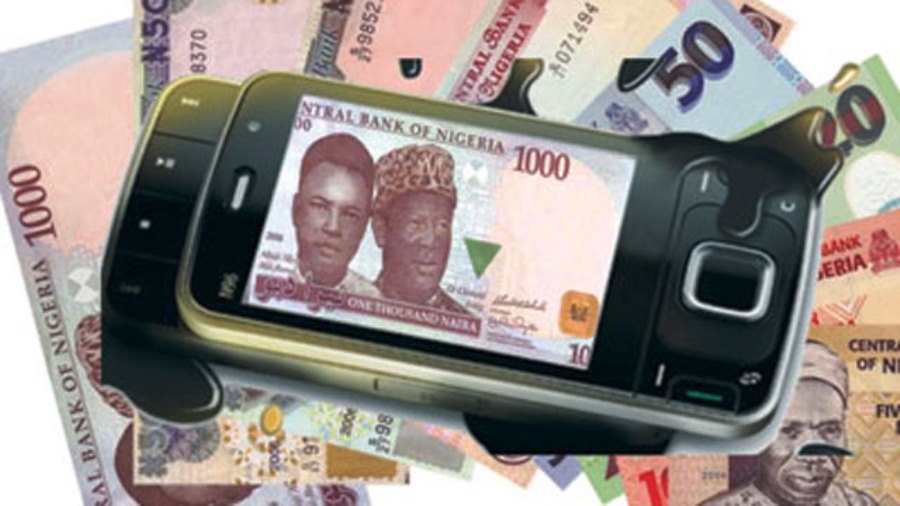
Nigerians love cash. Despite the best efforts of the Central Bank of Nigeria (CBN), the bulk of transactions in Nigeria are still cash-driven. It is not surprising. Cash embodies power, it breeds a sense of security and many swear it has aphrodisiac properties.
It is all too convenient to talk of electronic payment but when push comes to shove – cash is king. Ask any businessman.
Of course, the slow adoption of electronic payment has been blamed on a lot of things. Experts talk of poor awareness of digital and e-payment solutions, lack of trust, widespread illiteracy, and the largely mediocre banking culture.
While talks of financial inclusion have become rampant in recent years, progress has noticeably been slow. When the Nigerian government launched the National Financial Inclusion Strategy in 2012, the objective was to reduce the financially excluded to 20 percent by 2020.
Today, the country is still a long way off the set objective. Studies show that only about one in five adults and 38 percent of households report having a formal bank account.
According to the World Bank, “Financial inclusion means that individuals and businesses have access to useful and affordable financial products and services that meet their needs – transactions, payments, savings, credit and insurance – delivered in a responsible and sustainable way.”
The understanding is that access to financial products and services may well be the first step towards broader financial inclusion. For most people, to be able to save money and send and receive payments would mark unprecedented progress.
Technology has proven a real alley in this effort. Today, in the quest to boost financial inclusion technology is being employed in different ways and across a myriad of platforms.
This COVID-19 driven lockdown provided me an opportunity to assess what is working. From a precursory study, agent banking is emerging an unlikely winner.
“Agent banking,” as explained by the CBN, “is the provision of financial services to customers by a third party (agent) on behalf of a licensed deposit-taking financial institution and/or mobile money operator (principal).”
In practice, agent banking is essentially a type of branchless banking. It, more than anything else, demonstrates that with the most basic technology any merchant shop can be transformed into a mini-bank (I do not know if mini-bank is a real word). Today, agent banking is proving an effective way to improve financial inclusion.
It would appear that the lockdown has reinforced the position of agent banking as an important and maybe even indispensable part of the financial service ecosystem.
It is no surprise that agents are becoming the channel of choice for many; they are close, convenient and cost-effective.
The number one proof of the growing acceptance of the agent banking model, particularly during the lockdown is the queue of people waiting to either collect cash or transfer funds.
The biggest beneficiaries appear to be agents with stores that sell provisions and packed drinks. They always have the cash to transfer. But when people need large sums the filling stations are the undisputed champions. I’ve seen people collect as much as N100, 000 at one time from one filling station.
So, in the lockdown, when one would expect e-payment to gain some foothold, cash still reigns. I don’t have the figures, perhaps when all this is over the CBN would make them available. For now, as far as it is obvious from close observation, the bulk of transactions is still cash-based.
Tomorrow, e-payment may gain ground but today is cash is king.
For those who may doubt, here is a simple test:
Consider the number of transactions that you have done during this period, how many of them were cash and how many e-payment? I came up with 95 to 5 in favour of cash.
But it is not all bad. The massive volume of cash transactions shows clearly that digital and e-payments still have a long way to go in this clime. They are not yet ubiquitous or widely accepted. This rather than discourage should help the players in the sector see the gap and opportunities.
So now the thinking should be how to fill this identified gap, take advantage of the opportunities and possibly harness the potential. Post COVID-19, players in the digital and e-payments space definitely need to up their game.
COVID-19 may not reinvent payments in Nigeria, but it would expose the failings, reveal the gaps and provide actionable insights for the discerning. Yes, it would shape the operations and focus of players in the ecosystem. COVID-19 would have a say on the future of payments in Nigeria and globally.
For now, cash is still king.
Elvis Eromosele, a Corporate Communication professional and public affairs analyst lives in Lagos.