


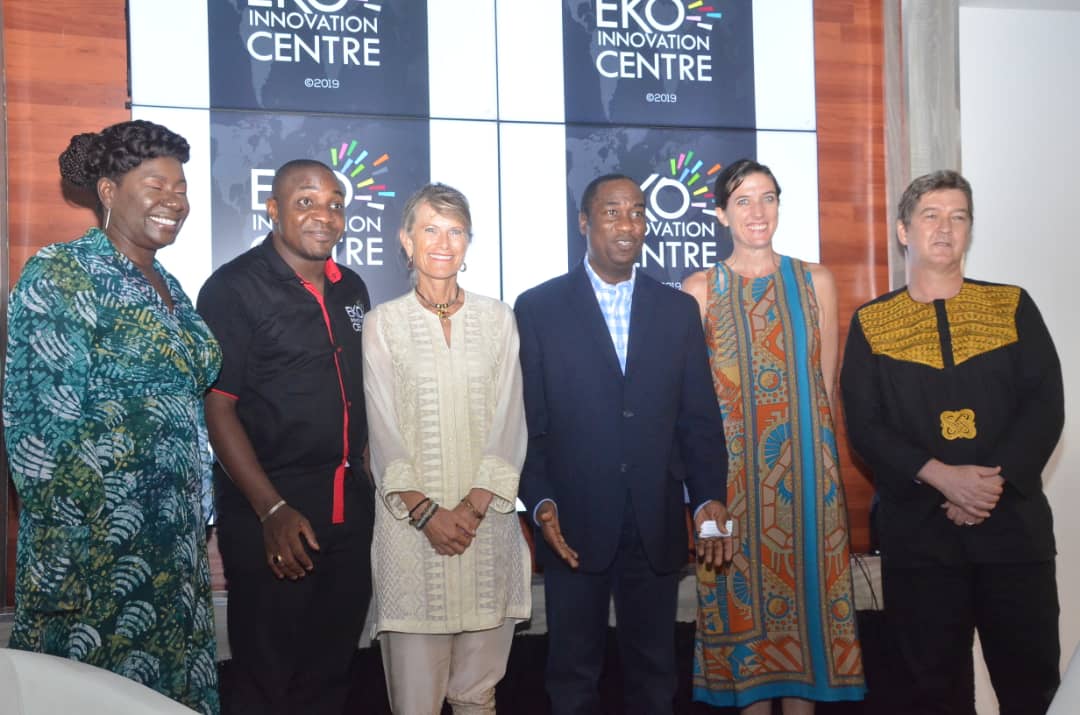
Nigerian government at all levels has been urged to leverage the expertise, technology provides to improve its leadership, as the solution the society largely need to run efficiently and effectively is embedded in technology.
This advice was given on Sunday by some stakeholders at a forum with the theme ‘An Evening of Conversation on Moral Leadership.’ organized by Eko Innovation Centre, Acumen and African Venture Philanthropy Alliance.
First to give the advice is Ms. Jacqueline Novogratz, Founder and Chief Executive Officer of Acumen, a non-profit impact investment fund with over 15 years’ experience in investing in social enterprises that serve low-income communities in developing countries. According to Jacqueline, by leveraging technology to govern, needs are met, problems are solved, which makes a national difference.
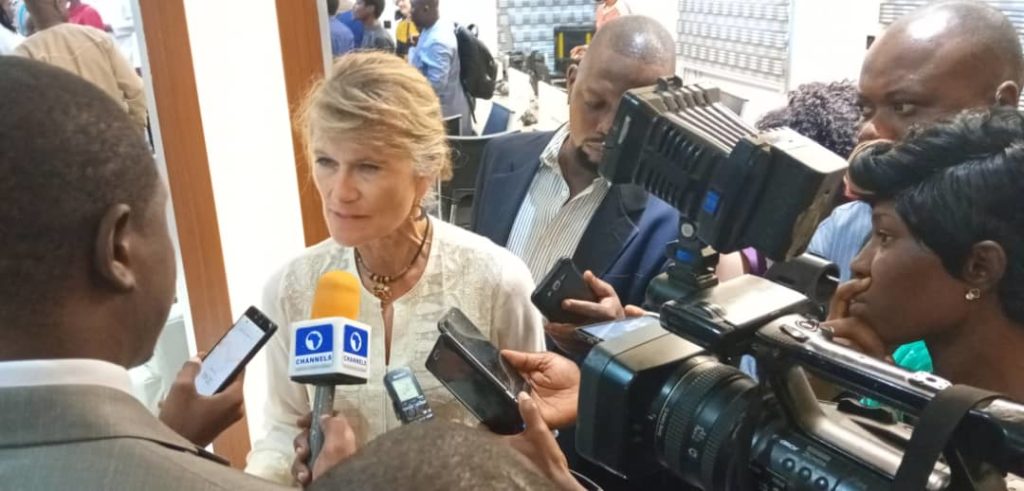
“For us at Acumen, we have always taken a position that leadership comes with responsibilities. It is a social investment from the citizens. So for any government to reciprocate that investment, they must leverage technology for
Asked what Acumen as an organization is doing to help in this regards, Jacqueline disclosed that Acumen has an interest in seeing young people grow their entrepreneurial skills, which will ultimately transform to leadership skills. “We are interested in seeing what young people are capable of doing and see how to support them,” she said.
She cited a case of a young man in Indonesia, who took 19 of the courses Acumen provides and decided to build a campaign that will focus on smallholder farmers. According to her, the boy today works with over 300,000 farmers across Indonesia. “That’s what we are talking about. We need to see the young people who are working on impacting the people in their localities,” she added.

Meanwhile, the Eko Innovation Centre, which
The Co-Founder of the Centre, Mr. Victor Afolabi, who stated on the sideline of the forum while granting interviews to Journalists, believes that leadership and morality, to a large extent, has impacted how people are able to attract initial capital.
He noted that the lack of proper leadership and inability to grasp what is required to create a good sense of enterprise have been a setback to many enterprises as they are not able to attract the right capital funding for acceleration and scaling up.
These, he said the Eko Innovation Centre provides by running the kind of model that sees social entrepreneurs grow social capabilities through innovation.
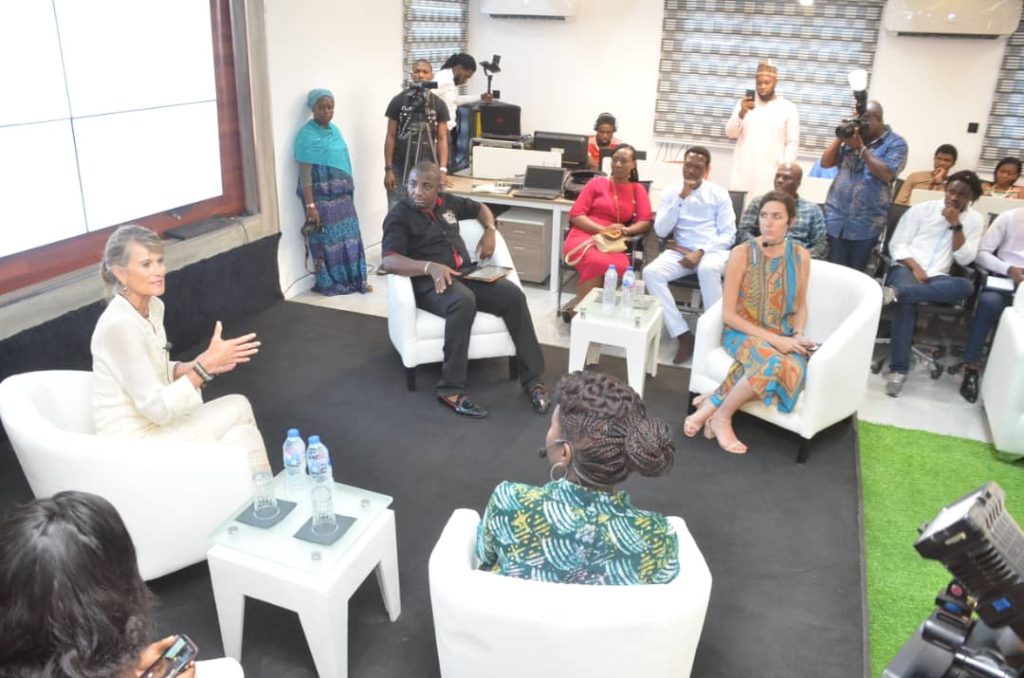
He said the Centre is using technology innovation and technology to create and scale up startups in solving the major issues around Lagos State and the Nigerian economy at large, explaining that Lagos as a State reflects the development of Nigeria and Africa. “We choose Eko as a base to launch and nurture ideas that will transform, impact and disrupt the world because we believe that Lagos reflects development,” he stressed.
Speaking further on what the Centre can offer, Afolabi said, for a startup to be admitted at the centre, the idea and concept must have the capability to touch at least 10 million people, adding it is not about startups for the sake of ‘having a startup’. “We are focused on startups that have viability with strong social impact on the people,” he stressed.
Hear him: “Eko Innovation Centre is a centre where we are trying, to a large extent, solve some of the challenges we have seen in this ecosystem around mentoring. It is not where are providing photocopies and papers and coffees to people. It is a place with facilities with people spending 18 months to 3 years; teaching them all forms of business processes – from tax management to procurement, admin, finance and others. So, when we have companies that are incubated in the centre they are more than sure that their chance of survival is strong due to the strong hand-holding and mentorship that we will be providing for them. That is why for us the mentorship is from the concept to commercialisation.”

Adding her to the conversation, the Executive Director, African Venture Philanthropy Alliance (AVPA), West Africa Region, Ms. Oluwatoyin-Moore, said leadership is all about starting from the very beginning.
She said the concept of Small to medium to large scale enterprises is very important and will change the face of Africa. “We have a lot of resources; Nigeria is gifted. We have so many talented people; very energetic people. I don’t know if you know that when you visit the US or UK, we are very hardworking people. We don’t give up in anything we put our mind to do. So, it is very important, we appreciate the fact that we must build the capacity of young people,” she stated.
Also giving a remark, the Lagos State Governor, Babajide Sanwo-Olu, who was represented by his Deputy, Dr. Obafemi Hamzat, stated that government is all about processes, disclosing that Lagos State is formulating processes that will have the state run smart in order to catch with the rest of the world.
With these processes in place, the state can start practicing e-health, elearning and ecommerce in a more sustainable way. “We will have fibre cables linked to our schools, hospitals and public institutions and the private sector will also plug in. It may take a year or two, but we have started and shall continue to scale it till we have the infrastructure that will support our Smart City initiative,” the deputy Governor assured.
On leveraging social media to drive moral leadership, Hamzat believes that social media gives you the understanding that whatsoever you post or say will catch up with you almost immediately. He said the negative about social media is that wrong information gets aggravated quickly.
“As a government, we do leverage social media to talk to our people to understand our programmes and to harness their feedbacks. During the campaign, for instance, we went everywhere knowing that one of the issues people talked about is transportation; that it takes too long to move from point A’ to point B’. That means, we have to fix the roads. It also means that the public has to obey the traffic rules. Also, we have to fix all the signage. Therefore, we leverage the social media to communicate our problems to the public and allow them to make suggestions to best-possible ways to tackle them,” he added.