



By Martin Ekpeke
The Nigerian Communications Commission (NCC) has expressed satisfaction with the current trajectory of investments within the telecommunications sector, disclosing that one major operator has already invested over $1 billion this year alone.

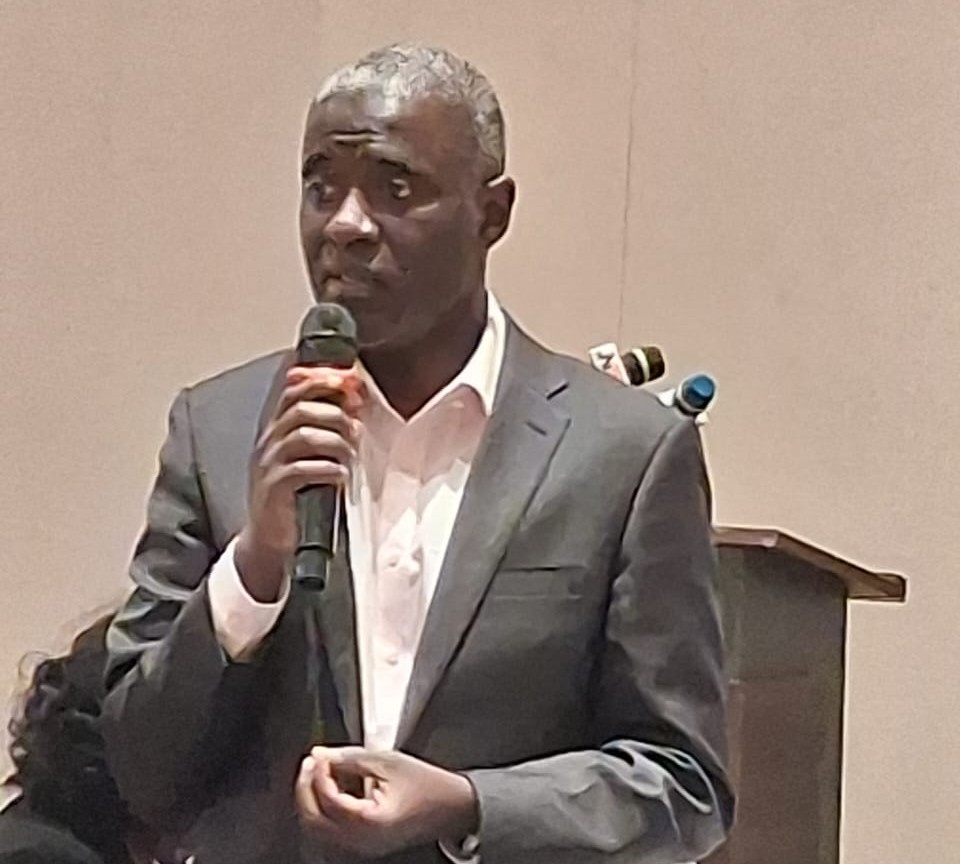
Speaking during a media engagement in Lagos today, the Executive Vice Chairman of the NCC, Dr. Aminu Maida, revealed that the sector is seeing significant financial commitments despite global economic headwinds, asserting that continuous capital injection is vital for the industry’s survival and growth.
Dr. Maida attributed this surge in investment to deliberate government policies aimed at providing predictability and certainty, particularly regarding the availability of foreign exchange. He noted that forex is a critical component for the industry, as the majority of telecommunications hardware and sophisticated software, such as radio equipment, must be imported.
“There are a few countries in the world responsible for the majority of telecommunications infrastructure. Even the mighty nations of the West depend on these hubs. Considering the situation, I am satisfied that our operators are doing very well in terms of investments,” Maida explained.
The NCC boss addressed the public perception of service quality, explaining that as networks improve, user habits shift to consume more data, often leading to rapid congestion. He pointed out that applications like TikTok, YouTube, and Facebook are designed for infinite scrolling, which demands constant capacity upgrades.
“Once a congested site is upgraded, it often returns to congestion in a short amount of time because users realize the service is better and begin to consume more. We need to get to a point where we have excess capacity to stay ahead of these changing habits,” Maida said.
Strategically, the NCC is pushing for a transition from mobile-heavy data usage to fiber-optic infrastructure. Dr. Maida identified fiber as the only economically viable technology capable of delivering truly unlimited internet access.
The NCC’s strategic infrastructure goals include verifying new sites to drive better quality of service through rigorous site audits. The commission also aims to expand public Wi-Fi by connecting stadiums, libraries, schools, and bus stops via fiber-optic cables. Additionally, it is focusing on economic sustainability by encouraging a move away from mobile data for home use, which is often more expensive due to the high cost of powering base stations with diesel and gas.
While the NCC has verified an increased number of sites to improve service quality, Dr. Maida urged Nigerians to be patient as these massive investments materialize. He reminded the public that the cost of running networks is heavily influenced by global events and the rising price of power.
“Fiber is the stable connection that makes unlimited data packages economical. In countries where citizens are happy with their connectivity, the majority of usage is through fiber. That is the reality we are working toward for Nigeria,” Maida concluded.