



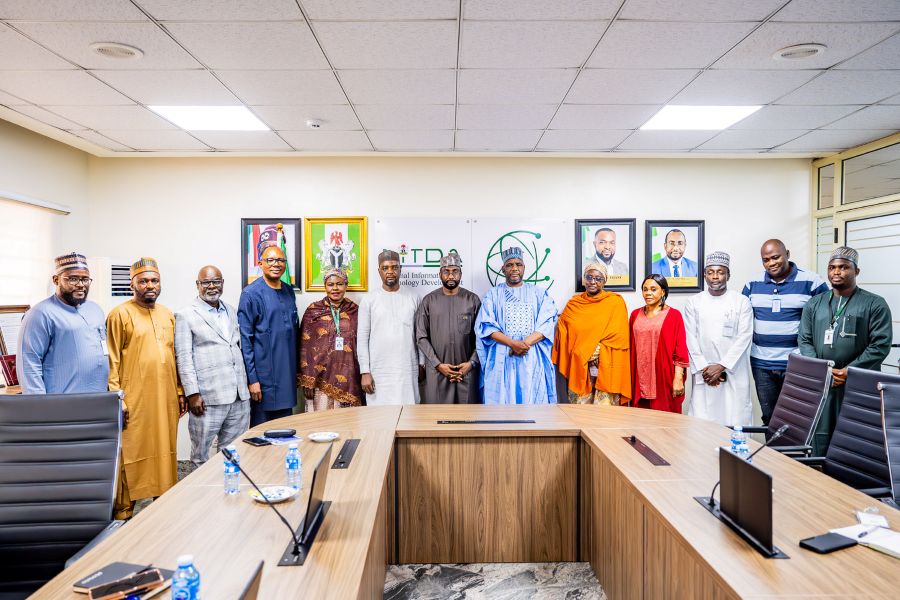
Nigeria is sitting on a human capital goldmine that could soon see the country become a global net exporter of skilled professionals, Kashifu Inuwa, Director-General of the National Information Technology Development Agency (NITDA), has insisted.
Speaking during a recent meeting with the National Commission for Almajiri and Out-of-School Children’s Education, Inuwa, outlined a bold vision to transform Nigeria’s youthful population into a dominant force in the global digital economy.

As many developed nations grapple with aging populations and shrinking workforces, Inuwa pointed out that Nigeria’s rapidly expanding youth demographic is its greatest competitive advantage.
“With the global demand for technical talent expected to far exceed supply by 2030, Nigeria has a strategic window to fill that void,” he argued.
By making the right investments in digital education, Inuwa believes Nigeria can follow the India Model, where a deliberate focus on talent development has led to citizens leading the world’s top technology firms and providing a steady stream of foreign exchange through remittances.
To turn this vision into reality, NITDA is spearheading the National Digital Literacy Framework, which aims for 95% digital literacy across Nigeria by 2030. This initiative is designed for everyone, rather than just tech experts and focuses on six foundational pillars. It covers core skills such as device and software operation as well as data literacy for managing information and data effectively. Additionally, the framework emphasizes content and marketing through the creation of digital content and the mastery of online commerce. Finally, it prioritizes safety and solutions by ensuring online safety and leveraging technology for problem-solving.
A significant portion of Inuwa’s address focused on the Digital Literacy for All initiative, which specifically targets underserved populations. As part of the effort to ensure inclusion for all, the agency is partnering with the Almajiri Commission to establish digital learning centers and develop training programs in indigenous languages. Inuwa also highlighted how these skills will drive sector transformation by revolutionizing agriculture and local trade. This will allow farmers to make data-driven decisions and enable small traders to reach global markets using their smartphones.
The Executive Secretary of the Almajiri Commission, Muhammad Sani Idris, lauded NITDA’s commitment, noting that integrating digital innovation into the traditional Almajiri system, which has suffered from years of neglect, is vital for protecting children from exploitation and providing them with a path to economic relevance.
By aligning government policy with digital training, NITDA and its partners aim to ensure that being out-of-school no longer means being out-of-reach for the digital revolution.