



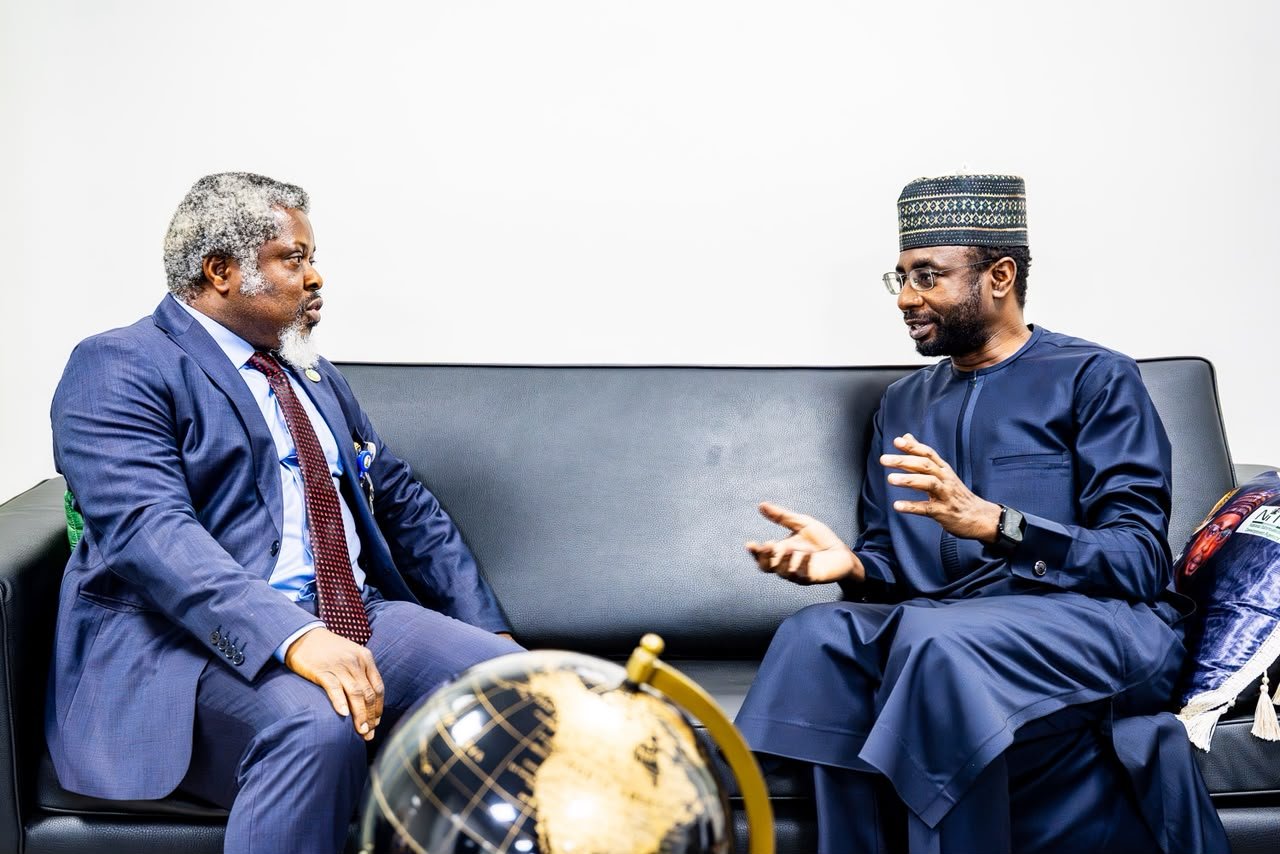
The National Information Technology Development Agency (NITDA) is mulling a strategic partnership with the newly established Federal University of Environment and Technology (FUET), Ogoni, Rivers State, to deepen digital education. This collaborative effort aims to boost the institution’s academic offerings by investing in essential digital infrastructure, fostering local innovation, and building modern digital skills within the region.
The initiative took a major step forward during a courtesy visit by FUET’s management, led by the Vice Chancellor, Professor Prince Chinedu Mmom, to NITDA’s Corporate Headquarters in Abuja. Discussions between the two delegations centered on creating a robust, technology-driven ecosystem designed to support modern teaching, cutting-edge research, and tech talent development.

Receiving the university’s leadership on behalf of NITDA Director General Kashifu Inuwa, the Director of Digital Literacy and Capacity Building, Mr. Oladejo Olawunmi, reaffirmed the agency’s dedication to supporting tertiary institutions. He highlighted that NITDA regularly champions digital capacity nationwide by establishing Information Technology Community Centres, IT Parks, and Innovation Hubs that drive entrepreneurship and research.
Olawunmi further explained that NITDA’s academic interventions are strategically aligned with the National Digital Literacy Framework (NDLF). Implemented in collaboration with the Federal Ministry of Education and the National Universities Commission (NUC), the framework aims to institutionalize digital skills across Nigerian classrooms and ensure graduates leave school with globally competitive tech capabilities.
Earlier in the meeting, Professor Mmom introduced FUET as a specialized institution created under President Bola Ahmed Tinubu’s administration to address the developmental needs of the Ogoni people. While the university has successfully designed its master plan and secured approval to run programs across six core faculties—including Engineering, Environmental Sciences, and Allied Health Sciences—it is still navigating its formative stages.
Despite having established departments for high-demand fields like Computer Science, Computer Engineering, and Cyber Security, the Vice Chancellor revealed that a lack of basic ICT infrastructure remains a major bottleneck. He emphasized that the university currently lacks the workstations, digital laboratories, and reliable internet connectivity necessary to deliver effective hands-on training to its students.
In response, Mmom appealed to NITDA for urgent support in providing essential digital tools and capacity-building resources. The meeting wrapped up on a highly optimistic note, with both leadership teams expressing confidence that this proposed partnership will serve as a vital catalyst for digital inclusion, research excellence, and Nigeria’s broader transition to a knowledge-driven economy.