


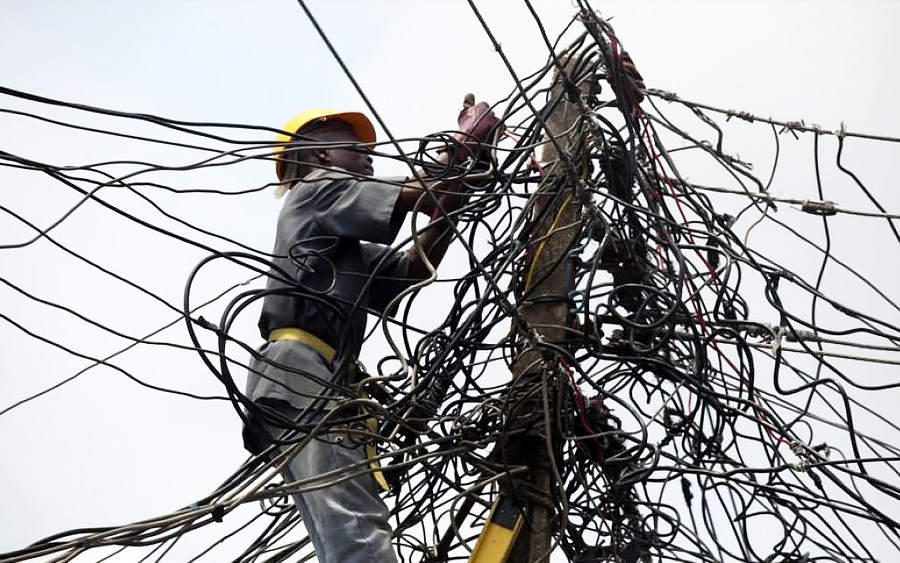
In a world of 3D printing and manufacturing, artificial intelligence (AI), Cloud Computing Big Data and smart cities can a country compete without power? It is doubtful. A steady power supply is essential for the smooth running of any economy. It is the lifeblood of the digital economy. To connect and partake of the digital economy, people must first be switched on.
Nigeria has been described severally as the largest economy in Africa, but limitations in the power sector constrain growth. Nigeria’s quest for a digital economy would struggle until it, as a matter of urgency, fixes the poor power supply situation.
To understand how dire the situation is, consider this: Nigeria generates approximately 4,000 MW for 200 million people, whereas South Africa produces over 40,000 MW of energy for her 62 million people. The situation is grave.
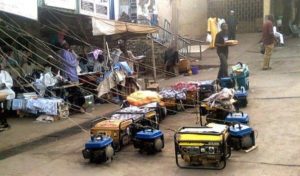
Today, the Nigerian economy runs on generators. Nigerians live with the fume, bear the noise and struggle under the burden. This is not sustainable.
Everywhere you turn across this vast landscape small and private power generating plants (aka generators) hum driving the Nigerian economy forward. The really sad part is that running on generators is not cheap. According to a report, “Nigerians and Nigerian businesses spend almost $14bn (about N5tn) annually on an inefficient generation that is expensive of poor quality, noisy, and polluting sources from electricity generators.”
The cost to health and the environment is uncalculatable.
The impact has been intense, but who is counting. The cost is extreme, but no one seems to care.
It is particularly worrying when one considers the sheer number of companies that have relocated, scaled-down operations or perhaps shut down completely over the last decade. It is disheartening. It is distressing to even talk of others that never got off the ground.
The impact has also been extensive, jobs lost, taxed unpaid and missed opportunities. Besides, the economy has stalled, gross domestic product (GDP) stunted, and productivity left dwindling due to power challenges.
Numerous experts, professionals and policymakers have written about this matter. White papers, seminal communique and technical reports have been published. But no one appears to be listening. If the economy is growing at all, it is in spite of these issues.
That is not all. Erratic power supply adds unnecessary cost burden to start-ups, raises production cost astronomically and dampens prospects and projections. Creativity is stifled innovation hampered and ideation is capped. It is bad for business, it is unhealthy for living and it is costly for the economy.
The real wonder, however, is that while the issues are obvious the remedy has eluded us for so long. We must be missing something. In the meantime, Nigeria continues to grope in the dark.
A thousand options have been proposed without a hint of progress. We must change if things are to be different.
It is not optional. If the country wants to key into the Fourth Industrial Revolution, be a part of the information society and benefit from the digital economy, then access to a steady power supply is not optional. It is mandatory!
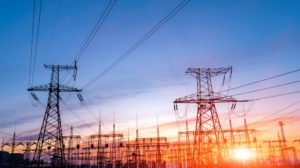 The consensus is that the government is the biggest hindrance to resolving the issues. No, there is no leap of logic necessary here. While the sector has been partially privatized, the government still controls the most important section. Talks of decentralization have gained little traction.
Now, it is time for Nigeria to heed that popular American saying “if you’re in a hole stop digging”. Doing the same thing would never produce a different result. So, we must change what we are doing and indeed how we are doing it.
No, we don’t need to reinvent the wheel. The solutions are out there. Procure them, harness them and install. Essentially, think sustainability and explore renewable options.
First, decentralise. Let power be generated and distributed within a smaller circle – regional, state, LGA and even estate and gated communities. It can even go down to business districts, trade free zones and hubs. This would involve making the mini and micro plants concept truly functional.
Next, consider the region’s landscape and climate to determine the type of power generation to deploy in each region. The northern region with wide flatlands would be great for solar solutions.
Across the southern part of the country, there is a long stretch of coastline and beaches. This is a great place for wind farms. Plus, it has the added advantage of easy access in bringing in and installing Wind Mills.
In the Eastern Region, Nigeria can take a line from President Trump and explore using the massive clean coal deposits in the Eastern states.
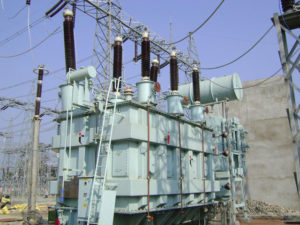 It is the hybrid solution that would work.
The current haphazard system sees humongous sums been thrown after poor unsteady power. This would never work. This will never produce the Everyone knows that electricity generation, transmission and distribution are capital-intensive activities requiring huge resources of both funds and capacity. It is only when the funds and strategy are properly directly that Nigeria can produce steady, clean power.
It is said that adequate power supply is an unavoidable prerequisite to any nation’s development. This is true. It is time to utilize Nigeria’s resources both human and natural. This is the only way to guarantee the availability of a steady power supply. Nigeria needs electric power to maintain connections.
The digital economy awaits.
Elvis Eromosele, a Corporate Communication professional and public affairs analyst lives in Lagos.