


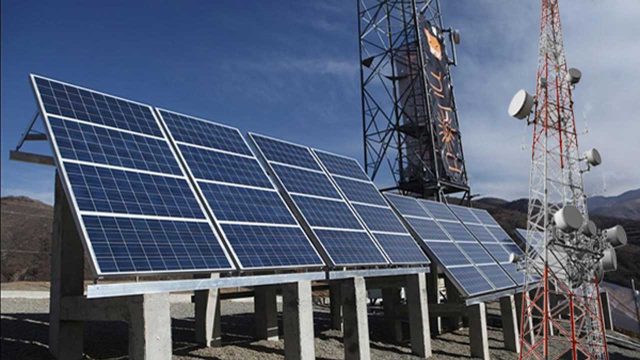
Having realized the environmental challenges posed by fossil fuel owing to the increased deployment of telecom infrastructure to satisfy the wireless coverage requirement for telecom services, the Nigerian Communications Commission (NCC) has decided to put up about six regulatory measures to combat the challenges.
These measures are not only timely but expedient as the dependence on telecom services in Nigeria will result in increased energy consumption for the network infrastructure, especially the Base Transceiver Stations (BTS). Thus, there is a need to look for green and sustainable solutions to power the industry.
The move by the telecom regulator is also important as several reports have found that implementing energy efficiency measures could potentially reduce the operating costs of telcos by up to 20 percent.
This is a win-win for the regulator, the Mobile Network Operators and the end users, as consumers all over the world are experiencing a high cost of living as the globe responds to the ongoing energy crisis caused by supply and climate issues.
Renewable Energy Option
The 54, 000 BTS scattered across the country depend on diesel generators with the attendant noise and environmental pollution. Some of these BTS operate on diesel generators for 24 hours across seven days of the week in some locations. Therefore, the Commission, as a responsive world-class organization is transitioning to a renewable energy source like solar power that will significantly reduce the menace of pollution from individually-powered generators. This will be zero carbon emission from the BTS just as noise pollution would be a thing of the past.

MNOs and the need for energy-efficient networks
To minimize the environmental impacts of climate change caused by carbon emissions, the regulator has asked telecom network providers to come up with a modern and more energy-efficient network. This includes using Solar-powered Cells, wireless electricity or a hybrid system to replace higher energy-consuming equipment that will lead to a reduction in capital expenditure (CAPEX) and operational expenditure (OPEX) and by implication, a reduction in service costs to consumers.
According to NCC, transitioning to renewable energy is predicted to result in a lower cost of operation as operators will be able to save on the cost of diesel, which accounts for a large chunk of the costs incurred by these licensees.
Collocation and Infrastructure Sharing Framework
The Commission introduced a regulatory framework on infrastructure sharing and collocation among the licensees which has encouraged operators to fully maximize their already-deployment infrastructure. By sharing infrastructure, some operators do not need to entirely build a telecoms site in an area where another operator had deployed one. A regulatory framework such as infrastructure sharing, and collocation is helping in this regard and the Commission has recorded appreciable adoption of this regulation.
Factoring in energy efficiency in Type Approval
Another regulatory initiative in this regard is NCC’s Type Approval Regulations. Type Approval of devices factors in energy efficiency, which ensures a reduction of power consumption. It also ensures that Radio Frequency devices used in Nigeria operate effectively, without causing harmful interference and otherwise comply with the Commission’s technical requirement prior to importation or marketing.
ICT competitions focusing on renewable energy
The annual tech innovation competitions the Commission organizes for young innovators in Nigeria also make considerations for inventions that address the challenges of renewable energy. Some of the entries submitted are in the process of being commercialized as the innovators are seeking investors to make their discoveries available to the public. The Commission will continue to support research and innovations that contribute to transitioning to renewable energy sources.
Regulations on e-Waste
The NCC’s regulatory efforts in dealing with issues of sanitizing the environment resulted in the formulation of a Regulation on E-Waste in Nigeria. Today, the global concern for the regulation of e-waste is two-pronged. First, is the acute awareness of the hazardous properties and the potential risk to human health, as well as their capacity to degrade the environment. Secondly, is the business case and vast Potential for wealth creation in recycling e-waste into more benign and productive uses.
In line with its regulatory mandate and to keep pace with efforts at managing e-waste-related issues, in a manner that reduces cases of indiscriminate burning of electronic devices with the potential for increased carbon emission in the environment, the Commission has been working, with other relevant agencies, to develop a Regulations on E-waste. The Regulations will represent a holistic intervention aimed at providing clarity and delimiting the responsibilities of various stakeholders in the e-waste value chain within the Telecommunications industry.