


By Martin Ekpeke
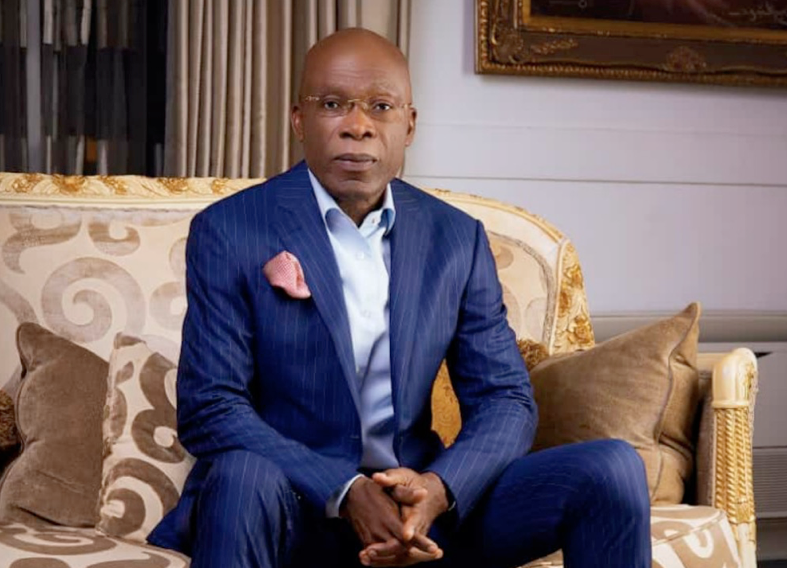
In the high-octane world of Nigerian boardrooms, where titles are often used as shields and corporate gates are kept firmly shut, Leo Stan Ekeh, the Chairman of Zinox Group, stands as a startling anomaly. As he marks his 70th birthday this week, the atmosphere in the Nigerian media space isn’t just one of reportage, but of genuine, personal celebration.
For those of us who carry recorders and notebooks, Leo Stan is more than a Tech Tycoon. He is the executive who actually knows our names, understands our deadlines, and most importantly, respects our craft.
Most billionaires view the press as a necessary evil or a PR tool. Leo Stan Ekeh views journalists as partners in nation-building. My first encounter with him wasn’t at a stiff press conference, but at an informal session where he spent more time asking about the welfare of reporters than touting his latest acquisition.
In his words, “Journalists are the most important group for my businesses”. This isn’t flattery; it’s a philosophy. He believes that if the journalists are ill-equipped or uninformed, the nation’s digital transition will stumble.
“I cannot thrive in a vacuum. If the media doesn’t understand the future we are building, they cannot explain it to the people,” he said last year during a media capacity building for journalists at his company’s corporate headquarters in Gbagada, Lagos.
Ekeh doesn’t just support the media with words; he funds their evolution. While other corporations slash training budgets, Ekeh has consistently organized and funded specialized ICT training sessions for Nigerian journalists.
Through the Zinox Group and the Leo Stan Ekeh Foundation, dozens of reporters have been equipped with digital tools, such as laptops and tablets, to help them transition from analog to digital reporting. These journalists have also received technical training in social media optimization, AI integration in newsrooms, and digital monetization strategies. Furthermore, the foundation has established welfare schemes and programmes designed to ensure that tech reporters have the support needed to sustain their own small media enterprises
Also, while his 70th birthday marks him as an elder statesman, his energy remains synchronized with the 20-somethings in Yaba’s Silicon Lagoon. Ekeh’s love for young tech entrepreneurs is legendary. He doesn’t see them as competition, but as the economic oxygen of Nigeria.
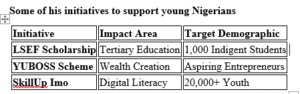 To celebrate this platinum milestone, he didn’t throw a lavish party for the elite. Instead, he committed ₦10 billion to a scholarship initiative for 1,000 indigent Tech Wizkids to study Computer Science. This is a show of patriotism that is not known to many Nigerians in his class.
Reporting on Leo Stan Ekeh for years has taught me that leadership is about accessibility. Whether it was his pioneering role in the 80s or his National First Responder status during the digital census, he has never lost the common touch with the press.
As he clocks 70, the consensus among the Nigerian media is clear: We aren’t just reporting on a man who reached a milestone; we are celebrating a man who made sure we had the tools to write the story in the first place.
Happy 70th Birthday, Chairman. The digital ink never dries on a legacy like yours.