


Africa is currently united by a bold vision: transforming into a technologically empowered powerhouse where world-class digital infrastructure drives unprecedented socio-economic growth.
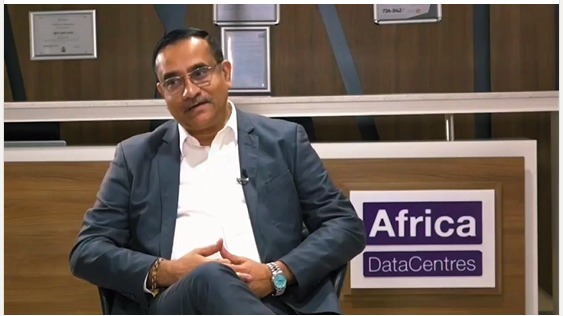
However, according to Dr. Krishnan Ranganath, Regional Executive for West Africa at Africa Data Centres (ADC), two significant hurdles, transmission and fragmentation, threaten to derail this momentum.
Data centres are the connective tissue of the modern economy. They provide the physical environment for the computing and storage power necessary to fuel the Intelligence Age.
The stakes for Africa:
- The African data centre market is projected to hit $6.81 billion by 2030, nearly doubling its 2024 value.
- Because AI cannot scale without data centres, the continent’s AI market is expected to surge from $4.51 billion in 2025 to over $16.5 billion by 2030.
Dr. Ranganath warns that building facilities is manageable, but connecting them is the true challenge. Africa generates significant power, but the necessary fundamentals are missing. Outdated transmission lines and terrestrial fiber networks prevent the efficient distribution of power and bandwidth. Furthermore, state-of-the-art data centres effectively become useless concrete blocks without robust connectivity and affordable power.
Beyond physical wires, Africa faces a fragmentation crisis where diverse regulations and inconsistent standards across borders create a friction-filled environment for investors. Strict local data sovereignty laws force companies to store data domestically, which increases operational costs and prevents regional scaling. Additionally, uneven market maturity across different nations makes it difficult for Africa to present itself as a unified digital hub.
“We must fix the fundamentals from the grassroots level up so that in five to 10 years, African infrastructure can converge,” said Dr. Krishnan Ranganath.
The path forward requires more than just technical solutions; it requires political and regional collaboration. While countries like Nigeria, Kenya, Egypt, and South Africa are moving fast, isolated progress isn’t enough to reach the projected $1.5 trillion African digital economy by 2030.
Dr. Ranganath advocates for cross-border standardization, urging national leaders to align on shared guidelines rather than maintaining 54 different sets of rules. He also proposes the creation of regional hubs through collaboration within the North, South, East, and West blocks to build a unified digital backbone. Finally, he emphasizes the need for holistic ecosystems that focus not only on physical buildings but also on human capacity, consumers, and reliable power.