



By Abigail Mbah
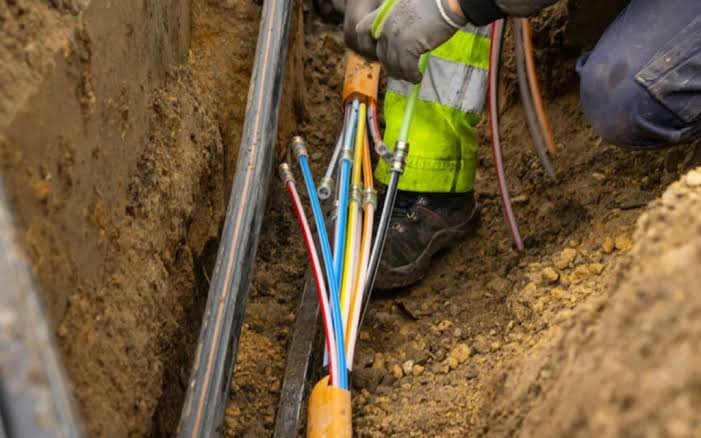
A fibre cut on the Backbone Connectivity Network (BCN) in Abuja Municipal Area Council has left parts of the Federal Capital Territory grappling with degraded data and internet services, the latest reminder of a much larger problem.

Subscribers, businesses, government offices and financial service providers reported slow speeds, intermittent connections and outright dropouts. Online transactions stalled. VoIP calls failed. Cloud apps became unreliable. Streaming and everyday digital platforms stuttered.
For companies whose daily operations run on stable connectivity, the disruption meant delayed service delivery and broken customer channels.
This single incident sits inside a national pattern that has become impossible to ignore.
The Nigerian Communications Commission recorded more than 5,000 fibre-optic cable cuts in the first six months of 2026 alone. One widely cited figure puts the total at 5,934, or roughly 33 cuts every day.
In the same period the previous year the industry logged 19,384 cuts between January and August.
MTN, Nigeria’s largest operator, reported 5,478 cuts in the first seven months of 2025 and more than 9,000 across the full year.

Road construction, excavation and civil works account for the majority of the damage, often 60 percent or higher. Vandalism and theft make up much of the rest. Contractors dig without accurate maps of underground routes. Utility crews work without coordination. In busy corridors the cables simply get hit.
Hotspots have included parts of the South-East and South-South, Lagos, Abuja, Rivers, Kano and Kaduna, exactly the places that carry the heaviest loads of enterprise traffic, banking systems and fintech volume.
The infrastructure itself is the country’s digital backbone. Fibre carries the high-capacity traffic that mobile networks, fixed broadband, data centres and international links all depend on.
When a major route such as the BCN is severed, the effects travel far beyond the trench. Operators mobilise repair teams to locate the break, dig, splice or replace the strands, test the signal and gradually restore traffic.
Depending on access and the extent of the damage, that work can take hours or stretch longer. Even with redundancy and alternative paths, service quality still drops for large numbers of users.
The economic cost is measurable. Operators have spent tens of billions of naira on repairs and relocation in recent years. Industry estimates put the combined annual bill for fibre damage — repairs, lost revenue and operational disruption, in the range of ₦27 billion to ₦35 billion.
MTN alone has budgeted billions for fibre maintenance and relocation. Those are funds that could otherwise go into new coverage and capacity.
Meanwhile the telecoms sector itself contributes roughly 9.7 percent of real GDP and processed trillions of naira in digital payments that now move through the economy every day.
A cut that knocks out POS terminals, banking apps or cloud services does not stay local; it ripples into commerce, logistics, healthcare records, education platforms and government systems.
Consumers feel it directly. Small businesses lose sales when card payments fail. Remote workers and students lose hours. Hospitals and emergency services face communication gaps.
In a market with well over 150 million internet subscriptions and rising data consumption, reliable connectivity has shifted from convenience to basic economic infrastructure.
Industry stakeholders and the regulator have repeatedly called for better coordination. Telecom operators now share route maps with relevant agencies.
A presidential order has designated telecom infrastructure as Critical National Information Infrastructure, giving it stronger legal protection. Committees involving the ministries of works and communications, the NCC and security agencies are trying to put practical rules in place so that contractors check before they dig.
Operators continue to invest heavily. MTN alone has poured more than ₦1.6 trillion into network expansion and modernisation since 2025, part of a broader industry push past ₦2 trillion, yet much of that capital is still diverted to emergency repairs.
As technical teams work to restore the affected BCN segment in AMAC, the broader picture remains clear. Nigeria’s digital economy is expanding, but its physical foundation is being cut open thousands of times a year.
Without tighter protection of the fibre routes that carry the traffic, the outages will keep coming, the repair bills will keep rising, and the reliability that businesses and citizens now depend on will stay under threat.