


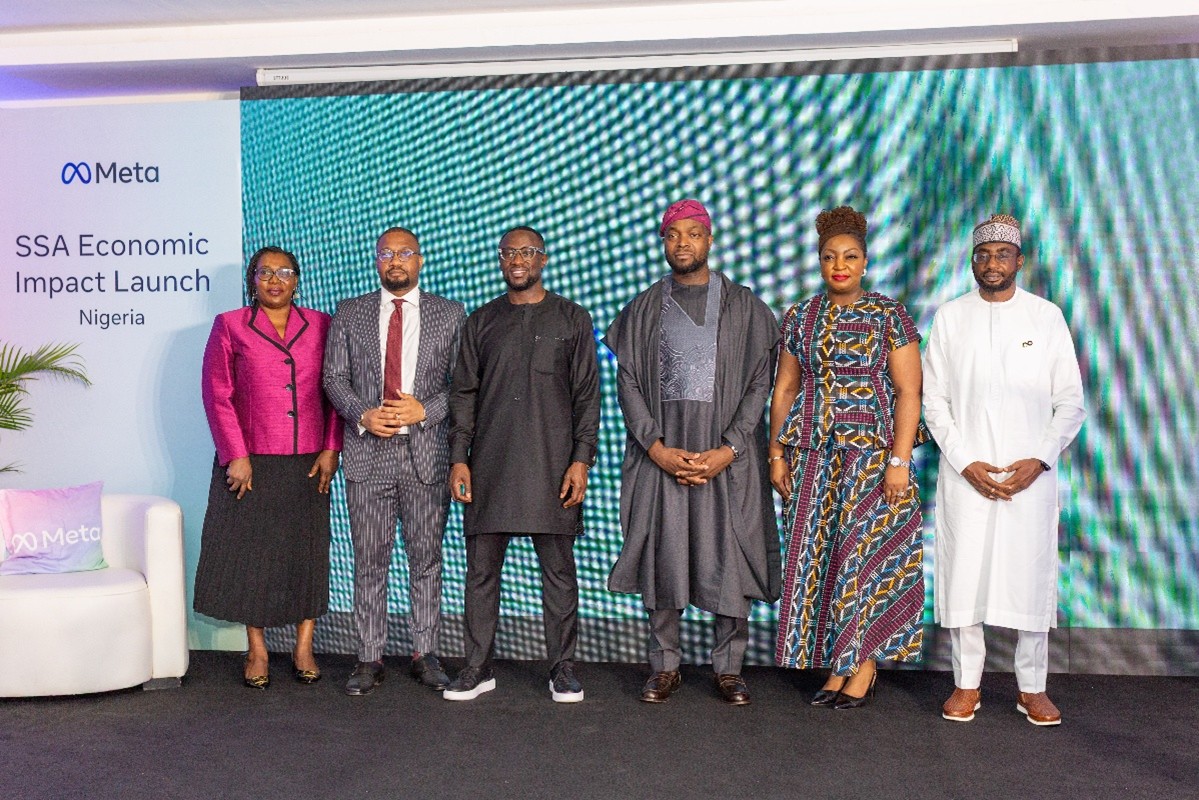
A new independent report by research firm Public First, titled “Nigeria’s Digital Economy,” reveals that Meta contributes an estimated $820 million in annual economic value to Nigeria.
According to the report, with deeper digital adoption and the right economic conditions, this impact is projected to scale up to $2 billion.

The study highlights that Meta’s suite of apps serves as critical digital infrastructure, allowing virtually all Nigerian businesses to expand their customer reach.
The findings reveal that 14 million Nigerian SMEs used Meta’s apps, such as Facebook, Instagram, WhatsApp, Messenger, Meta AI, and Threads, to start and grow their businesses in 2025, contributing $2 billion to Nigeria’s GDP and delivering an estimated $640 million in productivity gains through more efficient instant messaging.
WhatsApp is playing a central role in connecting Nigerians to AI and new economic opportunities across the region. The platform serves as Nigerians’ primary AI interface — reflecting the wider regional pattern, where 93% of Meta AI prompts in Sub-Saharan Africa are generated via WhatsApp, demonstrating how AI adoption in Nigeria is happening through the tools people already use every day.
Balkissa Ide Siddo, Director of Public Policy, Sub-Saharan Africa at Meta, said: “Nigeria is one of the most dynamic, entrepreneurial and digitally engaged markets in the world and this research makes clear the scale of what is possible when Nigerian ambition meets the right digital tools. From a tailor in Lagos reaching customers across the country through Instagram, to a small business owner in Kano taking orders on WhatsApp, to a creator in Abuja building a global audience on Facebook — Meta’s platforms are removing the traditional barriers to growth and unlocking real economic opportunity. The fact that 80% of Nigerians say access to reliable internet has improved compared to a decade ago speaks to the progress already made and with continued investment in connectivity, smart policy that supports innovation, and the rise of open-source AI built for and by Africans, Nigeria is exceptionally well positioned to lead the continent’s next decade of digital growth. We are proud to be a long-term partner in that journey.”
For Nigerian small businesses, Meta’s platforms have become a primary sales and discovery channel. 81% of online businesses surveyed said Facebook, Instagram, and WhatsApp have expanded their customer base beyond their local geography — reducing customer acquisition costs and giving a business in Kano access to the same advertising and commerce tools available to businesses in Lagos, London or New York.
93% of online adults say they feel more connected to a wider community through Meta’s family of apps, reflecting how deeply these platforms are woven into everyday life, commerce and community in Nigeria.
Alison Neyle, Director at Public First, said: “Nigeria’s digital transformation is creating new opportunities for businesses, creators and consumers alike. The findings show that Meta’s platforms are helping Nigerian firms grow across formal and informal sectors, supporting entrepreneurship and strengthening participation in one of the world’s most rapidly expanding digital economies. With the right combination of infrastructure, platform access and open-source AI, the upside for Nigeria is significant.”