



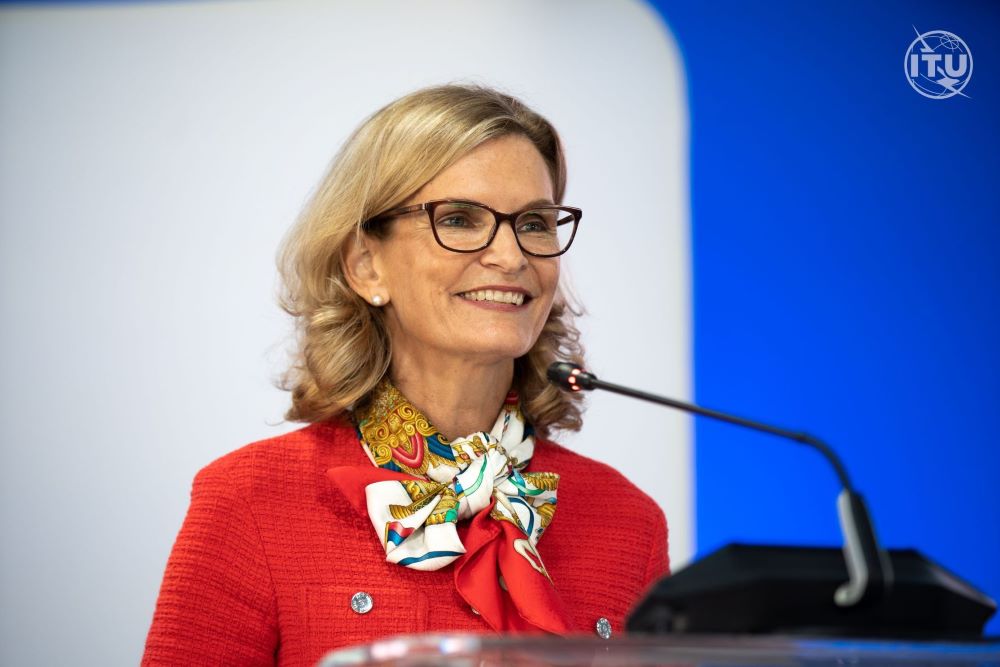
Doreen Bogdan-Martin of the United States has been re-elected Secretary-General of the International Telecommunication Union (ITU), securing a second four-year term to lead the United Nations agency responsible for digital technologies.
Bogdan-Martin won 164 of the 173 votes cast by Member States during the election held at the ITU Plenipotentiary Conference 2026 in Doha, Qatar.

Her re-election comes as the global telecommunications industry navigates rapid technological changes driven by artificial intelligence (AI), expanding satellite communications, cybersecurity threats and the growing demand for resilient digital infrastructure.
Expressing appreciation for the confidence reposed in her, Bogdan-Martin said her second term would focus on ensuring that technological advancement creates opportunities for everyone, particularly the estimated two billion people worldwide who remain unconnected.
“The digital world has changed dramatically in four years, and it will change even faster going forward. Our job is to make sure that change works for everyone, especially the 2 billion who are unconnected. Together, we can make sure the digital future leaves no one behind,” she said.
First elected in 2022, Bogdan-Martin assumed office in 2023 after serving as Director of ITU’s Telecommunication Development Bureau from 2018 to 2022. She is the first woman to hold both elected positions in the organisation.
During her first tenure, ITU’s Partner2Connect Digital Coalition secured more than $120 billion in connectivity commitments aimed at expanding global digital access.
She also expanded the organisation’s stakeholder network to more than 1,000 companies, universities, research institutions and civil society organisations, alongside its 194 Member States.
Another major achievement during her first term was the launch of an organisational transformation programme to modernise ITU’s systems, processes and operations.
For her second term, Bogdan-Martin has identified expanding connectivity, promoting digital skills, strengthening cybersecurity and building resilient digital systems as key priorities.
She also plans to ensure that emerging technologies, particularly AI, deliver wider economic and social benefits rather than deepen existing digital inequalities.
Within ITU, she pledged to sustain the organisation’s transformation, making it more agile, transparent and responsive to the needs of its members.
The election took place during PP-26, ITU’s highest decision-making conference, which runs until November 27 at the Doha Exhibition and Convention Center.
Member States are also electing the organisation’s Deputy Secretary-General and directors of its Radiocommunication, Telecommunication Standardization and Telecommunication Development bureaux.
The conference will further elect members of the 12-seat Radio Regulations Board and representatives to the 48-seat ITU Council, while determining the organisation’s strategic and financial priorities for the next four years.