



By Martin Ekpeke
The Association of Licensed Telecommunications Operators of Nigeria (ALTON) has identified unreliable power supply, infrastructure vandalism, insecurity, restricted access to network facilities and prohibitive fibre-optic right-of-way charges as major factors undermining telecommunications service quality in Nigeria.

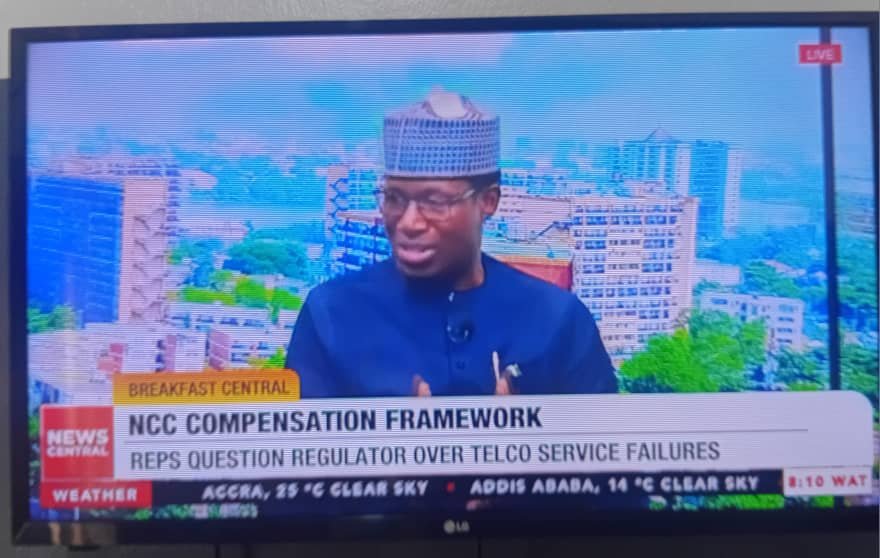
ALTON Chairman, Engr. Gbenga Adebayo, disclosed this during an interview with News Central Television, explaining that although operators acknowledge persistent complaints about poor network services, several challenges affecting network performance are beyond their direct control.
He identified power supply, vandalism and the lack of collective responsibility for protecting telecommunications infrastructure as the three biggest challenges confronting operators.
“Power is a major challenge because operators have to provide electricity for their facilities. Despite our efforts to deploy generators, solar power systems and ensure adequate diesel supply to our sites, there are situations where it becomes practically impossible to keep the facilities running,” Adebayo said.
He explained that vandals target not only diesel-powered facilities but also alternative energy infrastructure, including solar panels and smart batteries, as operators increasingly invest in reducing their dependence on generators.
Infrastructure theft, particularly the removal of manhole covers and the vandalism of underground fibre-optic cables to extract copper, has also become a major threat.
According to him, “An entire neighbourhood could lose connectivity because someone has vandalised a cable in one location.”
He added that telecommunications sites often serve about 5,000 subscribers, while a fibre-optic cable could connect millions of users, making infrastructure damage a serious threat to national connectivity.
Adebayo also identified insecurity and restricted access to telecommunications facilities as significant operational constraints. In some communities, individuals reportedly demand money before allowing diesel delivery trucks to access network sites, while technicians sometimes face security threats during maintenance operations.
“There are also security situations where technicians cannot access certain sites at particular times. In some instances, our personnel have lost their lives in the line of duty,” he disclosed.
Another major obstacle is the difficulty of obtaining rights of way for fibre-optic deployment. According to Adebayo, some state governments impose charges that are disproportionate to the value of the infrastructure being installed, slowing network expansion and increasing deployment costs.
He also cited restrictions imposed by landlords and local authorities, which sometimes prevent operators from accessing facilities for maintenance or upgrades.
Beyond these challenges, Adebayo said rising data consumption was putting additional pressure on network capacity. He explained that increased use of sophisticated applications, frequent software upgrades and richer digital content had significantly changed consumption patterns, with additional network capacity often quickly absorbed by growing demand.
He, however, assured subscribers that operators were investing substantially in network expansion and optimisation, noting that industry investments between 2025 and 2026 were significantly higher than those recorded in the preceding four years.
Following the January 2025 tariff adjustment, he said operators were expected to demonstrate increased investment in their networks and had continued to meet that commitment.
“Improving network quality and availability is a continuous process. We are expanding capacity, maintaining infrastructure and undertaking the necessary work to improve service delivery,” he said.
The ALTON chairman stressed that improving service quality requires more than financial investment, calling for stronger cooperation among government agencies, security organisations, communities and consumers to protect telecommunications infrastructure.
“Network quality is not solely the responsibility of telecommunications operators. It requires a collective societal approach,” he said.
Adebayo welcomed the Federal Government’s designation of telecommunications infrastructure as Critical National Information Infrastructure (CNII), saying security agencies, including the Nigeria Security and Civil Defence Corps and the Office of the National Security Adviser, were assisting efforts to track down vandals.
He warned that sustainable improvements in telecommunications services would depend on addressing the underlying operational challenges, rather than relying solely on directives to network operators.