


By Martin Ekpeke
With Africa carrying 22% of the world’s disease burden but attracting just 1% of global health spending, investors and healthcare leaders are pushing for domestic capital, technology and innovation to transform the continent’s health system.
Africa’s healthcare crisis is increasingly becoming a capital and technology challenge, with the continent facing an estimated US$1.1 trillion annual health financing gap despite accounting for 22 percent of the world’s disease burden.
The gap is forcing healthcare leaders, investors and policymakers to rethink how the continent finances hospitals, health technology, pharmaceuticals and other critical infrastructure, particularly as traditional sources of international donor funding continue to shrink.

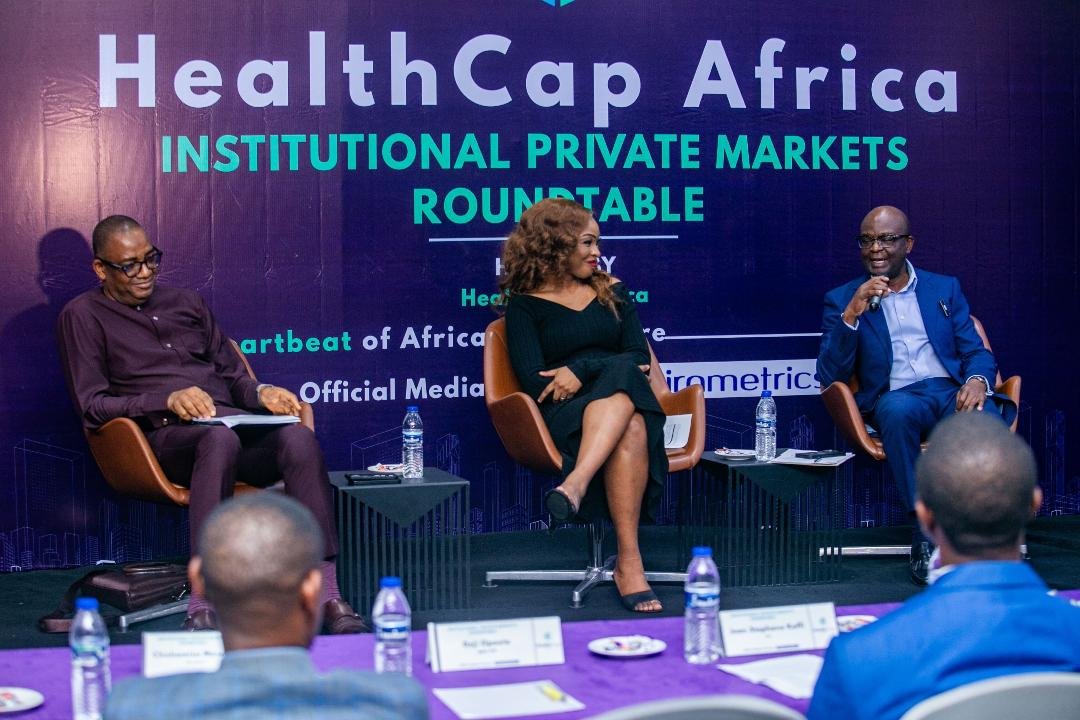
The warning came at the HealthCap Africa Private Markets & Healthcare Roundtable in Lagos, where investors and regulators called for a stronger domestic capital ecosystem capable of funding Africa’s healthcare transformation.
The roundtable, themed “Healthcare as an Asset Class,” brought together senior representatives from the Securities and Exchange Commission (SEC), National Pension Commission (PenCom), Africa Finance Corporation (AFC), International Finance Corporation (IFC), World Bank, pension funds, financial institutions, healthcare operators and investment firms.
The event was chaired by Deji Alli, Founder and Chairman of ARM, and co-chaired by Abu Jimoh, Founder and Group CEO of TrustBanc Financial Group.
At the event, stakeholders argued that Africa can no longer rely predominantly on foreign aid to fund its healthcare needs, especially as funding from USAID and other international assistance programmes becoming less certain. They said African countries must unlock capital already available within the continent, including pension funds, insurers, family capital, development finance and private investment.
Pension funds emerged as one of the most significant potential sources of long-term healthcare capital. Representatives at the Lagos meeting collectively managed more than US$5 billion in assets.
But participants said unlocking this capital will require investment products that provide appropriate risk-adjusted returns while protecting pension contributors.
This will require closer collaboration between regulators, institutional investors and fund managers to develop transparent, well-governed structures that make healthcare an investable asset class.
Technology can unlock the opportunity
The financing challenge also comes as technology is rapidly reshaping healthcare delivery across Africa.
Digital health platforms, healthtech startups, data systems, telemedicine, artificial intelligence and other innovations are creating new opportunities to deliver healthcare more efficiently while potentially reducing the cost of reaching underserved populations.
Participants said Africa must therefore ensure that the growing pools of private capital are not restricted to traditional hospital infrastructure but also flow into innovative healthcare businesses and technologies capable of solving systemic problems.
The continent’s challenge, they noted, is not necessarily a shortage of ideas or entrepreneurs, but a shortage of capital matched to the different stages of healthcare innovation.
According to Dr. Mories Atoki, CEO of ABC Health, more capital must be directed towards early-stage healthcare businesses. “There needs to be more early-stage investors. There’s no such thing as an unbankable project. There’s only such a thing as a risk-investor match.”
He noted that investors must recognise that healthcare companies require different types of capital as they move from early-stage innovation to growth.
“Some are early-stage, some are later-stage, and we need to match the right investors, or we need to invest in the early-stage ecosystem if we want to get to growth,” she said.
The stakeholders also called for a stronger pipeline from private markets to public markets, arguing that successful companies need time and capital to develop before eventually accessing the stock market.