



By Martin Ekpeke
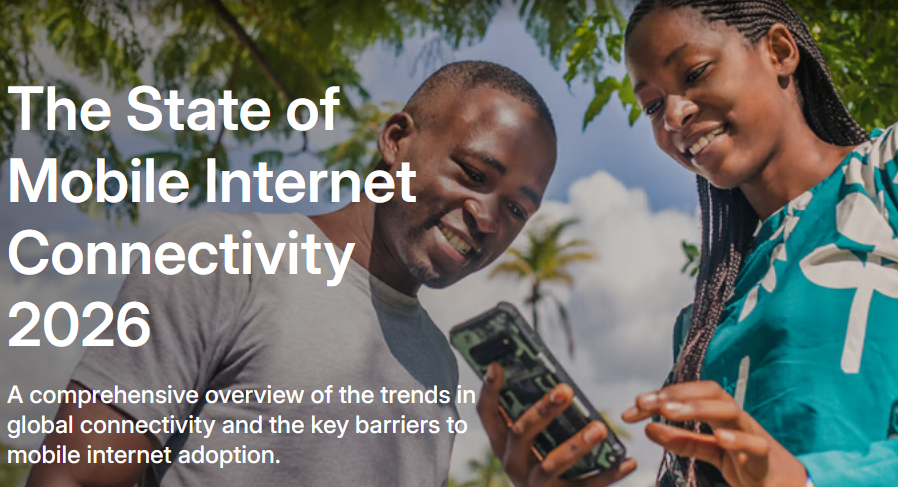
Mobile internet connectivity has reached 4.8 billion people globally, representing 59 percent of the world’s population, but a new GSMA report shows that billions remain excluded from the digital economy due to affordability, skills and other barriers.

The GSMA State of Mobile Internet Connectivity 2026 report said growth in mobile internet adoption is slowing even as access continues to expand. It identified the persistent usage gap as the biggest challenge to achieving universal mobile internet access.
According to the report, 3.1 billion people, or 38 percent of the global population, live in areas covered by mobile broadband but do not use mobile internet. This compares with 270 million people, equivalent to 3 percent of the world’s population, who remain outside mobile broadband coverage.
The figures highlight that coverage alone is no longer the central challenge. The much larger issue is enabling people who already live within network coverage to afford devices, acquire the necessary skills and use mobile internet meaningfully.
The digital divide is particularly pronounced in low- and middle-income countries (LMICs), which account for 92 percent of people who do not use mobile internet.
Gender and location also remain significant factors. Women in LMICs are 12 percent less likely than men to use mobile internet, while adults living in rural areas are 28 percent less likely to use it than their urban counterparts.
The GSMA identified handset affordability and literacy and digital skills as the leading reported barriers to mobile internet adoption among people who are already aware of mobile internet.
The cost of internet-enabled devices is particularly significant for poorer populations. An entry-level internet-enabled handset costs an average of 44 percent of monthly income for the poorest 20 percent of people in LMICs.
The report warned that handset affordability could come under further pressure as rising demand for artificial intelligence drives up memory prices, potentially increasing the cost of entry-level smartphones.
This could deepen existing digital inequalities if lower-income consumers are priced out of internet-enabled devices.
The GSMA said the rapid expansion of technologies such as AI is accelerating digital transformation while creating new forms of inequality.
The combination of rising device costs, persistent skills gaps and unequal access means that connecting the remaining billions will require more than expanding mobile network coverage.
With 3.1 billion people already living under mobile broadband coverage but not using mobile internet, the report points to affordability, digital literacy and meaningful usage as critical areas for policymakers and industry stakeholders.
The GSMA said universal access to, and meaningful use of, mobile internet should be treated as both an economic imperative and a development priority.
The organisation’s findings underscore the scale of the task: while 4.8 billion people are now connected through their own mobile devices, 3.4 billion people remain offline, leaving a substantial portion of the global population outside the benefits of the digital economy.
The report provides recommendations aimed at accelerating progress towards a more digitally inclusive future, with particular attention to the barriers facing users in low- and middle-income countries.