



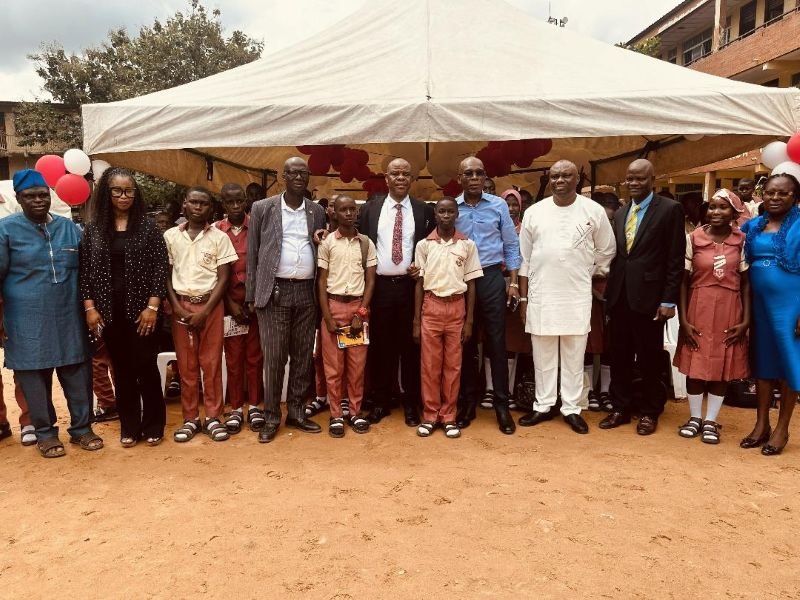
Students at two Lagos public schools now have access to AI-powered classrooms, Starlink internet, renewable energy and modern computing infrastructure as the Leo Stan Ekeh Foundation deepens its push to build Nigeria’s next generation of digital talent.
The two schools are the Gbagada Senior Grammar School and Lanre Awolokun High School in Lagos, giving students access to digital infrastructure typically unavailable in many public schools.

Delivered in partnership with Task Systems, TD Africa, Zinox Technologies and the Konga Group, the facilities combine AI-enabled learning tools with uninterrupted power and high-speed internet to create digitally connected classrooms.
Each centre features Zinox All-in-One desktop computers, interactive AI-enabled smart screens, 24-hour renewable energy systems from iPower, and two years of Starlink satellite internet, enabling students and teachers to access global educational resources without relying on unstable connectivity.
Speaking at the commissioning, Leo Stan Ekeh, Chairman of the Zinox Group, urged students to see technology as a pathway to creating wealth and competing globally.
“Use these platforms to become the new wealth creators of this nation and certified global citizens,” he said.
Ekeh also challenged governments at all levels to invest more aggressively in education, arguing that improving teachers’ welfare is essential to raising learning standards.
“An angry or hungry teacher cannot deliver quality education. We must consciously raise the quality of education to save this nation.”
Beyond the new facilities, Ekeh announced that exceptional students from the schools could earn full university scholarships and gain access to advanced technology training, creating a pipeline from public schools to globally recognised digital careers.
The Gbagada initiative marks the latest in 123 education and technology projects executed by the Foundation over nearly four decades. Previous interventions include digital ICT centres at Imo State University, St. Augustine University, Federal University Birnin Kebbi, Bakambara Day Secondary School, and Holy Ghost College, Owerri.
The Foundation is now expanding its ambition even further.
According to Dr. George Emetuche, Director of Studies at LSEF, the organisation is working to develop 1,000 tech-savvy young Nigerians through fully funded university scholarships and internationally recognised technology training.
He disclosed that the first students admitted to study Computer Science and Computer Engineering at universities across Nigeria will be announced soon, reinforcing the Foundation’s long-term strategy of building a skilled workforce for Nigeria’s digital economy.