



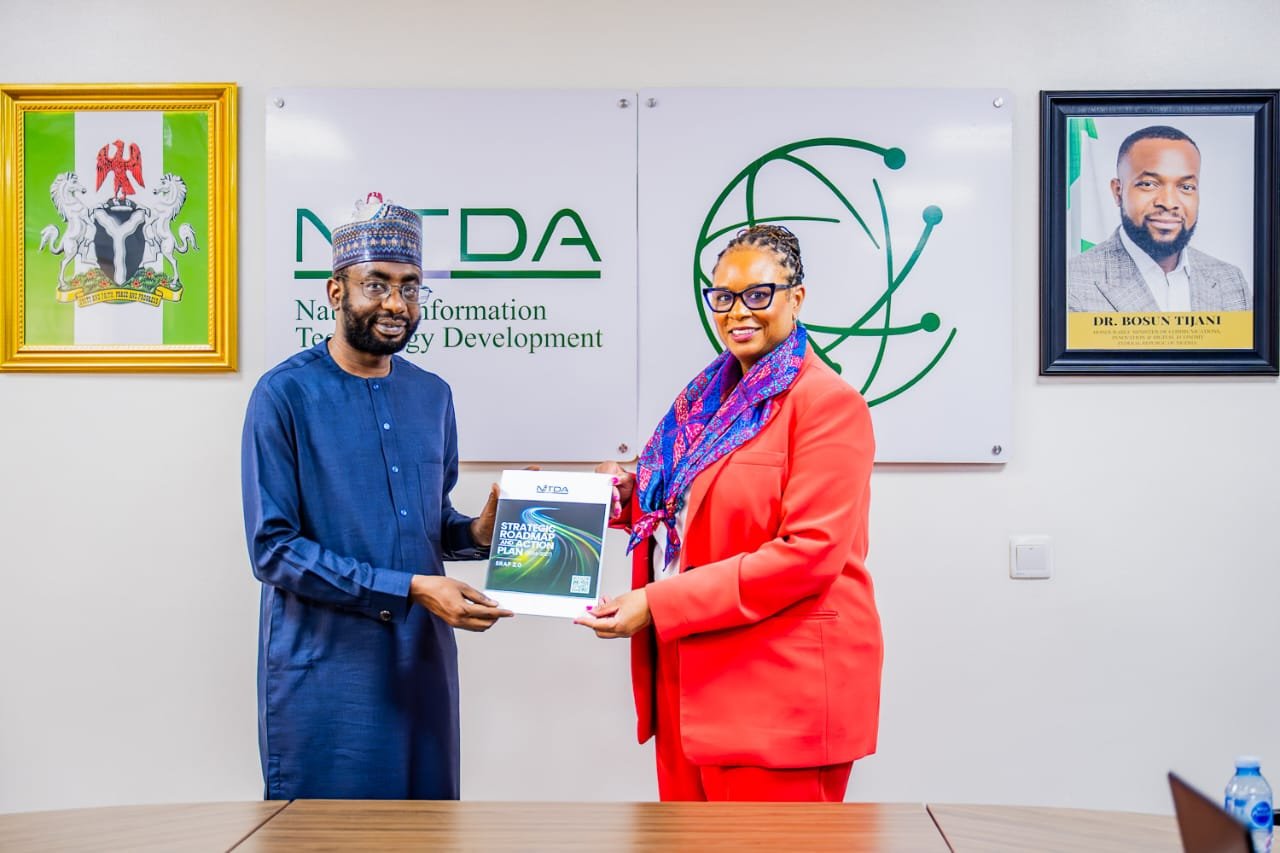
The National Information Technology Development Agency (NITDA) is exploring strategic partnerships with leading United States technology companies and investors to strengthen Nigeria’s digital infrastructure, attract investment, create jobs and accelerate the adoption of emerging technologies.
The partnership discussions, involving Microsoft, Citi Bank, Cavista Holdings, Flutterwave, Tolaram Group, the American Business Council and the U.S. Chamber of Commerce, are expected to open opportunities for collaboration in cloud computing, artificial intelligence (AI), data governance, digital transformation and workforce development.

The delegation, led by Kendra Gaither, President of the U.S.-Africa Business Centre, met with NITDA Director-General, Kashifu Inuwa, who reaffirmed the Federal Government’s commitment to building an inclusive, resilient and globally competitive digital economy.
Inuwa said Nigeria’s digital policies were designed to encourage international companies to invest in local infrastructure and collaborate with domestic businesses, rather than restrict foreign participation.
“Our policy intent is just about two things. First, to make sure our citizens have basic access, no matter what,” he said, emphasising the need for digital self-determination.
A major benefit of the proposed collaboration is the potential to expand local data centres and cloud infrastructure, enabling Nigerian businesses and public institutions to access reliable digital services while keeping greater control over critical data and systems.
According to Inuwa, investments in domestic cloud infrastructure would stimulate local innovation, create business opportunities and strengthen Nigeria’s position as a technology hub for West and Central Africa.
He disclosed that the Federal Government had invested more than ₦4.5 trillion in information technology between June 2023 and June 2026, adding that appropriate policies could encourage more government technology services to be hosted on locally operated sovereign cloud platforms.
The initiative could also improve regulatory certainty for investors. Inuwa said NITDA was working with relevant regulators, including the Central Bank of Nigeria, to develop an assurance framework clarifying technical requirements and supporting compliance, particularly within the fintech sector.
He stressed that technology providers must be able to compete fairly, allowing businesses to choose solutions that meet their needs without being locked into a single provider.
The proposed partnership also offers opportunities for digital skills development and employment, particularly following a collaboration proposal from Cavista Holdings covering digital transformation and workforce training. Inuwa invited the company to submit its proposal for assessment.
Gaither said American businesses were interested in expanding commercial engagement with Nigeria, noting that clearer regulations, predictable investment policies and sustained dialogue would strengthen investor confidence.
She added that cooperation between NITDA and US companies could address regulatory uncertainties, support innovation and advance shared economic interests.
If translated into concrete investments and programmes, the partnership could help Nigeria attract technology capital, develop local expertise, strengthen digital infrastructure and create new opportunities for businesses and workers in the country’s expanding digital economy.