



Artificial intelligence (AI) is creating new cybersecurity challenges for Nigeria, exposing businesses, government institutions and citizens to increasingly sophisticated cyberattacks that could undermine economic growth, digital trust and national security.
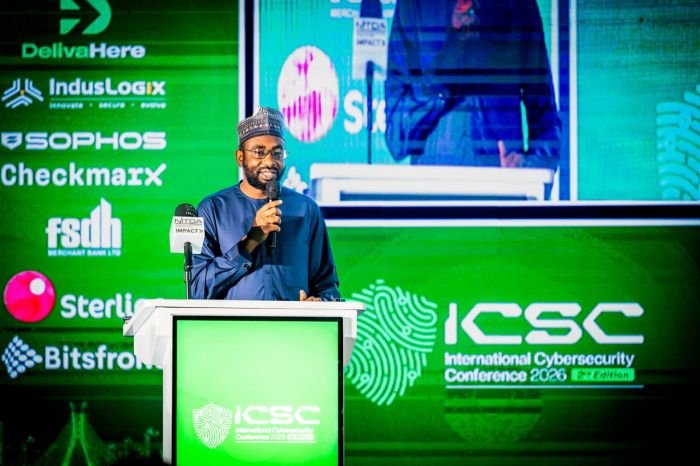
Cybersecurity experts, lawmakers and international partners raised the concern on Tuesday at the opening ceremony of the International Cybersecurity Conference in Abuja, calling for stronger digital defences, improved public awareness and greater international cooperation to combat emerging threats.

The stakeholders warned that as cybercriminals adopt AI to improve their methods, traditional security measures may no longer be sufficient to protect digital infrastructure, sensitive information and online transactions.
The Director-General of the National Information Technology Development Agency (NITDA), Kashifu Inuwa, said the growing sophistication of AI had introduced a new dimension to cybersecurity, requiring organisations to deploy advanced technologies to anticipate, detect and counter attacks.
He noted that cybercriminals were increasingly exploiting human weaknesses, arguing that manipulating individuals could sometimes be easier than breaching sophisticated technological systems.
The development raises concerns about the growing risks of phishing, impersonation, online fraud and other forms of social engineering, through which attackers deceive victims into disclosing sensitive information or authorising fraudulent transactions.
Inuwa said cybersecurity strategies must therefore extend beyond protecting computer systems and digital infrastructure to include the human mind, stressing the importance of understanding how attackers exploit human behaviour.
He also distinguished between cybersecurity and cyber resilience, explaining that while cybersecurity focuses on preventing attacks, resilience involves an organisation’s ability to recover when an attack succeeds.
The distinction is particularly important for Nigeria’s expanding digital economy, where disruptions to financial services, business operations and government platforms could result in financial losses, data exposure and reduced public confidence in digital services.
As more Nigerians embrace digital payments, e-commerce and technology-enabled public services, the growing threat of AI-assisted attacks underscores the need for businesses and government agencies to strengthen security systems and prepare for rapid recovery from cyber incidents.
Chairman of the House of Representatives Committee on ICT and Cybersecurity, Hon. Adedeji Stanley Olajide, described cybersecurity as a moving target, warning that strategies effective today might become inadequate as AI continues to transform the methods available to cybercriminals.
He called for stronger collaboration among cybersecurity practitioners, policymakers, diplomats, judges and heads of government agencies, noting that cyber threats transcend national and continental boundaries.
Olajide said countries across the Americas, Europe, Asia, Africa and Latin America must recognise cybersecurity as a common challenge requiring coordinated international action.
Similarly, Chairman of the Senate Committee on ICT and Cybersecurity, Senator Shuaib Afolabi Salisu, described the conference as an opportunity to advance technology diplomacy and strengthen Nigeria’s international partnerships in the digital sector.
He said the participation of legislators from other countries demonstrated growing international interest in Nigeria’s technology initiatives and reinforced the country’s potential as a destination for business and collaboration.
Chair of the Council of Europe’s Cybercrime Convention Committee, Pedro Verdelho, highlighted the gap between the rapid adoption of digital technologies and public understanding of their associated risks.
He observed that AI and other digital tools had become integral to everyday activities, including online searches, travel planning and commercial transactions, while awareness of the dangers accompanying their use remained inadequate.
Verdelho called for stronger cybersecurity awareness among government institutions, private-sector organisations and citizens. He also highlighted the Budapest Convention, an international treaty designed to facilitate cooperation against cybercrime and improve access to electronic evidence.
The framework, he noted, provides an avenue for strengthening international collaboration in investigating cybercrime and responding to threats that cross national borders.
Swedish Ambassador to Nigeria, Anna Westerholm, said cybersecurity was essential to building public confidence in digital transformation, warning that increased connectivity also created greater exposure to cyber risks.
She noted that Nigeria’s digital transformation offered significant opportunities for innovation, economic growth and inclusion, with Sweden and Swedish companies supporting the country’s progress.
The concerns raised at the conference highlight the need for Nigeria to match its growing digital adoption with stronger cybersecurity investment, continuous training and effective incident-response mechanisms.
Beyond deploying advanced security technologies, organisations must equip employees to recognise AI-assisted scams, protect sensitive information and respond quickly to suspected breaches.
For policymakers, the challenge includes strengthening cybercrime enforcement, improving cross-border cooperation and ensuring that institutional frameworks keep pace with the evolving threat landscape.
The stakeholders’ message was clear: Nigeria’s digital ambitions depend not only on expanding connectivity and adopting emerging technologies but also on protecting the systems, institutions and people that sustain the digital economy.