



By Martin Ekpeke
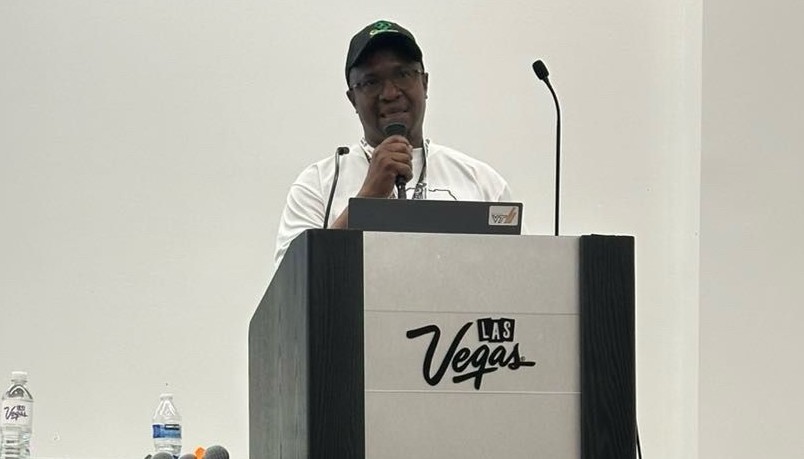
The stereotype of the Nigerian prince scam is officially a thing of the past. At the recent DEF CON conference in Las Vegas, cybersecurity expert Remi Afon, founder of GoLegit Africa and the pioneer president of the Cyber Security Experts Association of Nigeria (CSEAN), delivered a powerful presentation that pulled back the curtain on a sophisticated and rapidly growing digital underground economy in Africa.

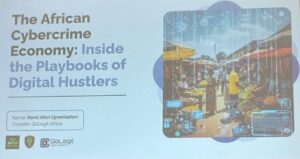
In his talk, titled “The African Cybercrime Economy: Inside the Playbooks of Digital Hustlers,” Afon argued that the world’s focus on cyber threats from Eastern Europe and Asia has allowed a new, high-tech cybercrime ecosystem to flourish largely unnoticed in Africa. This growth is fueled by a perfect storm of high unemployment, limited economic opportunities and rapid mobile technology adoption.
Afon’s presentation went beyond the “419” stereotype, showcasing a new era of attacks that are far more advanced and organized.
 He highlighted several case studies to illustrate the evolution of cybercrime. He detailed a sophisticated BEC (Business Email Compromise) attack on a South African multinational, where criminals used spear-phishing and social engineering to impersonate a supplier, creating a fake website and payment portal to steal money that was then laundered through cryptocurrency exchanges.
Afon also pointed to Mobile Money Mayhem in Kenya, where fraudsters exploit the M-Pesa mobile payment system. They use “smishing” (SMS phishing) to send texts with links to fake login pages, stealing PINs and using SIM swapping to take over victims’ phone numbers and accounts.
Finally, he described how West African criminals are successfully launching targeted BEC attacks against companies in the U.S. and Western Europe. These attackers meticulously gather information on executives and financial processes to compromise email accounts, sending urgent and authoritative requests for wire transfers that have resulted in the theft of millions of dollars.
These new digital hustlers are using a wide range of readily available tools, from open-source penetration testing kits, social engineering toolkits to outright purchase of cybercrime services in the dark web. The use of cryptocurrency mixers and tumblers has made the money laundering process faster and more effective than ever.
Afon’s presentation wasn’t just a warning; it was a call to action. He identified several key “blockers” that currently hinder the fight against cybercrime in Africa, including a lack of public awareness, weak infrastructure, and under-resourced law enforcement.
However, he also offered a vision for how to combat this growing threat. Through his organization, GoLegit Africa, Afon is working to redirect Africa’s cyber talent from the dark web to the job board.
The organization focuses on several key areas to combat cybercrime and offer a new path for young people. It provides skills development through training in coding, web development, and cyber defense, creating legitimate career opportunities.
It also prioritizes rehabilitation, offering support, coaching, and job placement to help individuals with criminal records rebuild their lives. The organization also emphasizes partnership and collaboration, working with governments, corporations, and NGOs to create a united front against cybercrime.
Afon’s work suggests that by investing in education, creating opportunities, and fostering collaboration, it’s possible to transform a generation of digital hustlers into a new force for cybersecurity. The challenge, he says, is to move beyond old stereotypes and recognize the sophisticated threat and immense potential that lies within Africa’s digital landscape.