


By Martin Ekpeke
A few days ago, Dr. Bosun Tijani, Nigeria’s Minister of Communications, Innovation, and Digital Economy, announced a major financial milestone for Project BRIDGE, Nigeria’s ambitious plan to close the digital divide.
The announcement followed a high-stakes investment tour across six European countries, where the project secured a $100 million investment from the European Bank for Reconstruction and Development (EBRD) and a €22 million grant from the European Union.
In this analysis, ITPulse examines how this capital infusion, combined with existing World Bank support, will fundamentally transform connectivity for over 200 million Nigerians.
What is Project BRIDGE?
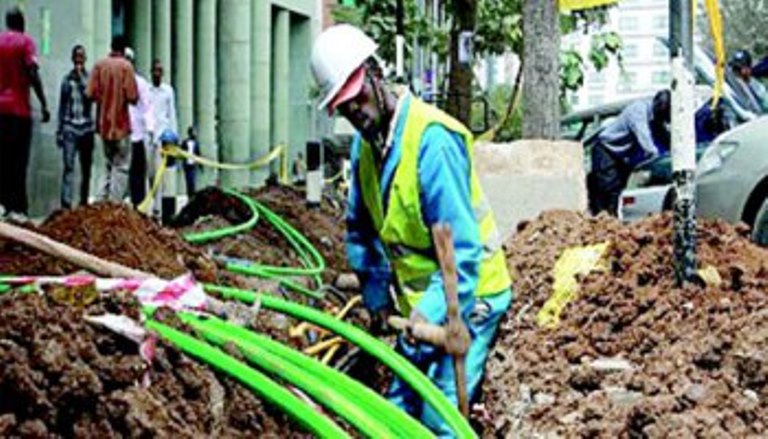
The goal of the Building Resilient Digital Infrastructure for Growth (BRIDGE) project to deploy 90,000 kilometers of additional fibre optic cable, expanding the national backbone from its current 35,000 km to a total of 125,000 km.
The project is structured as a $2 billion Public-Private Partnership (PPP). Recent European funding has significantly bolstered the project’s financial resources, building upon the $500 million already approved by the World Bank. This new support includes a $100 million investment from the EBRD and a €22 million grant from the European Union specifically for Project BRIDGE. These contributions are part of a broader €45 million European Union digital economy package, which also allocates €18 million for Digital Public Services and €5 million to support the 3MTT talent programme.
How it impacts all Nigerians
Currently, high-speed internet is primarily concentrated in urban hubs such as Lagos and Abuja. Project BRIDGE aims to establish Points of Presence (PoPs) in every one of Nigeria’s 774 Local Government Areas. This means that even remote communities will have a physical connection point to the national digital highway.
The government intends to break the monopoly of major mobile operators over infrastructure by providing a wholesale, open-access network. This model increases competition by allowing smaller Internet Service Providers to lease space on the 90,000 km network at lower rates. These lower operational costs are expected to generate significant consumer savings. Projections suggest that these efficiencies could reduce data and broadband costs for the average Nigerian by over 60%.
The European Union’s contribution specifically earmarks funds for the transformation of Digital Public Services. This funding aims to revolutionize healthcare by connecting over 200,000 social institutions, including primary health centers, to enable real-time data exchange and telemedicine. In the education sector, the investment will provide schools with high-speed internet to foster digital literacy and facilitate remote learning. These targeted improvements are designed to ensure that critical public infrastructure can leverage modern technology for better service delivery.
The Ministry estimates that Project BRIDGE will serve as a massive engine for job creation and economic growth. The project is expected to create 20,000 direct jobs in construction and maintenance. Furthermore, the digital economy and startup sectors are projected to generate over 150,000 indirect jobs. This increased connectivity is estimated to drive a 1.5% increase in GDP per capita. To support these goals, the government has set a target of reaching 70% broadband penetration across Nigeria by 2027.
Final analysis
Securing $700+ million in international backing is a significant diplomatic win for Dr. Tijani. It signals global confidence in Nigeria’s digital reforms. However, the true test lies in the execution.
The use of a Special Purpose Vehicle (SPV) to manage the project suggests a shift toward private-sector efficiency rather than traditional government bureaucracy. By linking disbursements to pay-for-results milestones (such as the first 5,000 km of fibre laid), the project incorporates built-in accountability that has been lacking in past infrastructure initiatives.
For the average Nigerian, this means the digital divide is finally moving from a political talking point to a tangible infrastructure project that could make high-speed internet as fundamental as electricity or water.