


The National Information Technology Development Agency (NITDA) has reaffirmed its commitment to building a coordinated, inclusive digital ecosystem in Nigeria, further cementing its role as the nation’s primary ecosystem orchestrator.
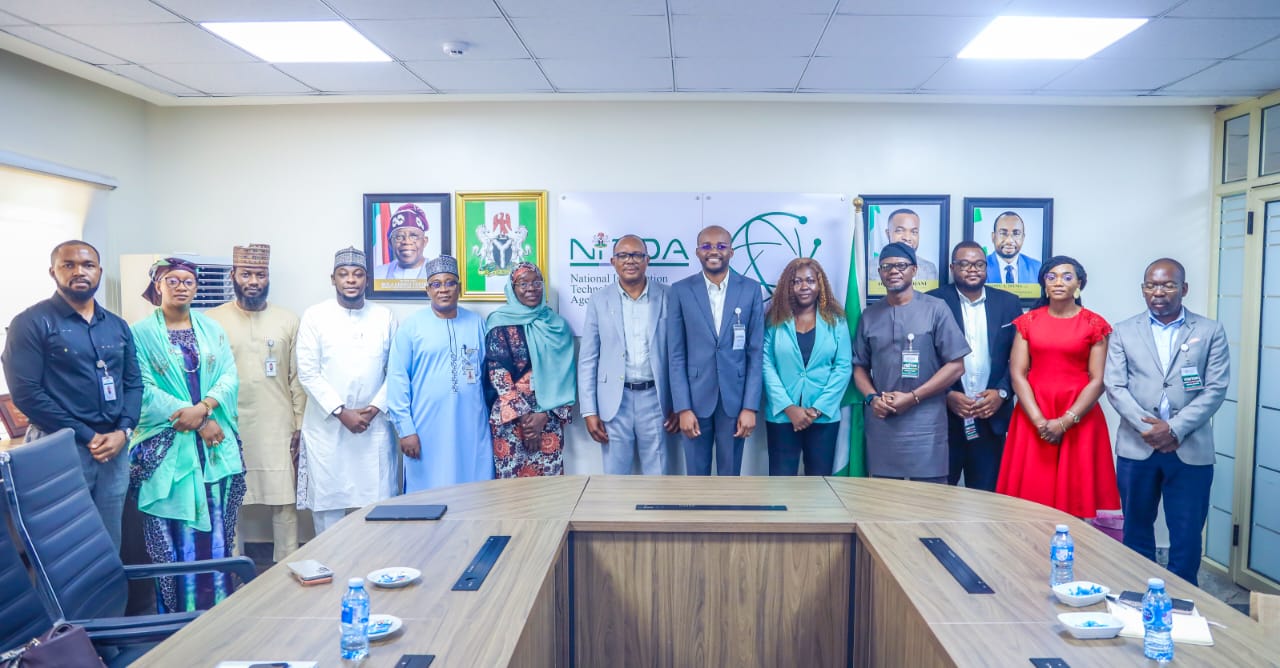
This position was disclosed during a bilateral working visit centered on Nigeria’s startup ecosystem framework. The Director General of NITDA, Kashifu Inuwa—represented by the Director of Stakeholders Management and Partnerships, Dr. Aristotle Onumo—emphasized that NITDA’s dual regulatory and developmental mandates are designed to foster collaboration, innovation, and long-term growth across the digital economy.

According to the Director General, Nigeria’s current startup reforms directly align with the Federal Government’s Eight-Point Agenda. These are operationalized through NITDA’s Strategic Roadmap and Action Plan (SRAP 2.0), which focuses on eight strategic pillars to accelerate economic development.
Key priority areas within this framework include:
- Digital Literacy: Targeting 70% digital literacy by 2027 under the National Digital Literacy Framework, with a long-term goal of 95% by 2030.
- Talent and Infrastructure: Advancing local IT talent and expanding robust digital infrastructure.
- Ecosystem and Innovation: Driving policy implementation, ecosystem development, and research-driven innovation.
The visiting delegation from Angola’s National Institute of Support for Micro, Small and Medium Enterprises (INAPEM), led by Chairman and CEO Bráulio Augusto, commended Nigeria’s progress. Augusto described the Nigeria Startup Act as a valuable model for shaping Angola’s own tech legislation.
Augusto revealed that Angola’s Startup Law has received initial parliamentary approval and is transitioning into the implementation phase. The Angolan delegation sought technical insights from Nigeria regarding:
- The operational transition from legal adoption to practical execution.
- The mechanics of startup labeling, investor registration, and incentive management.
- The governance structure of the National Startup Council and the operation of the Nigeria Startup Portal.
“Angola is currently developing the ‘Startup Angola Programme’ under its Digital Entrepreneurship Support Programme. We aim to build a structured, integrated ecosystem rather than relying on isolated interventions,” Bráulio Augusto, CEO of INAPEM
The Angolan program will focus on institutional strengthening, startup funding, incubation expansion, and partnerships with international accelerators. Augusto noted that Nigeria’s framework offers practical solutions to shared continental challenges, such as economic informality, youth unemployment, digital gaps, and limited market access for SMEs.
This high-level exchange highlights a growing trend of intra-African collaboration on digital policy, reinforcing Nigeria’s position as a benchmark for startup ecosystem frameworks across the continent.