



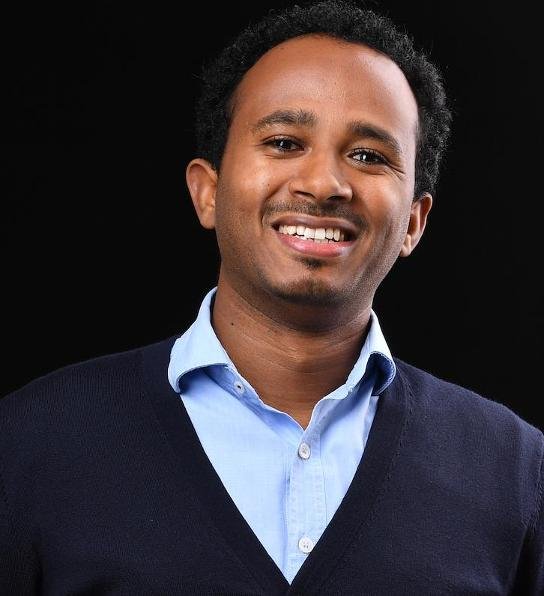
By Dr. Girmaw Abebe Tadesse
For millions of farmers across Africa, the timing of the rains can determine whether a growing season brings a harvest or hardship. Plant too early, and seeds may fail before the rains arrive. Plant too late, and crops may not mature in time. A single decision can shape a family’s income, food security and ability to invest in the next season.

In many African countries, including Nigeria, increasingly unpredictable rainfall, prolonged dry spells and recurrent flooding are disrupting planting seasons, reducing crop yields and threatening the livelihoods of millions who depend on agriculture. These challenges are compounded by limited access to timely, reliable and locally relevant climate information, making it difficult for farmers to anticipate weather patterns and make informed decisions. As climate variability intensifies, the challenge is no longer simply accessing climate information, but translating it into practical, timely decisions that protect agricultural productivity, strengthen resilience and safeguard livelihoods.
As governments convene for COP31, the question is not only whether we can forecast changing weather more accurately. It is whether farmers and public institutions have the information and capacity to act before climate risks become crises. Artificial intelligence (AI) offers part of the answer. But predicting the rain is only the beginning.
The weeks before planting are a critical window for farmers weighing when to sow and how to allocate agricultural inputs. More reliable forecasts could inform those decisions and provide advance warning of dry spells. One approach, Probabilistic Bias Correction, from Microsoft Research, improves forecasts uses machine learning to correct recurring errors in existing weather models.
The challenge remains translating climate intelligence into practical decisions. What works in one region may not work elsewhere. Thus, context-aware guidance is required that accounts for soil conditions, crop varieties, water availability, costs and farmers’ knowledge.
Technology-enabled agricultural services illustrate how information and resources can reach farmers. Nigerian agritech innovator Farmcrowdy developed a digital platform connecting farmers with financing and agricultural support. Although an example of digital agricultural finance rather than AI forecasting, it demonstrates how technology can address critical finance gap facing smallholder farmers.More directly focused on climate resilience is Nigeria’s Digital Climate Advisory Services initiative, involving local entities such as the Nigerian Meteorological Agency (NiMet) and MTN Nigeria. Designed to deliver location-specific weather guidance through mobile channels, the initiative aims to help farmers make informed decisions about planting, irrigation and harvesting. It illustrates how meteorological expertise and accessible technology can bring climate intelligence closer to farmers. In Nigeria, Pula, Leadway Assurance, Bayer Foundation, and government partners are advancing data-driven agricultural insurance and climate-risk management to strengthen the resilience of approximately 250,000 smallholder farmers across eight states.
These experiences reinforce a broader lesson: climate intelligence delivers value when connected to the institutions and services that enable action. For farmers, this may mean timely planting advice or access to agricultural inputs. For governments, it may mean identifying vulnerable communities and directing resources where they are needed most.
Yet sophisticated information systems have limited impact if their insights cannot reach farmers. In Nigeria, language barriers, connectivity costs, digital literacy and limited agricultural extension services influence whether advice reaches those who need it. Accurate information has little value if it arrives too late or cannot be understood.
This makes initiatives such as LINGUA Africa particularly important. Supported by Microsoft’s AI for Good Lab and partners, the initiative is advancing the development of AI tools that reflect Africa’s linguistic diversity. In Nigeria, projects such as AgroLingua Africa are exploring how AI can deliver agricultural information in local languages, including Hausa, Yoruba and Igbo, while HausaNLP’s DialectBridge focuses on improving AI capabilities across regional Hausa dialects.
The principle is simple: agricultural AI must listen before it advises. Farmers, researchers and extension workers possess knowledge and local context understanding that technology will struggle to replace it. Thus, AI should strengthen their decision-making, not override their experience.
But accessibility is only part of the challenge. Positive impact from AI still requires responsible adoption and diffusion across sectors. Agricultural records are often fragmented, public agencies may lack specialist capacity, and institutions responsible for agriculture, meteorology and disaster management may struggle to share information. AI cannot overcome these constraints alone.
At COP31, African governments and development partners should treat agricultural data systems as essential climate adaptation infrastructure. Adaptation finance must support linkage across crop surveys, databases that can share information, affordable connectivity and ongoing training for government analysts and extension workers. Responsible data-sharing and national ownership are equally important to ensuring these systems remain useful beyond individual projects.
AI alone cannot prevent droughts, replace irrigation or eliminate farmers’ financial pressures. It can, however, help farmers and governments anticipate risks and respond more effectively. From Nigeria’s efforts to make weather intelligence accessible, the lesson is clear: technology creates value when information leads to action.
Ultimately, Africa’s agricultural future depends not simply on predicting when the rain will fall, but on what farmers and governments can do with that knowledge before it arrives.
Dr Girmaw Abebe Tadesse leads Microsoft’s AI for Good Lab in Nairobi and is a member of the UN’s Independent International Scientific Panel on AI.