


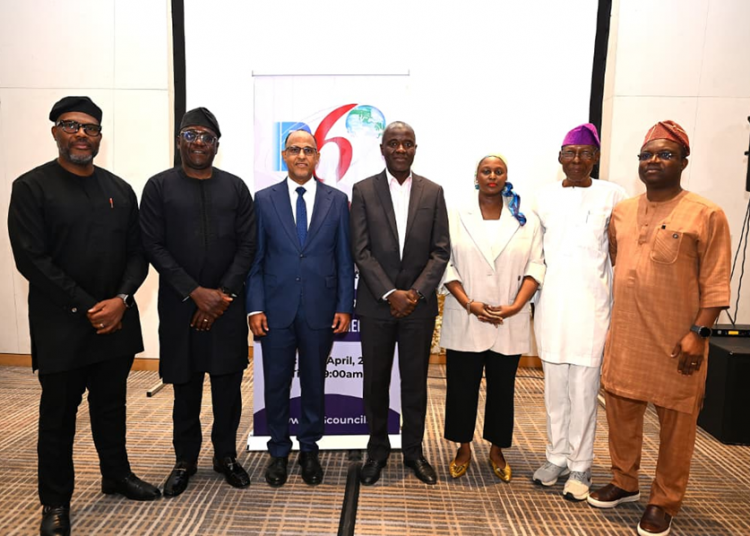
In a decisive move to secure Nigeria’s digital future, the Nigerian Communications Commission (NCC) has officially inaugurated the new IPv6 Council Board. Tasked with spearheading the nationwide migration from the aging Internet Protocol version 4 (IPv4) to the more robust Internet Protocol version 6 (IPv6).
The council brings together a powerhouse of Nigerian tech veterans. Among the prominent leaders appointed to the board are Olusola Teniola, Director at ipNX; Funke Opeke, founder of MainOne; and Muhammed Rudman, CEO of the Internet Exchange Point of Nigeria (IXPN), who will serve as the Council’s Chairman.
The inauguration, which took place in Ikeja, Lagos, marks a critical turning point for Nigeria’s telecommunications landscape as the global demand for IP addresses outstrips the capacity of older infrastructure.
The newly formed council reads like a Who’s Who of the West African tech ecosystem. Under Rudman’s leadership, the board features a stellar lineup of pioneering visionaries:
- Muhammed Rudman (Chairman)
- Chris Uwaje (Vice Chairman)
- Olusola Teniola (Director, ipNX)
- Funke Opeke (Founder, MainOne)
- Mary Uduma (Former President, NiRA)
- Gbenga Adebayo (Chairman, ALTON)
- Lanre Ajayi (Past President, ATCON)
- Latif Ladid (Founder and President, Global IPv6 Forum)
The board will also include key representatives from vital regulatory bodies and government institutions to ensure seamless policy alignment.
Speaking shortly after the inauguration, ipNX Director Olusola Teniola expressed deep gratitude to the NCC for the appointment, while emphasizing the sheer urgency of the mission.
“The transition to IPv6 is no longer a future consideration; it is an immediate priority for Nigeria’s digital economy. As data consumption grows and emerging technologies such as 5G, IoT, and AI become more pervasive, we must ensure that our underlying infrastructure is scalable, secure, and globally competitive,” Teniola stated.
Teniola pointed out that the explosion of connected devices means Nigeria can no longer rely on the finite resource pool of IPv4. However, he warned that the transition cannot happen in a vacuum.
“This is a collective responsibility. We must invest in capacity building, drive awareness, and create the right policy and regulatory environment to accelerate adoption. Nigeria cannot afford to lag in an increasingly connected world,” he urged.
The NCC has handed a comprehensive roadmap to the IPv6 Council Board. Moving forward, the group will formulate and oversee the implementation of a comprehensive national IPv6 strategy. They will also monitor adoption levels across various sectors and provide periodic updates to the federal government.
Additionally, the board will identify and resolve technical bottleneck challenges while strengthening local engineering capacity. Finally, they will recommend regulatory incentives and penalties to encourage internet service providers, telecom operators, academia, and enterprises to upgrade their systems.
Teniola’s appointment highlights the active role of local tech giants, such as ipNX, in shaping the country’s digital backbone. By joining forces with Rudman, Opeke, and the rest of the council, the initiative signals a unified front from the private sector to build a resilient, high-speed, and future-ready network infrastructure.
With the council now officially active, the clock is ticking for Nigerian enterprises and network providers to upgrade, ensuring the nation stays firmly on the global digital map.